Every November 11, Americans pause to honor the brave men and women who have worn the uniform of the United States Armed Forces. Veterans Day is more than a federal holiday. It is a national expression of gratitude to those who have served, defended freedom, and made sacrifices for their country.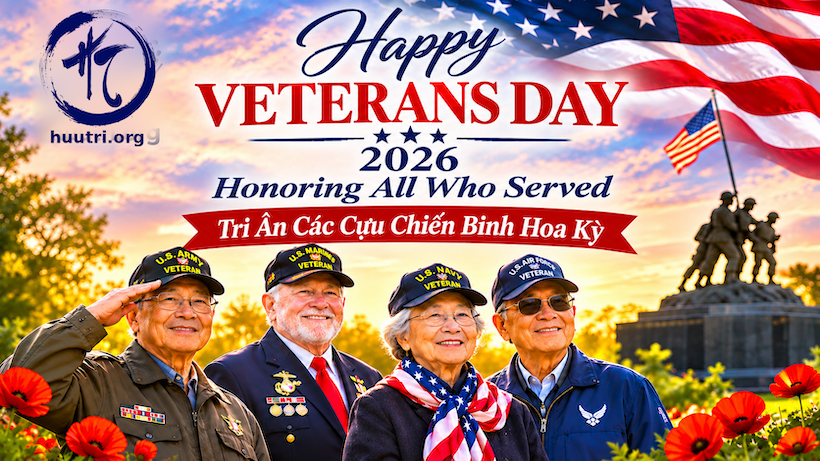
For millions of American families, including Vietnamese Americans whose lives were shaped by war, displacement, and the search for freedom, Veterans Day carries a particularly profound meaning.
But how did this important American tradition begin, and how has it evolved over more than a century?
From Armistice Day to Veterans Day: A Brief History
The story of Veterans Day begins with the end of World War I, one of the deadliest conflicts in modern history.
On November 11, 1918, an armistice between Germany and the Allied powers took effect at the 11th hour of the 11th day of the 11th month, bringing the fighting on the Western Front to a halt.
One year later, on November 11, 1919, President Woodrow Wilson proclaimed the first Armistice Day, honoring those who served and remembering the lives lost during the Great War.
Originally, the observance focused primarily on World War I veterans. Following World War II and the Korean War, Americans recognized the need to honor veterans from all generations.
In 1954, President Dwight D. Eisenhower signed legislation officially changing the name from Armistice Day to Veterans Day, expanding its purpose to recognize all American military veterans.
An important distinction remains today: Veterans Day honors everyone who has served in the U.S. military, while Memorial Day specifically commemorates those who died while serving their country.
Traditions That Continue Today
- A solemn ceremony at Arlington National Cemetery. Each November 11, a national ceremony takes place at the Tomb of the Unknown Soldier in Arlington, Virginia. A wreath-laying ceremony, military honors, and commemorative remarks pay tribute to those who served.
- Veterans Day parades and community celebrations. Cities and towns across America organize parades, concerts, and patriotic gatherings. Veterans of different generations march together, often accompanied by military bands, service organizations, and families.
- Moments of silence and remembrance. Many communities observe a moment of silence at 11 a.m., recalling the historic moment the World War I armistice took effect. Schools, churches, and civic organizations also hold commemorative services.
- Thanking veterans and educating younger generations. Students write letters, invite veterans to share their experiences, and learn about military history. Many businesses offer complimentary meals or special discounts to veterans as gestures of appreciation.
A Special Meaning for Vietnamese Americans
For many Vietnamese American families, Veterans Day is also a time to remember the American service members who fought during the Vietnam War, as well as the sacrifices of soldiers of the former Republic of Vietnam.
American veterans and South Vietnamese military personnel served alongside one another during years of conflict. Their experiences, and those of their families, remain an important part of the shared history of the two communities.
Many Vietnamese American veterans later became U.S. citizens, raised families, and contributed to their adopted country. Some also served in the U.S. Armed Forces, continuing a tradition of military service across generations.
Recognizing these histories helps younger Vietnamese Americans understand the courage, hardships, and resilience that shaped their families.
How Can We Honor Veterans Today?
Honoring veterans does not require a grand ceremony. Simple gestures can make a meaningful difference.
- Thank a veteran personally and listen to their story.
- Attend a local Veterans Day ceremony or community parade.
- Visit a veterans memorial or military museum.
- Support reputable organizations assisting veterans, especially older veterans living alone or facing difficulties.
- Encourage children and grandchildren to learn about the sacrifices made by previous generations.
For seniors and retirees, Veterans Day can also be an opportunity to reconnect with former service members, preserve family photographs and memories, and share firsthand experiences with younger generations.
An Interesting Historical Detail
Veterans Day was not always observed on November 11. A 1968 law moved the federal observance to a Monday in October, beginning in 1971, to create a three-day weekend. However, many veterans and communities wanted to preserve the historical significance of November 11.
In 1975, President Gerald Ford signed legislation restoring the traditional date, effective in 1978. Veterans Day has remained on November 11 ever since.
A Legacy Worth Preserving
More than a century after the end of World War I, Veterans Day remains a powerful reminder that service, courage, and sacrifice should never be forgotten.
Behind every military uniform is a human story: a young person who left home, a family that waited anxiously, and a veteran who carried memories of service long after returning to civilian life.
This November 11, let us honor those who served, remember their contributions, and ensure that their stories continue to inspire future generations.
To all American veterans: Thank you for your service, your courage, and your sacrifices. Happy Veterans Day!
From HuuTri.org, with gratitude and respect to all veterans and their families.
-Phan Trần Hương-