
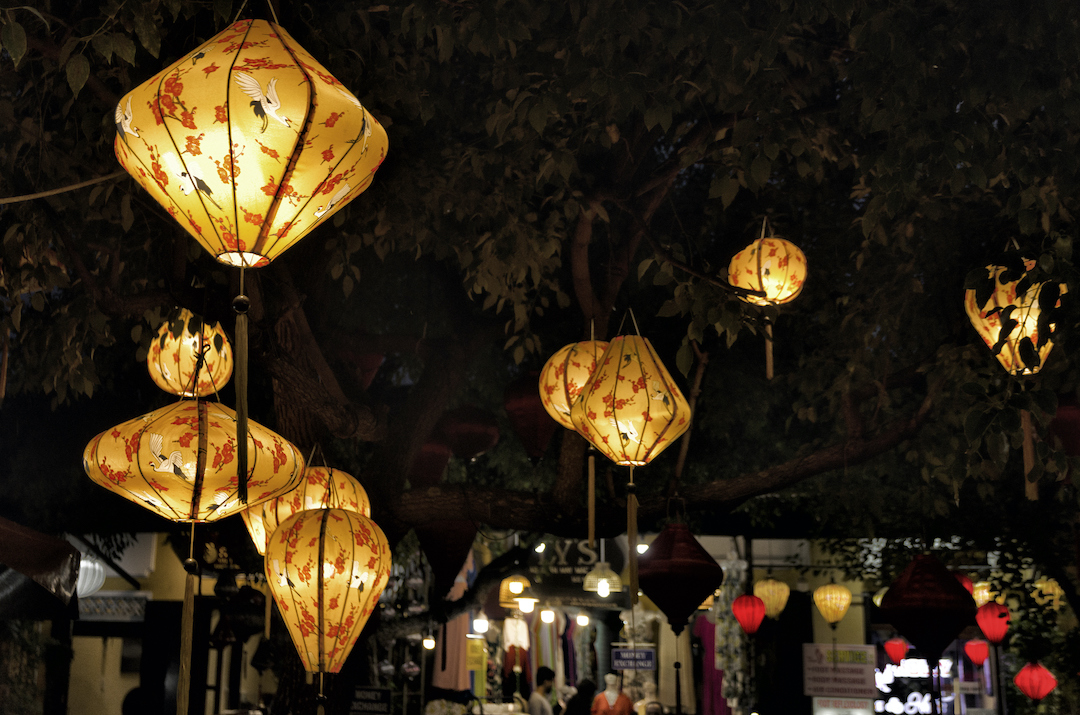
Every autumn, when the moon glows brightest and fullest, Vietnamese families gather for one of the most beloved celebrations of the year — Tết Trung Thu, or the Mid-Autumn Festival. In 2025, the festival falls on October 6, the 15th day of the 8th lunar month. But the excitement begins weeks before — as markets fill with lanterns, the aroma of freshly baked mooncakes drifts through neighborhoods, and children’s laughter echoes under the moonlight.
A Glimpse into History
Tết Trung Thu has deep cultural roots that go back more than a thousand years. In ancient Vietnam, it marked the time when farmers finished harvesting their crops and offered thanks to the moon — a symbol of abundance and reunion. Under Chinese influence, stories of the moon goddess Chang ’e and the jade rabbit became woven into local folklore, but Vietnamese people gave the holiday a unique touch: it became the Children’s Festival, honoring innocence, joy, and family togetherness.
During the Lý and Trần dynasties (11th–14th centuries), royal families organized large moon-viewing parties with music, dance, and floating lanterns. Over time, the celebration spread to villages and towns, where children paraded through streets with star-shaped lanterns (đèn ông sao), beating small drums, and singing under the moon.
Traditions and Symbols
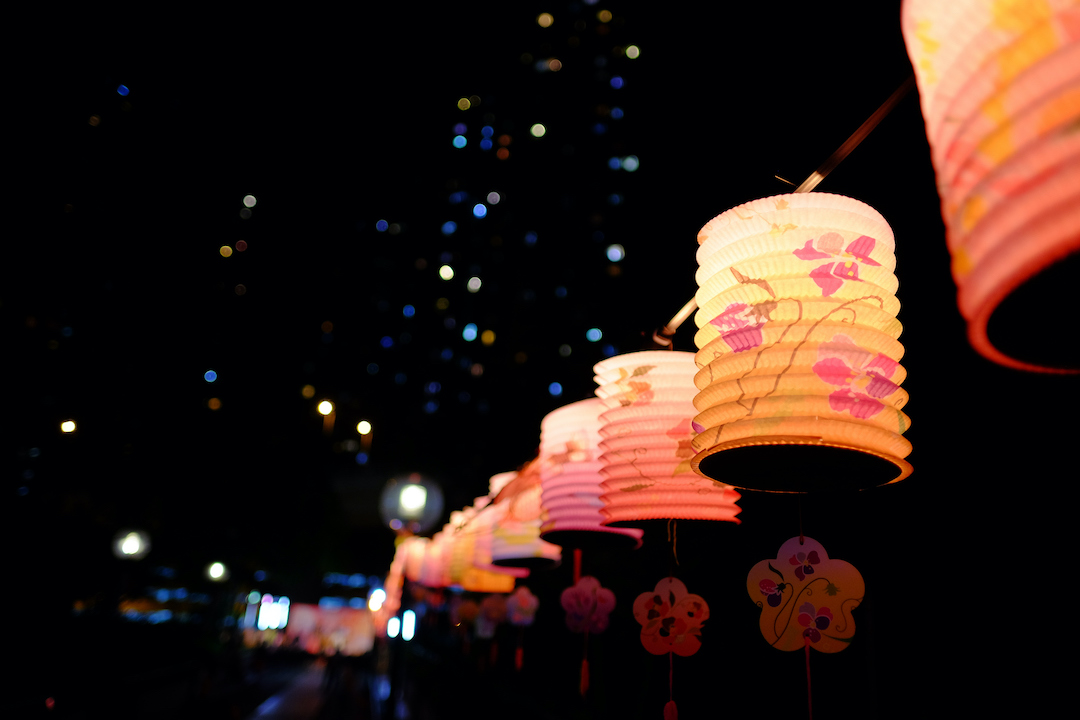
At the heart of the Mid-Autumn Festival is the belief that the full moon brings harmony and completeness. Families prepare trays of fruits, mooncakes, and tea to honor ancestors and share with neighbors. Children carry colorful paper lanterns in the shapes of stars, fish, and rabbits — symbols of light, prosperity, and joy.
- Lion dances (múa lân) fill the streets with drumming and laughter.
- Moon-viewing gatherings bring together generations under glowing skies.
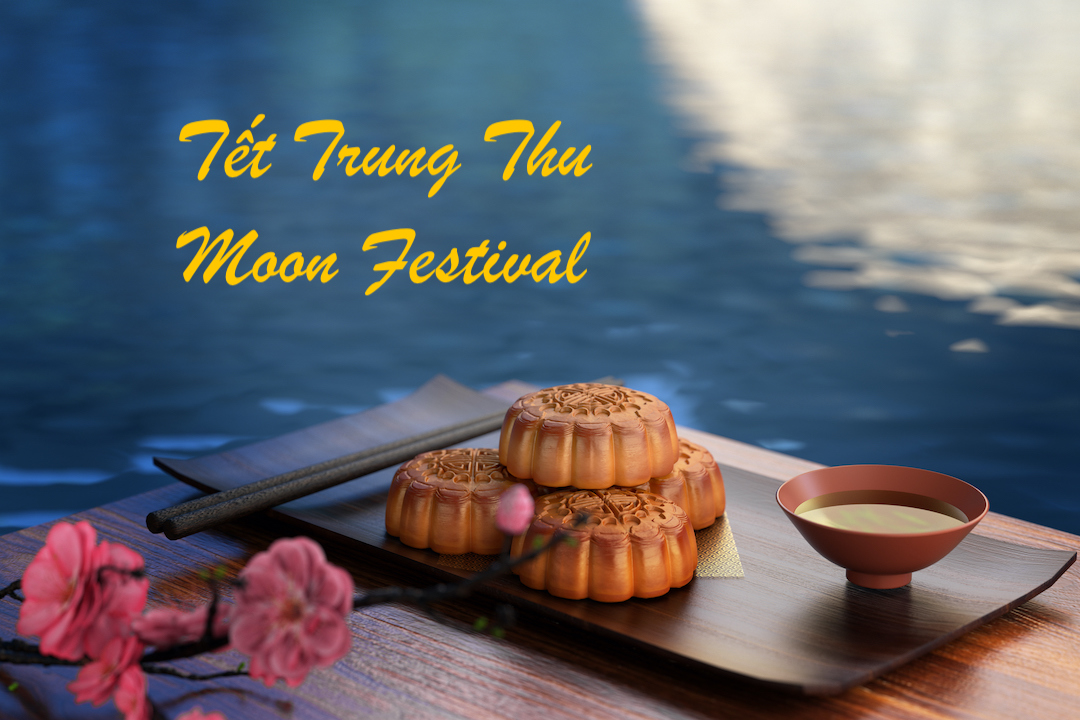
- Bánh Trung Thu (mooncakes) — round, golden pastries — symbolize reunion and gratitude.
Vietnamese Mooncakes – A Taste of Heritage
Vietnamese mooncakes differ from those made in China, Taiwan, Singapore, or Malaysia. While others often use lotus seed paste, red bean, or salted egg yolk fillings, Vietnamese families create mooncakes with local flavors — pumpkin seeds, sesame, mung beans, dried apricots, or green tea.
The two most common types are:
- Bánh nướng (baked mooncakes) — golden crusts with rich fillings, baked until fragrant.
- Bánh dẻo (snow-skin mooncakes) — soft, chewy rice-flour cakes, usually white and delicate.
Mooncakes are traditionally enjoyed with a pot of hot jasmine or lotus tea, balancing sweetness with calmness. For many Vietnamese Americans, baking mooncakes at home has become a beautiful way to reconnect with roots and teach younger generations about culture.
Celebrating Tết Trung Thu in Vietnam vs. in the U.S.
In Vietnam, the entire country glows with festivity. Streets are lined with lantern stalls, lion dancers visit every neighborhood, and parks fill with families watching the moon. Schools and communities host contests for the most creative lanterns, and city centers like Hanoi’s Old Quarter or Saigon’s Lương Như Học Street become rivers of color.
In the United States, Vietnamese-American communities keep the spirit alive in temples, churches, and cultural centers. Parents and grandparents teach children how to make lanterns, share stories of the moon goddess, and enjoy mooncakes together. Cities such as Little Saigon (California), Houston, and Falls Church (Virginia) host large community festivals with lion dances, food stalls, and live music — connecting multiple generations in celebration of heritage.
While the setting is different, the emotion is the same: love, unity, and gratitude.
For Non-Vietnamese Friends
Tết Trung Thu is more than just a cultural event — it’s an invitation to experience joy, storytelling, and shared humanity. Non-Vietnamese visitors can:
- Join lantern-making workshops or moon-viewing events at Vietnamese community centers.
- Taste a variety of mooncakes and learn the stories behind them.
- Watch or participate in lion dances and drumming performances.
- Enjoy traditional tea ceremonies and children’s parades under the moon.
It’s a perfect opportunity to appreciate how family, gratitude, and beauty transcend language and borders.
How to Make the Most of This Magical Holiday
- Host a moon-viewing night — Invite friends and family, serve mooncakes and tea.
- Tell the legends — The tale of the moon lady Chang ’e or Vietnamese hero Chú Cuội.
- Make your own lanterns — Craft colorful paper lanterns with children.
- Support local bakeries — Many Vietnamese-American shops offer creative mooncake flavors each year.
- Give mooncakes as gifts — They symbolize goodwill, reunion, and appreciation.
A Festival of Light and Love
For Vietnamese everywhere — from Saigon’s lantern-filled alleys to California’s vibrant Little Saigon — Tết Trung Thu remains a luminous thread connecting past and present, homeland and diaspora. It reminds us that even under different skies, the same moon shines — bringing light, warmth, and togetherness.
-Lê Nguyễn Thanh Phương-