
What Californians Must Know to Avoid Costly Retirement and Long-Term Care Mistakes
For many California retirees and near-retirees, Medi-Cal planning has quietly become one of the most important—and misunderstood—parts of retirement security. Over the past two years, a temporary policy change created what many attorneys described as a “once-in-a-lifetime” gifting window. That window has now closed.
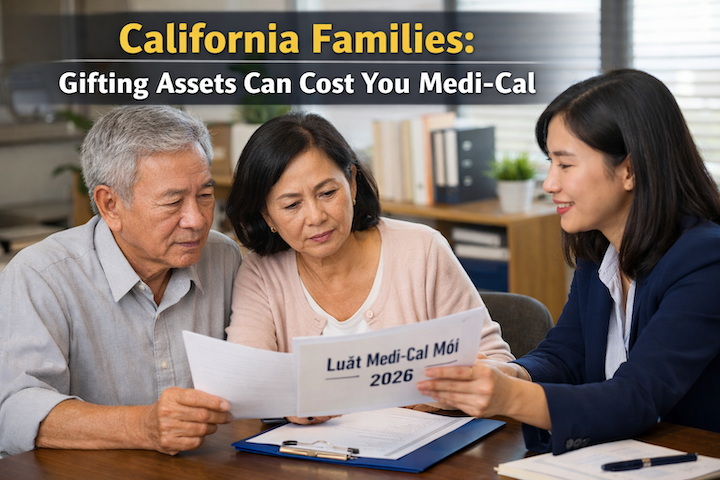 As of January 1, 2026, California has reinstated asset limits and transfer penalties for Medi-Cal long-term care. Families who misunderstand these rules—or rely on outdated information—risk losing eligibility, delaying nursing home coverage, or draining a lifetime of savings.
This article explains what changed, what still applies, and what Californians must do now to avoid serious financial trouble.
Why Medi-Cal Planning Matters for Californians
California is unique:
- Long-term care in California can cost $10,000–$14,000 per month
- Medicare does not cover extended nursing home care
- Medi-Cal is the primary safety net for long-term care for middle-class seniors—not just low-income individuals
Many retirees wrongly assume:
- “I paid taxes all my life—Medi-Cal won’t apply to me”
- “My house and savings are protected”
- “I can just give assets to my kids later”
Unfortunately, under California law, mistakes made even years earlier can come back to haunt families at the worst possible time—during illness, disability, or cognitive decline.
The 2024–2025 Gifting Window: What It Was—and Why It’s Over
What Happened in 2024–2025?
During 2024 and 2025, California temporarily:
- Eliminated asset limits for Medi-Cal eligibility
- Did not enforce transfer penalties for gifts or asset transfers
- Allowed applicants to qualify for Medi-Cal even after gifting significant assets
This led many families to:
- Gift money to children
- Transfer assets out of their name
- Reposition savings without penalty
Why This Window Closed
The state always intended this to be temporary. Beginning January 1, 2026, California law reinstated:
- Asset limits
- Transfer reviews
- Penalty periods for gifts
Anyone relying on the old rules today is relying on expired law.
Current California Medi-Cal Rules (2026 and Beyond)
1. Asset Limits Are Back
As of 2026:
- Single individual: approximately $130,000 in countable assets
- Married couple: higher combined threshold (with spousal protections)
Countable assets include:
- Cash
- Savings and checking accounts
- Investments
- Non-exempt retirement funds
- Second homes
- Certain life insurance cash values
Exempt assets may include:
- Primary residence (with limits and conditions)
- One vehicle
- Certain personal belongings
2. The 30-Month Look-Back Rule Has Returned
California now reviews:
- All gifts and asset transfers made within the prior 30 months
- Transfers for less than fair market value
This includes:
- Cash gifts to children or grandchildren
- Paying off someone else’s debt
- Adding a child’s name to property
- Transferring assets into certain trusts
- Selling assets for below market value
3. Transfer Penalties Can Delay Care—When You Need It Most
If Medi-Cal finds an improper transfer:
- You will not be denied permanently
- But you will face a penalty period
During the penalty period:
- Medi-Cal will not pay for nursing home care
- The family must pay out of pocket
Even a “small” gift can trigger months of ineligibility, easily costing tens of thousands of dollars.
The Most Common (and Dangerous) Mistakes Californians Make
Mistake #1: Gifting After 2025 “Like Before”
Many families still believe gifting is penalty-free. It is not.
Mistake #2: Adding a Child to the Home Title
This can:
- Trigger Medi-Cal penalties
- Create capital gains tax problems
- Expose the home to the child’s creditors or divorce
Mistake #3: Emptying Accounts Right Before Applying
Sudden transfers are red flags and are almost always reviewed.
Mistake #4: Assuming the Family Home Is Always Safe
While the home may be exempt during life, it can still be subject to:
- Estate recovery
- Eligibility complications
- Improper transfer rules
Important Clarification: What About Gifts Made in 2024–2025?
Good news:
- Transfers legally completed during 2024–2025 generally will not be penalized
- They are not counted in the look-back
However:
- Documentation matters
- Improperly recorded or unclear transfers may still cause disputes
This is why records and timing are critical.
What Californians Should Do Now (Action Checklist)
If You Are 60+ or Caring for Aging Parents
- Stop all gifting until rules are reviewed
- Do not transfer property without legal advice
- Get a full asset inventory
- Understand which assets are countable
- Plan at least 30 months ahead
If Long-Term Care Is a Possibility in the Next 2–3 Years
- Explore permitted spending strategies
- Understand exempt asset conversions
- Review spousal protection rules
- Consider estate planning that aligns with Medi-Cal law
Why This Matters Especially for HuuTri.org Readers
For many Vietnamese-American and immigrant families:
- Gifting assets to children is cultural and well-intentioned
- Multigenerational planning is common
- Conversations about aging and care are often delayed
Unfortunately, California law does not recognize intent—only timing and structure.
A loving gift today can become a financial disaster tomorrow if it interferes with Medi-Cal eligibility when care is urgently needed.
Final Takeaway: Planning Early Is No Longer Optional
The Medi-Cal gifting window is closed.
The rules are stricter.
The costs of mistakes are higher than ever.
For Californians approaching retirement, the best protection is:
- Accurate information
- Early planning
- Understanding that Medi-Cal is not welfare—it is long-term care insurance for the middle class
HuuTri.org will continue to provide clear, practical guidance so our readers can protect their dignity, their savings, and their families—before a crisis forces rushed decisions.
-Phan Trần Hương-
Sources & Further Reading
(For California residents, families, and caregivers)
🔹 California Department of Health Care Services (DHCS) – Official Medi-Cal Authority
Medi-Cal Asset Limits & Eligibility (DHCS)
https://www.dhcs.ca.gov/services/medi-cal/eligibility/Pages/Asset-Limits.aspx
Official California guidance on Medi-Cal asset limits, including what assets are countable and exempt after the 2026 reinstatement.
Medi-Cal Long-Term Care Eligibility
https://www.dhcs.ca.gov/services/medi-cal/Pages/Long-Term-Care.aspx
Overview of Medi-Cal eligibility rules for nursing home and long-term care services, including medical and financial requirements.
🔹 Gifting & Asset Transfer Rules
DHCS – Transfers of Assets (Medi-Cal Policy)
https://www.dhcs.ca.gov/services/medi-cal/eligibility/Pages/Transfers-of-Assets.aspx
Explains how Medi-Cal reviews gifts and asset transfers, applies the 30-month look-back period, and calculates penalty periods.
🔹 Consumer & Senior Advocacy Resources
California Advocates for Nursing Home Reform (CANHR) – Medi-Cal Information
https://canhr.org/medi-cal/
A trusted nonprofit resource explaining Medi-Cal eligibility, asset limits, and transfer penalties in plain language for seniors and families.
CANHR – Medi-Cal Asset Limits & Look-Back Rules
https://canhr.org/medi-cal/medi-cal-eligibility-asset-limits/
Detailed explanation of California’s reinstated asset limits and transfer review rules following the end of the 2024–2025 policy window.
🔹 Legal Analysis of the 2024–2025 Gifting Window
Keyes Law Group – The Medi-Cal Gifting Loophole (California)
https://keyeslawgroup.com/blog/the-medi-cal-gifting-loophole-why-2025-is-a-once-in-a-lifetime-window/
Legal analysis explaining why the 2024–2025 Medi-Cal gifting window was temporary and why gifting after 2025 carries significant risk.
🔹 Nursing Home Cost Data (Penalty Divisor Reference)
Genworth – Cost of Care Survey (California)
https://www.genworth.com/aging-and-you/finances/cost-of-care.html
Widely cited cost-of-care survey used by elder law attorneys and planners to estimate average California nursing home costs (≈ $11,500/month).
🔹 Tax Implications of Property Transfers
IRS – Capital Gains and Sale of Home
https://www.irs.gov/taxtopics/tc701
Explains capital gains tax rules that may apply when a home is transferred or sold, especially when children are added to the title.
IRS Publication 551 – Basis of Assets (Step-Up in Basis)
https://www.irs.gov/publications/p551
Authoritative IRS guidance on asset basis and “step-up in basis,” critical for understanding tax consequences of early property transfers.
🔹 Finding Qualified Elder Law Attorneys
National Academy of Elder Law Attorneys (NAELA)
https://www.naela.org
Professional association of attorneys specializing in Medi-Cal/Medicaid planning, long-term care, and elder financial protection.
Editorial Note for HuuTri.org Readers
- California Medi-Cal rules differ from Medicaid rules in other states
- Many online articles written before 2026 are now outdated
- Always verify publication dates when researching Medi-Cal topics
📌 These resources are for educational purposes only and do not replace individualized legal advice.