
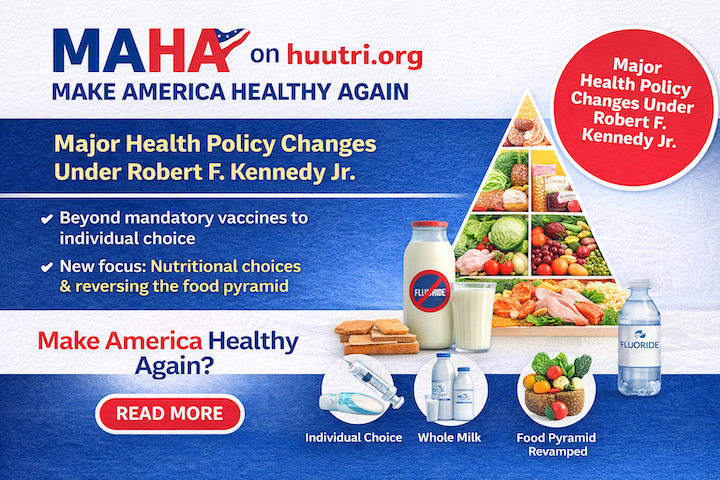
Reducing the number of childhood vaccines, revising the COVID vaccination program, stopping the addition of fluoride to public water systems, overturning the traditional food pyramid, advising caution when using pain relievers like Tylenol, and conducting more comprehensive research on the rising rates of autism in children—these and many other topics are part of the agenda being pursued by Secretary of Health and Human Services Robert F. Kennedy Jr. under the initiative “Make America Healthy Again” (MAHA).
 For many years, when the government spoke, the public followed without question. When told to get the first shot, long lines formed. Then came the second, the third… and so on. Every year there seemed to be another booster—almost without end. Everyone knows that when spring arrives with pollen filling the air—runny noses, itchy red eyes, constant sneezing—the seasonal flu shot appears, strongly recommended to prevent severe illness or even death. Scientists would explain that the virus had mutated and that a new formula was needed.
In short, from birth to old age, no one can remember how many vaccines for dozens of diseases have entered their bodies. Under the current administration’s approach, that era of blanket vaccination mandates is intended to end—the long-standing practice of requiring people to receive a wide array of lab-developed vaccines.
Naturally, overturning decades of vaccination policy has sparked resistance from many in the scientific establishment who strongly defend mandatory immunization for newborns and adults. This has left many citizens confused: all are scientists, yet they disagree. Who should we believe?
It must be emphasized that the new guidelines on vaccines, food policy, and nutrition are recommendations, not mandates. Health decisions are meant to remain in the hands of individuals and parents, in consultation with medical professionals. Health officials now avoid the word “mandate”—which many associate with pharmaceutical industry influence—and instead emphasize “individual freedom.”
It is well known that politicians are influenced by lobbyists and campaign donors. Similarly, pharmaceutical products must receive FDA approval, a process often accompanied by visible and behind-the-scenes lobbying. No company wants to see its stock value fall.
In an interview, Secretary RFK Jr. said:
“As the head of Health and Human Services, I must tell the truth to the public and allow people to decide for themselves. But for this agency to function effectively, it must earn public trust.”
Childhood Vaccination
Beginning in 2026, the CDC recommends that children receive 11 routine vaccines instead of 17. This change is justified by noting that many other developed countries also use an 11-shot schedule. However, children in high-risk categories may still be considered individually for vaccines such as Hepatitis A and B, oral rotavirus vaccine, seasonal influenza, and RSV. These are no longer blanket requirements for all newborns.
The American Academy of Pediatrics (AAP) strongly opposes this change, calling it dangerous. Dr. Sean O’Leary, chair of the AAP Committee on Infectious Diseases, wrote in Pediatrics:
“At this time, the American Academy of Pediatrics no longer endorses the CDC’s recommended immunization schedule.”
The AAP argues that reducing vaccines could lead to higher rates of hospitalization and death among children. Meanwhile, the CDC has also relaxed its guidance on the HPV vaccine, saying that two or three doses may not be necessary in all cases.
Although the federal government has issued new recommendations, individual states and school districts still have authority to require certain vaccinations for school attendance to prevent outbreaks.
The Food Pyramid
For years, public school students were served only low-fat or fat-free milk at lunch. That policy is ending. Students will now be offered whole milk, based on the view that growing brains and bones need full nutrition. Schools must still provide alternatives for children with dairy allergies.
This shift is part of a broader revision of the food pyramid. Secretary RFK Jr. argues that protein and unsaturated fats are essential nutrients that were overly restricted in past guidelines. The new pyramid—literally inverted—encourages fresh vegetables, fruits, meats, nuts, and whole grains. This contrasts with the old model, where bread, cereals, rice, pasta, and refined carbohydrates formed the base.
Both old and new guidelines agree on reducing sugar and salt.
According to the FDA, the U.S. sees 15,000 new diabetes cases annually, and obesity has risen from 14% in 1980 to 40% today. About 120 million Americans have high blood pressure, partly due to poor diet. Alarmingly, 76% of young adults do not meet health standards for military service.
The FDA recommends cutting back on sugar, processed foods, and refined carbohydrates. Fast foods and processed meals, though convenient and tasty, contribute to long-term health problems.
Vietnamese Americans should note that bánh mì sandwiches, beloved worldwide, are made with refined white bread and processed meats high in salt and additives. White rice, a staple of Vietnamese meals, also ranks at the bottom of the new pyramid. Though rice contains no sugar, the body converts its starch into sugar during digestion, raising blood glucose levels.
In summary, the new food pyramid represents a major shift in decades of nutrition policy. The message is simple: the more we avoid unhealthy foods, the longer and healthier we may live—while reducing the burden of medical costs on ourselves, our families, and society.
But reality is not so simple. When Tết approaches, the Kitchen Gods prepare to return to Heaven, and festive foods—sticky rice cakes, pickled onions, sweets, and celebratory drinks—fill every market. How can anyone resist?
—Đức Hà—
Written exclusively for HuuTri.org