
“Cheers! Cheers! Cheers!”
“It’s been a while since we’ve had a drink.
So let’s make this one last!”
And once again, the table erupts with raised glasses and a loud chorus of “Cheers! Cheers! Cheers!”
This scene—a lively drinking party—is something I witnessed firsthand during a recent visit back to Vietnam. In Vietnamese business culture, these kinds of gatherings are common. People drink to seal deals, celebrate signed contracts, network professionally, or simply toast birthdays.
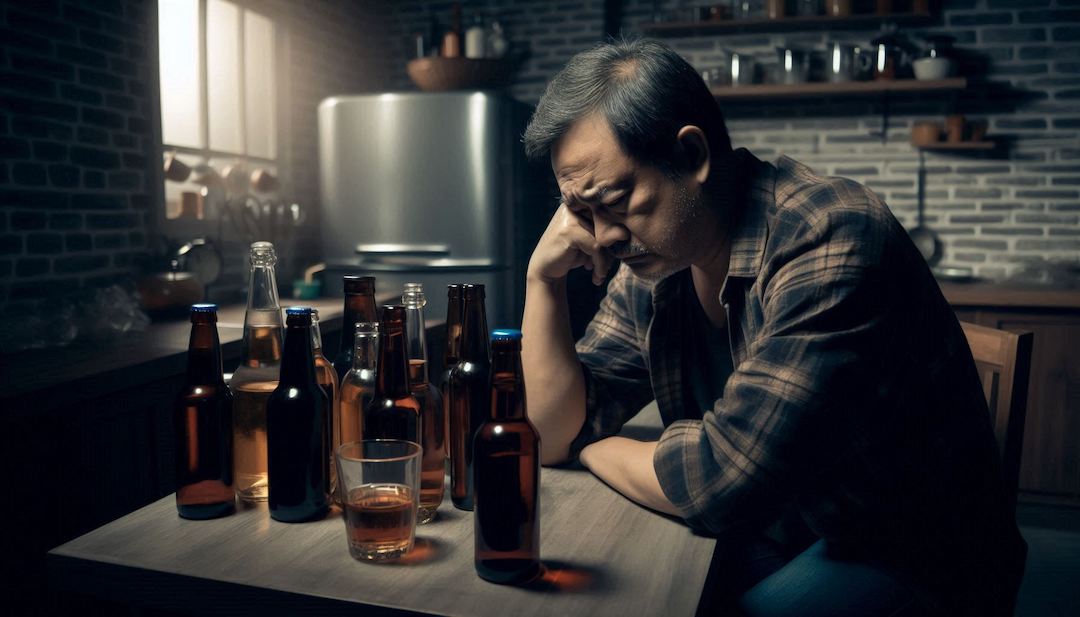
Drinking has become inseparable from social and business interactions. But what follows—broken homes, divorce, neglected children—is the painful reality many families face as a result.
These are just the immediate consequences. What about the long-term impact? Excessive drinking doesn’t just ruin the life of the drinker—it can devastate the lives of their children and grandchildren. That’s why there’s a Vietnamese proverb that says:
“When the father eats salty food, the child gets thirsty.”
We might even add: “And the grandchild wets the bed.”
The following story is not unusual—it’s all too common in families where the father falls into a life of addiction: drinking, gambling, womanizing, or drug abuse. In Vietnam, we call these destructive vices the “four walls of ruin.”
A Broken Legacy
Mr. Công was the father of five—four boys and one girl. He was an alcoholic deep in the final stages of addiction, unable to function without alcohol. Over time, three of his children and one grandchild developed developmental delays and eventually showed signs of addiction themselves.
Medically, we know that a mother’s drinking during pregnancy can directly harm the fetus, potentially leading to Fetal Alcohol Syndrome—a condition that damages the baby’s brain and nervous system, often resulting in intellectual disabilities, birth defects, and early death.
While a father’s drinking doesn’t directly impact the fetus, it profoundly affects children’s upbringing. A father who models destructive behavior contributes to a toxic family dynamic, impairs education, and damages relationships through emotional absence or abuse.
So, were Mr. Công’s children and grandchild victims of genetics, environment, or both? Science may provide more precise answers, but the lesson is clear: parents have a profound responsibility to their children.
A Different Kind of Father
Not all fathers fit this tragic mold. Many are the backbone of their families—hardworking, selfless, and quietly heroic. As children grow, their view of their father evolves:
- Age 4: “My dad can do anything!”
- Age 5: “My dad knows a lot!”
- Age 6: “My Dad is smarter than your dad.”
- Age 8: “Dad doesn’t know everything.”
- Age 10: “Dad’s different than he used to be.”
- Age 12: “Dad doesn’t know a thing! He’s too old!”
- Age 14: “Dad’s out of touch. Forget him.”
- Age 21: “Dad is clueless about the world today.”
- Age 25: “Dad’s old-fashioned. What does he know?”
- Age 30: “Maybe I should ask Dad for advice.”
- Age 35: “I wonder what Dad would do.”
- Age 40: “This is hard… I need to talk to Dad.”
- Age 50: “Dad’s gone. I wish I’d understood him better.”
This arc shows the rediscovery of wisdom and appreciation for a father’s role—but it also underscores what’s lost when that father falls into addiction.
The Scope of Alcohol Abuse
Alcohol itself isn’t the villain. When enjoyed responsibly, it can even offer some health benefits—like a glass of red wine for heart health. But excessive drinking, especially hard liquor, can destroy lives.
In the U.S., an estimated 28.9 million people aged 12 and up had Alcohol Use Disorder (AUD) in the past year. That’s 10.2% of the population—12.1% of males and 8.3% of females. Alarmingly, only 1 in 10 alcoholics receive treatment.
The number of deaths related to alcohol-related liver disease (like cirrhosis) has risen significantly—from 4.3 per 100,000 in 2000 to 7.3 per 100,000 in 2019.
In Vietnam, alcohol addiction is even more widespread. In 2021, 64% of men and 10% of women were classified as having alcohol dependency. WHO estimates that 31% to 50% of alcohol abuse cases are underreported. More than 40,800 deaths annually in Vietnam are alcohol-related, accounting for 7.5% of total deaths.
According to WHO, the most commonly consumed alcoholic beverage in Vietnam is beer (91.5%), followed by hard liquor like whiskey, vodka, rum, gin, and tequila (7.7%), and wine or fruit-based alcohol (0.8%). In terms of global rankings, Vietnam is #25 for alcohol consumption, with an average of 11.4 liters per person per year.
The Ripple Effects of Alcohol
Alcohol changes people. It doesn’t just hurt the drinker—it impacts spouses, children, friends, and communities. It erodes trust, destroys intimacy, and undermines dignity.
Its consequences stretch beyond the home—into workplaces, schools, and public spaces. Health-wise, alcohol abuse is linked to heart disease, liver failure, cancer, loss of coordination, and increased risk of accidents.
Mentally and emotionally, alcoholism leads to memory loss, cognitive decline, anxiety, depression, insomnia, sexual dysfunction, and in severe cases, violence or suicide.
There’s a powerful reminder in the Book of Sirach (30:4):
“When a father dies, he is not really dead, for he leaves behind children like himself.”
So what do we leave behind? A legacy of love—or a trail of destruction?
Is Recovery Possible?
Even the most addicted person has moments of clarity. In those moments, there’s hope. Recovery begins with recognizing the need for change and avoiding the environments or people that trigger the addiction—be it stress, failure, loneliness, or peer pressure.
Here are several paths to recovery:
- Behavioral therapy and psychological counseling
- Medical detox and supervised withdrawal treatment
- Peer support from those who’ve successfully quit
- Reconnection with family—your spouse, children, and parents
- Self-love and rediscovery of personal worth and dignity
- Avoiding temptation—don’t put yourself in the presence of alcohol
Final Thoughts
Whether it stems from a mother’s womb or a father’s example, alcoholism wreaks havoc on families for generations. Most addicts don’t even acknowledge they’re addicted. That’s why prevention is key.
If you’re struggling, take the first courageous step toward healing. Because while drinking is easy—quitting takes strength.
Trần Mỹ Duyệt, Ph. D in Psychology