
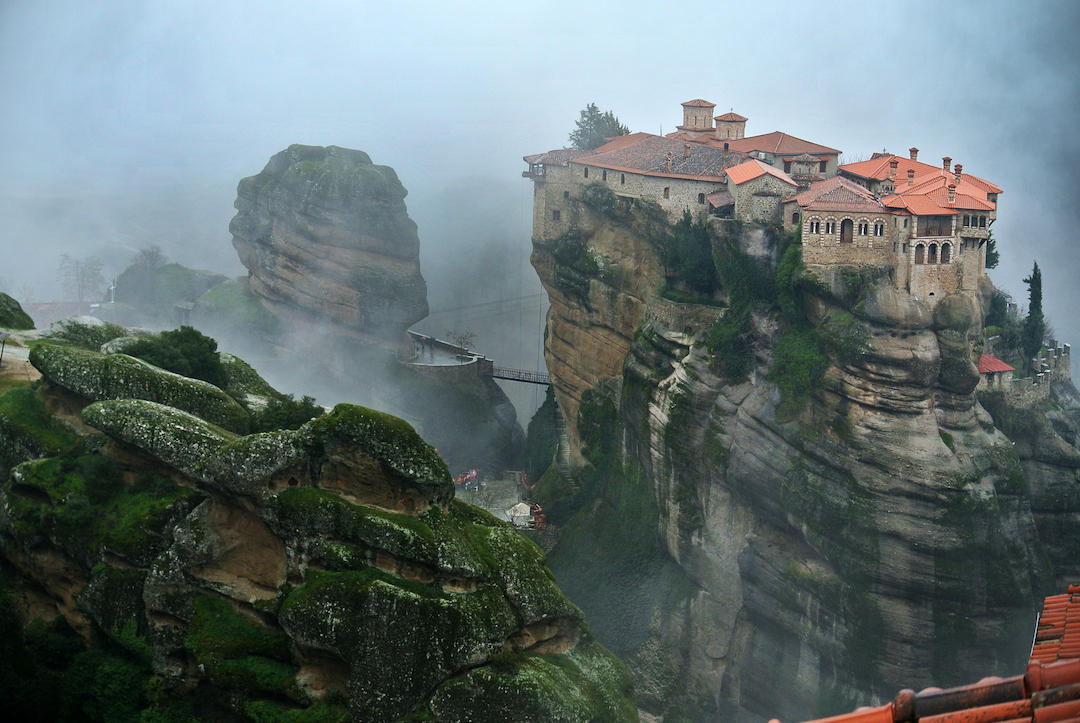
The first time I saw Meteora, I had to blink twice. There they were — stone giants, rising out of the Thessalian Plain like watchful sentinels, their peaks crowned by monasteries that seemed to float between heaven and earth. No photo can truly prepare you for that first glimpse; Meteora is less of a destination and more of a revelation.
Arrival in Kalambaka
The train from Athens wound through the countryside, past olive groves and sleepy villages, until the towering cliffs appeared in the distance. Kalambaka, the town at Meteora’s base, is charming and unhurried, with red-tiled roofs and locals sipping coffee in small squares. This is where the journey begins — a gentle prelude to the spiritual and visual drama waiting above.
Climbing Toward the Sky
The drive to the monasteries is breathtaking, with roads that twist and turn, revealing new vistas at every bend. Once you reach the base of each monastery, the climb begins. Steps carved directly into the rock lead you up, and with every step, the view expands until the plains seem to fall away beneath you.
At the entrance, a wooden bridge leads across to the gate. In the past, monks used retractable rope ladders and baskets hoisted by windlasses to enter. Standing there, imagining the perilous climb of those early monks, I felt the same mixture of fear and faith they must have felt centuries ago.
A History Written in Stone
Meteora’s history begins with hermits who sought solitude here in the 11th century, carving small caves into the cliffs for prayer and contemplation. By the 14th century, as the Byzantine Empire weakened and invasions threatened, larger monasteries were built on the most inaccessible peaks to provide safety and seclusion.
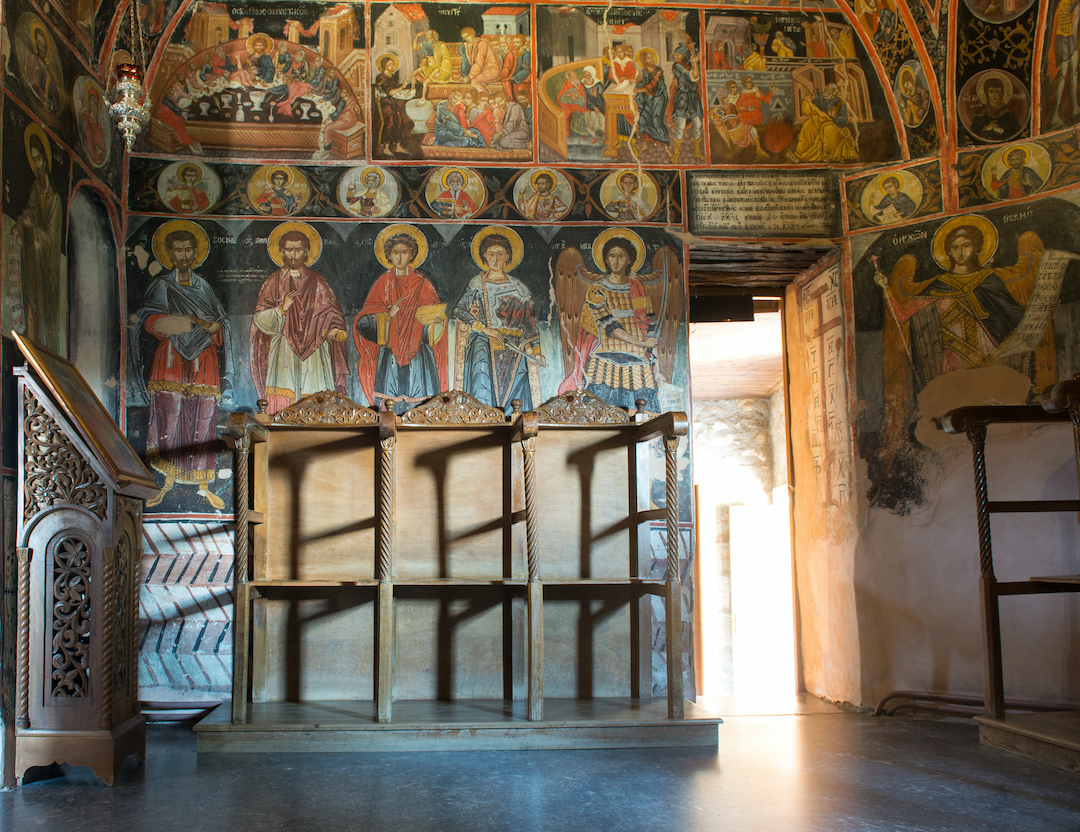
At its peak, Meteora had 24 monasteries. Today, six remain active — St. Stephen’s, Varlaam, Rousanou, Holy Trinity, Great Meteoron, and St. Nicholas Anapafsas — each a masterpiece of Byzantine architecture. Inside, the frescoes glow with gold, depicting Christ, the Virgin Mary, and saints, turning the walls into sacred storybooks.
Unlike Gothic Catholic cathedrals with soaring spires, Meteora’s churches seem to grow organically out of the rock, blending with nature rather than dominating it.
The Monastic Way of Life
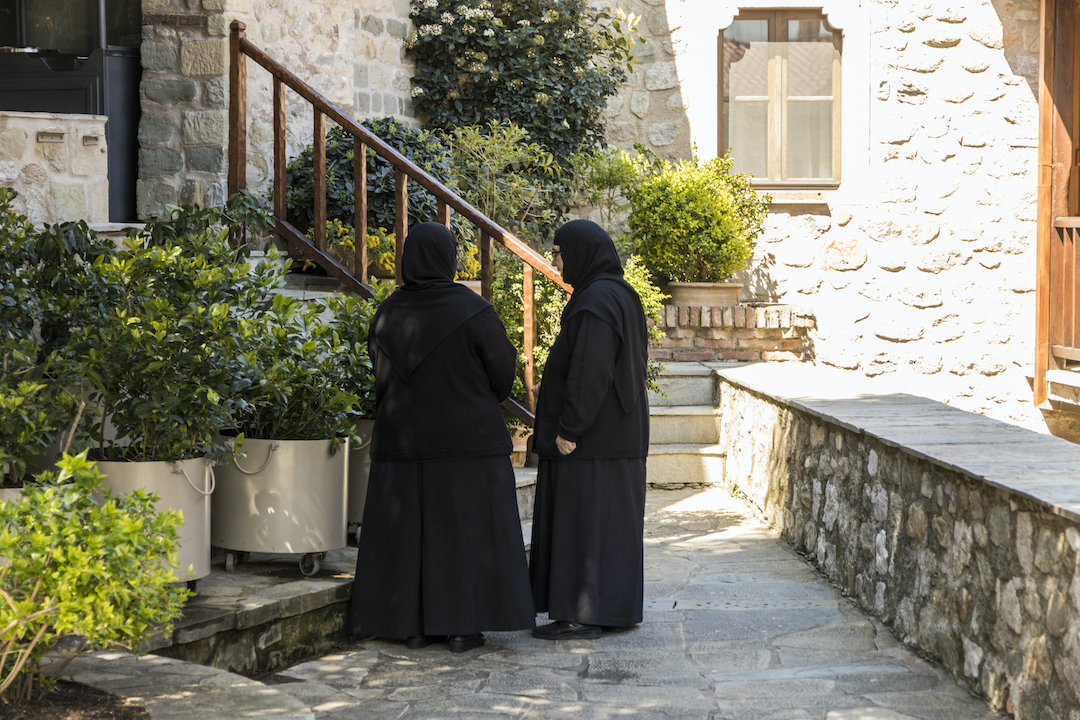
Visitors often wonder: are the priests married? In the Orthodox Church, parish priests may marry before ordination, but monks do not. They take vows of celibacy and live a life of prayer, work, and contemplation. Their seclusion is not an escape from the world but a way to rise above it spiritually.
Daily life here is simple: early morning liturgies, tending gardens, restoring manuscripts, and maintaining the stone structures that have withstood centuries of wind and war.
Building the Impossible
The construction of these monasteries was an act of faith as much as engineering. Every stone, every beam had to be hauled up by rope, often while hanging over dizzying drops. For centuries, the only way to enter was by net or retractable ladder.
Could we build Meteora today? Yes — with helicopters, cranes, and reinforced concrete — but the cost would likely run into hundreds of millions of dollars. Yet the real value of Meteora is not in the stonework but in the devotion that inspired it. These monasteries are monuments to the idea that man can rise above the world — literally and spiritually.
Experiencing Meteora
When the sun begins to set, the cliffs glow orange and the valley fills with shadows. The bells of the monasteries ring, echoing through the mountains, and the entire scene feels suspended in time.
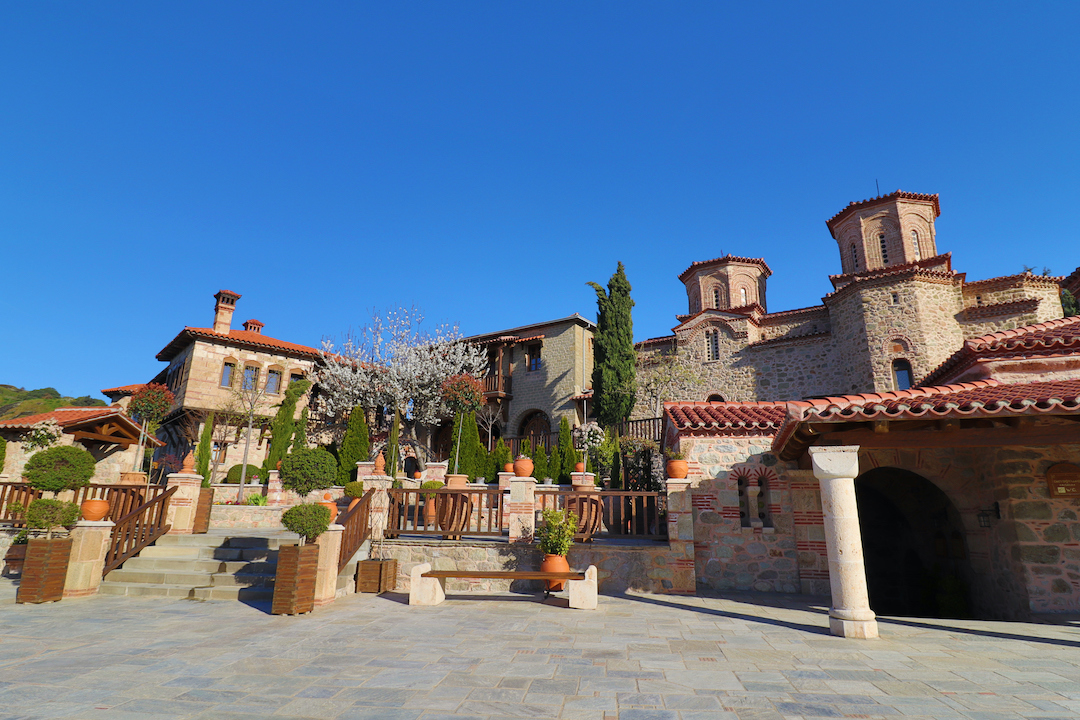
Take your time here. Wander the courtyards. Sit in silence in a chapel. Light a candle. Look out over the valley and breathe in the stillness. Meteora is not just a sight to see — it is a place to feel.
Practical Travel Tips for Meteora
Best Time to Visit
- Spring (April–June): Mild weather, blooming wildflowers, fewer crowds.
- Fall (September–October): Stunning foliage and soft golden light, perfect for photography.
- Summer: Hot and busier, but early mornings are peaceful.
- Winter: Quiet and atmospheric — some monasteries may close earlier.
How to Get There
- By Train: Take the direct train from Athens or Thessaloniki to Kalambaka (4–5 hours).
- By Car: Driving gives you the freedom to explore at your own pace.
- Guided Tours: Many day trips and multi-day tours are available from Athens.
Entrance Fees & Hours
- Each monastery charges a small entrance fee $3.5/per (around €3 per person).
- Check hours in advance — some close on certain weekdays.
Dress Code
As these are active monasteries, modest dress is required:
- Women: Skirts below the knee (some monasteries provide wraps), shoulders covered.
- Men: Long pants, no sleeveless shirts.
Photography
Photos are allowed outside, but respect no-photo rules inside chapels.
Tips for the Climb
- Wear sturdy shoes — there are many steps.
- Bring water and a hat, especially in summer.
- Pace yourself — the views are worth every step.
-Lê Nguyễn Thanh Phương-