
As Congress approaches its year-end recess, a critical showdown over health care funding and policy remains unresolved — and the outcome could have meaningful consequences for seniors, retirees, and those approaching retirement. At the center of the debate are decisions that may affect Affordable Care Act (ACA) premiums, Medicaid eligibility and cost-sharing, and Medicare provider access and out-of-pocket costs beginning in 2026.
While no immediate cuts to Medicare benefits are scheduled, the failure to pass health care legislation before Congress breaks could create higher costs, reduced affordability, and coverage uncertainty for millions of older Americans. Below is what is at stake, who is affected, and what may realistically happen before the end of the year.
1. Affordable Care Act (ACA): A Major Risk for Pre-65 Retirees
What Is Happening
The enhanced ACA premium tax credits — originally expanded during the pandemic — are scheduled to expire on December 31, 2025 unless Congress acts. Recent Senate votes to extend these subsidies failed to reach the required threshold, leaving no guaranteed fix in place.
Who Is Most Affected
- Retirees ages 60–64 who are not yet eligible for Medicare
- Early retirees relying on ACA Marketplace plans for themselves or their spouses
- Self-employed older adults without employer coverage
What Happens If Congress Does Nothing
- Monthly premiums could rise sharply in 2026
- Some retirees may pay hundreds to thousands of dollars more per year
- Health plans could become unaffordable, forcing some to delay retirement or reduce coverage
For many older adults, ACA coverage has served as a crucial “bridge” to Medicare at age 65. The expiration of enhanced subsidies would weaken that bridge substantially.
2. Medicaid: Quiet Changes With Long-Term Effects
What Has Already Changed
Earlier this year, federal legislation introduced structural changes to Medicaid, including:
- More frequent eligibility reviews
- Expanded work or activity requirements for some adults
- New or higher co-payments in certain states
Why Seniors Should Pay Attention
Even when seniors are not directly targeted, Medicaid changes matter because:
- Medicaid helps fund long-term care, nursing homes, and home-based services
- Many seniors are dual-eligible (covered by both Medicare and Medicaid)
- Cuts or restrictions can strain hospitals and providers that serve older adults
Reduced Medicaid funding often leads to fewer services, longer wait times, and increased pressure on Medicare providers.
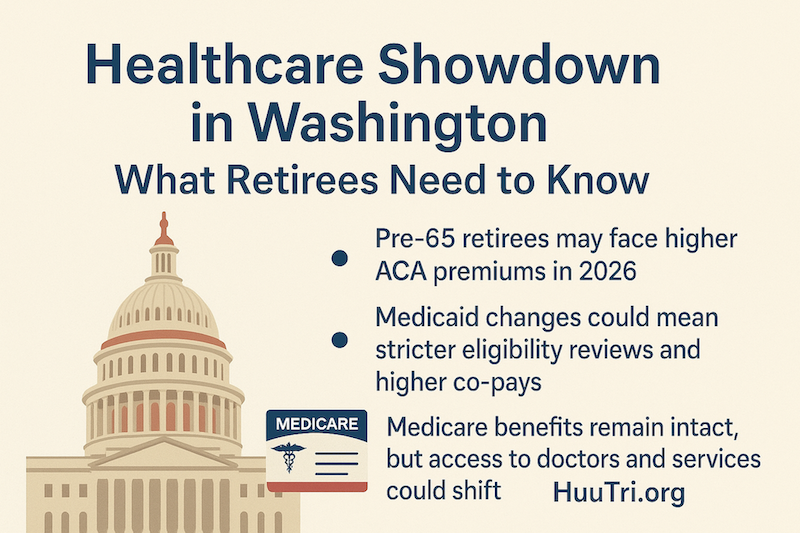
3. Medicare: Benefits Are Stable, but Access Could Shift
What Is NOT on the Table
- No proposals currently eliminate Medicare Part A or Part B
- No direct reductions to guaranteed Medicare benefits are scheduled for 2026
What Is Being Debated
- Provider payment rates (labs, diagnostics, outpatient services)
- Budget offsets that could indirectly affect access to care
Why This Matters
If provider reimbursements fall:
- Some providers may limit the number of Medicare patients they accept
- Access to diagnostics or specialized care could become more difficult
- Seniors may face longer wait times or fewer choices
These changes affect access, not eligibility — but access is just as critical for retirees managing chronic conditions.
4. Co-Pays, Premiums, and Out-of-Pocket Costs: What Could Rise
If No Agreement Is Reached Before Recess
- ACA enrollees: Higher premiums starting January 2026
- Medicaid beneficiaries: More frequent renewals and possible co-pays
- Medicare recipients: Potential indirect cost increases through reduced provider participation
None of these changes are guaranteed — but uncertainty itself makes financial and retirement planning more difficult.
5. What Is Likely Before Congress Breaks?
Current Outlook
- Senate votes on healthcare extensions have failed
- The House has proposed alternatives that do not fully preserve ACA subsidies
- Partisan divisions make a last-minute comprehensive deal unlikely
Most Realistic Scenario
- No major health care fix before recess
- Temporary uncertainty extending into early 2026
- Potential for retroactive or partial solutions later — but no guarantee
For retirees, this means planning conservatively and preparing for higher costs until clarity emerges.
What Seniors and Retirees Should Do Now
If You Are on Medicare
- Monitor provider participation and access to care
- Review Medicare Advantage or Medigap plans carefully during enrollment periods
If You Are Retired but Not Yet 65
- Budget for possible ACA premium increases
- Consider timing of retirement, income withdrawals, or Medicare enrollment strategies
If You Rely on Medicaid or Are Dual-Eligible
- Respond promptly to renewal notices
- Confirm eligibility requirements in your state
- Seek assistance early if coverage is at risk
The healthcare debate unfolding in Washington is not abstract politics — it directly affects monthly premiums, access to care, and retirement affordability. While Medicare itself remains intact, ACA uncertainty and Medicaid tightening pose real risks for older Americans, especially those caught between retirement and Medicare eligibility.
As Congress heads toward a break without a clear resolution, retirees should stay informed, plan cautiously, and be prepared for changes in 2026.
-Phan Trần Hương-
Further Reading & Official Resources
For readers who want to follow developments closely or verify details through official and non-partisan sources:
- Centers for Medicare & Medicaid Services (CMS):
https://www.cms.gov - Medicare Official Site:
https://www.medicare.gov - HealthCare.gov (ACA Marketplace):
https://www.healthcare.gov - Kaiser Family Foundation (KFF) Health Policy Analysis:
https://www.kff.org - Medicare Rights Center (Senior Advocacy):
https://www.medicarerights.org - Congressional Budget Office (CBO):
https://www.cbo.gov - National Council on Aging (NCOA):
https://www.ncoa.org