
Why It Matters: Strengthening the Political Foundation of a New Republic
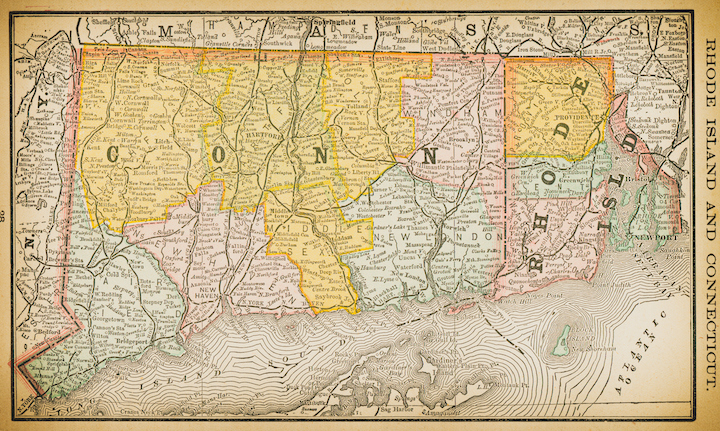
In the winter of 1788, as the United States was still learning how to govern itself, Connecticut quietly took a decisive step that helped stabilize a fragile new nation. On January 9, 1788, Connecticut ratified the U.S. Constitution, becoming the fifth state to join the Union. There were no parades or cannon fire—but the significance of this decision would echo through American history.
 At the time, the United States was less than a decade removed from the Revolutionary War. The Articles of Confederation had proven too weak to hold the states together effectively. The proposed Constitution offered a stronger federal framework, but many feared centralized power. Trust was fragile. Unity was uncertain.
Connecticut’s ratification mattered because it came from experience.
Often called “The Constitution State,” Connecticut had already developed a tradition of self-governance long before independence. Its Fundamental Orders of 1639 are widely regarded as one of the first written constitutions in the Western world. For generations, Connecticut residents were accustomed to balancing local authority with collective responsibility—a mindset the young republic desperately needed.
When Connecticut lawmakers debated the Constitution, they did so pragmatically. They recognized its flaws, but also understood the dangers of disunity. Their support signaled confidence that the Constitution could evolve, especially with the promise of amendments protecting individual liberties—what would later become the Bill of Rights.
This decision helped build momentum.
With each additional state ratifying the Constitution, skepticism began to soften. Connecticut’s approval reassured both small and large states that compromise was possible. It reinforced the idea that a stronger federal government could coexist with state autonomy—a principle that remains central to American democracy today.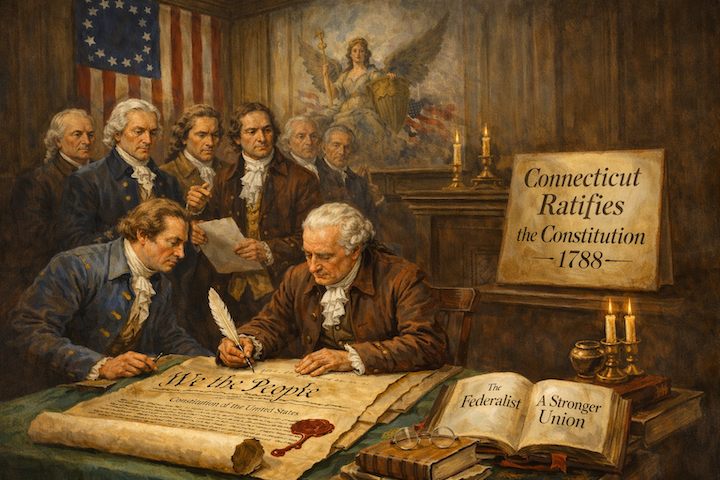
Connecticut’s influence extended beyond ratification. Earlier, during the Constitutional Convention of 1787, the state played a pivotal role in crafting the Connecticut Compromise, which created a bicameral legislature—balancing representation by population in the House and equal representation in the Senate. This compromise made the Constitution acceptable to both large and small states and prevented the Convention from collapsing.
For modern readers, especially older Americans reflecting on civic legacy, Connecticut’s story is a reminder that nation-building is often shaped by steady judgment rather than dramatic moments. The strength of the United States did not come from unanimous agreement, but from thoughtful participation and a willingness to invest in a shared future.
In choosing to ratify the Constitution, Connecticut helped anchor the political foundation of a republic still finding its footing—demonstrating that durability, compromise, and foresight are as vital to democracy as revolution itself.
-Lê Nguyên Vũ-
Sources for Further Reading
- National Archives — The Ratification of the Constitution
https://www.archives.gov/founding-docs/constitution-ratification - Connecticut State Library — Connecticut and the U.S. Constitution
https://ctstatelibrary.org/connecticut-history/connecticut-and-the-constitution/ - Library of Congress — Creating the United States
https://www.loc.gov/exhibits/creating-the-united-states/ - History.com — Connecticut Ratifies the Constitution
https://www.history.com/this-day-in-history/connecticut-ratifies-the-constitution