
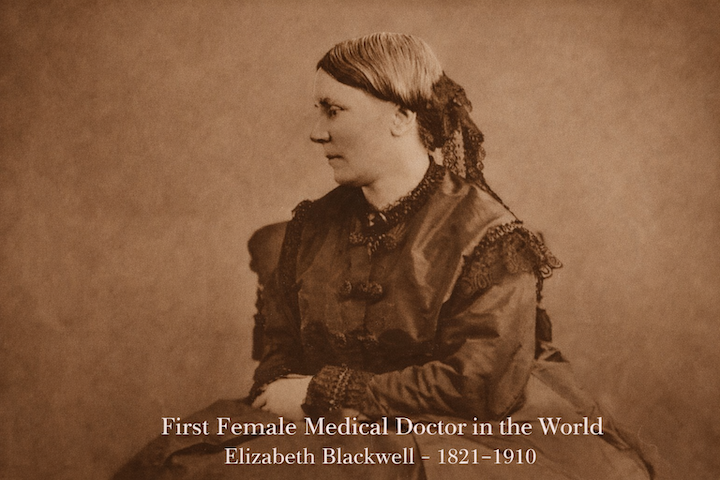
She opened the medical profession to women worldwide and permanently reshaped how society views women as healers, professionals, and leaders in healthcare.
A World That Excluded Women from Medicine
In the early 19th century, medicine was an exclusively male domain. Social norms across Europe and the United States firmly held that women were intellectually weaker, emotionally unstable, and morally unsuited for scientific study—particularly anatomy and surgery, which were considered improper for “ladies.”
Several barriers kept women out of medical schools:
- Cultural beliefs: Women were expected to focus on domestic roles—marriage, motherhood, and caregiving—rather than professional careers.
- Moral objections: Studying the human body, especially male anatomy, was deemed indecent for women.
- Institutional exclusion: Medical schools explicitly barred female applicants, often without written policies—custom alone was enough.
- Professional resistance: Male physicians feared competition and believed women would undermine the authority of the profession.
Ironically, women already served as healers—midwives, nurses, herbalists—but formal medical education and credentials were denied to them.
What Sparked Elizabeth Blackwell’s Interest in Medicine
Elizabeth Blackwell did not initially dream of becoming a physician. The turning point came when a close female friend, dying from a painful illness, confided that her suffering might have been eased had she been treated by a woman doctor. This deeply personal moment transformed Blackwell’s outlook.
She later wrote that the idea of studying medicine first felt “repulsive,” shaped by the same social conditioning as everyone else. But her sense of justice, combined with intellectual curiosity and moral conviction, gradually overcame that hesitation. Medicine became, for her, not merely a career—but a mission.
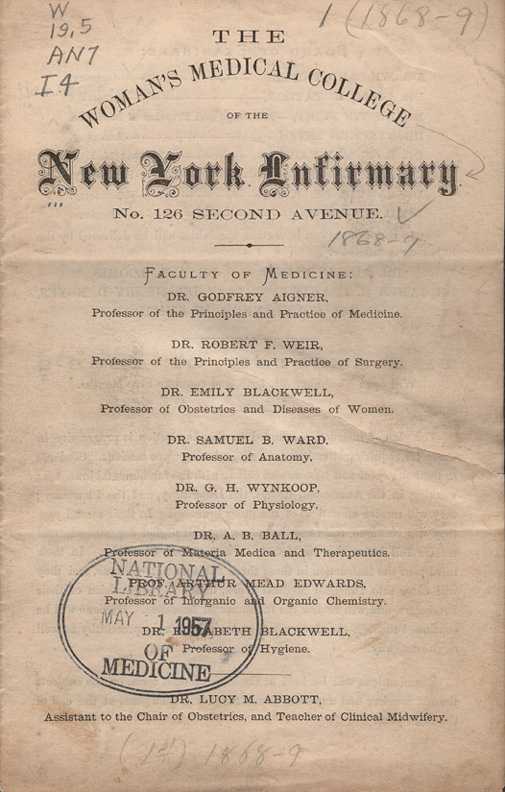 Overcoming Prejudice: An Unlikely Admission
Between 1847 and 1849, Elizabeth Blackwell applied to more than 20 medical schools and was rejected by all—except one.
Her acceptance to Geneva Medical College in New York came almost by accident. The all-male student body was asked to vote on whether to admit her, assuming the request was a joke. They voted “yes” unanimously—thinking it was humorous. When Blackwell arrived, the joke became reality.
Her challenges did not end there:
- She was ostracized by classmates and excluded from laboratory demonstrations.
- Professors initially refused to teach her, uncomfortable with her presence.
- Local townspeople treated her as a curiosity—or worse, a moral threat.
Yet Blackwell persevered with discipline and excellence. On January 23, 1849, she graduated first in her class, becoming the first woman in the United States—and one of the first in the modern world—to earn a medical degree.
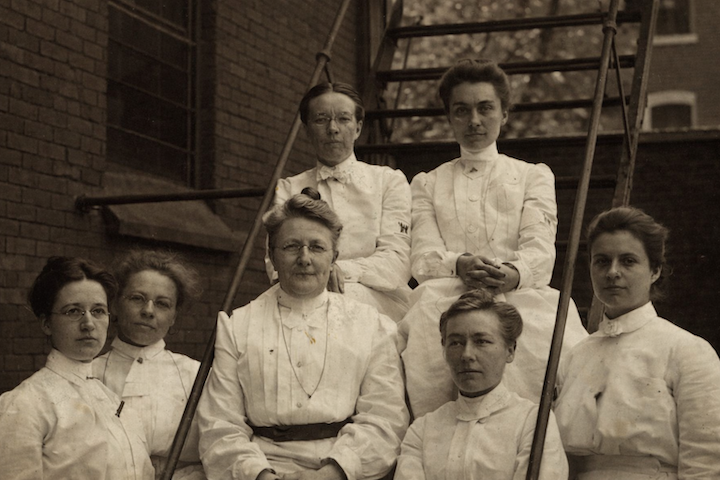
Redefining Medicine and Women’s Healthcare
Elizabeth Blackwell’s achievement had effects far beyond her own career.
1. Opening Doors for Women Physicians
Her success proved that women were fully capable of mastering medical science. Within decades, women’s medical colleges emerged in the U.S. and Europe, and coeducational medical schools slowly followed.
2. Transforming Care for Women Patients
Before Blackwell, many women avoided medical treatment due to embarrassment or mistrust of male doctors—especially for reproductive and gynecological issues. Women physicians brought dignity, empathy, and access to care that had long been denied.
3. Advancing Public Health and Prevention
Blackwell emphasized hygiene, preventive medicine, and moral responsibility in healthcare—ideas that later became central to modern public health. She linked medicine not only to curing disease but to improving social conditions.
4. Changing How Society Viewed Women
Perhaps most profoundly, Blackwell’s life challenged the belief that women should remain on the margins of intellectual and professional life. She became a symbol of women’s capacity for leadership, discipline, and ethical authority.
A Legacy That Still Matters Today
Today, women make up more than half of medical school students in many countries. That reality traces directly back to Elizabeth Blackwell’s courage to challenge exclusion—and endure ridicule—to claim her rightful place in medicine. After decades of advocacy, teaching, and public health work, Blackwell spent her later years in England, where she continued writing and mentoring until her death in 1910 at the age of 89.
Her story is not only about gender equality. It is about access to care, respect for patients, and the principle that talent and compassion—not gender—should define who is allowed to heal.
For readers of HuuTri.org, especially those reflecting on healthcare, aging, and dignity in later life, Elizabeth Blackwell’s long life and enduring legacy remind us that progress in medicine has always depended on individuals willing to confront injustice—so that care becomes more humane, inclusive, and respectful for everyone.
-Phan Trần Hương-
Sources & Further Reading
- National Library of Medicine (NIH)
Elizabeth Blackwell (1821–1910): First Woman Physician in the United States
A comprehensive and authoritative biography detailing Blackwell’s life, education, challenges, and lasting contributions to medicine and women’s medical education. - Encyclopaedia Britannica
Elizabeth Blackwell
A scholarly overview of Blackwell’s background, achievements, and historical significance, written and reviewed by subject-matter experts. - U.S. National Park Service
Elizabeth Blackwell: Champion of Women in Medicine
An accessible historical essay highlighting Blackwell’s role in advancing women’s rights and reforming medical education in the 19th century. - Library of Congress
Elizabeth Blackwell Papers
A collection of original primary-source materials, including letters, writings, and personal documents, valuable for deeper historical research. - National Institutes of Health – Changing the Face of Medicine
Women Physicians and Medical Education in the 19th Century
Provides broader historical context on the exclusion of women from medical schools and how pioneers like Blackwell transformed the profession.
- The British Medical Journal (BMJ)
Elizabeth Blackwell and the Struggle for Medical Education
An academic perspective on gender barriers in medical education and Blackwell’s long-term impact on professional medicine. - Yale School of Medicine – Historical Perspectives
Women in Medicine: Historical Barriers and Breakthroughs
Examines systemic barriers faced by women in medicine and situates Elizabeth Blackwell within the broader historical movement toward inclusion.