
On January 24, 1984, Apple introduced the Macintosh, a computer that redefined how ordinary people interact with technology. By replacing command lines with icons, windows, and a mouse, the Macintosh made personal computing more human—visual, intuitive, and accessible. Four decades later, its influence still shapes how we work, create, and communicate.
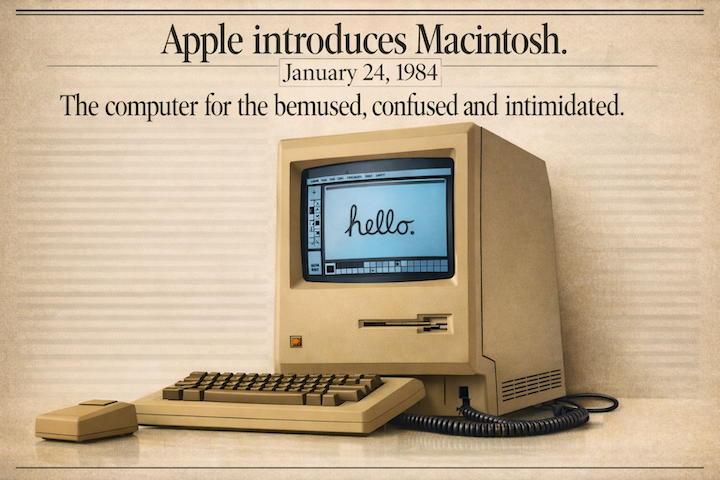
The Birth of Macintosh
The original Macintosh 128K debuted with a compact, all-in-one design and a revolutionary graphical user interface (GUI). Instead of typing commands, users could point, click, and drag. This was not the first GUI ever created, but it was the first to reach consumers at scale—and to do so with personality.
Apple positioned the Macintosh as a cultural statement, reinforced by the now-legendary “1984” Super Bowl commercial. The message was clear: computers should empower individuals, not intimidate them.
Why the Name “Macintosh”?
The name “Macintosh” came from the McIntosh apple, a favorite of early project leader Jef Raskin. The spelling was altered to avoid trademark conflicts, but the spirit remained: friendly, approachable, and human.
The Apple Logo—and the Famous Bite
The Apple logo was designed by Rob Janoff. The bite was added so the apple would not be mistaken for a cherry or tomato at small sizes. While many enjoy the “byte” wordplay, Janoff has emphasized clarity and recognition as the real reason.
How Macintosh Revolutionized Personal Computing
1) Making GUI mainstream
The Macintosh normalized visual computing for consumers, establishing the interaction model still used today across desktops, laptops, tablets, and phones.
2) Design as strategy
From the original Mac’s integrated handle to later minimalist aluminum enclosures, Apple treated industrial design as a competitive advantage—not an afterthought.
3) Powering creativity and publishing
Combined with laser printers and layout software, Macs became the backbone of desktop publishing, graphic design, education, and creative industries worldwide.
First-Year Sales and Early Revenue (1984)
- Launch price: $2,495
- Estimated units sold in 1984: ~372,000
- Implied first-year hardware revenue: ≈ $928 million
Note: This figure is an estimate based on published unit sales and list price; it is not an audited Apple line-item.
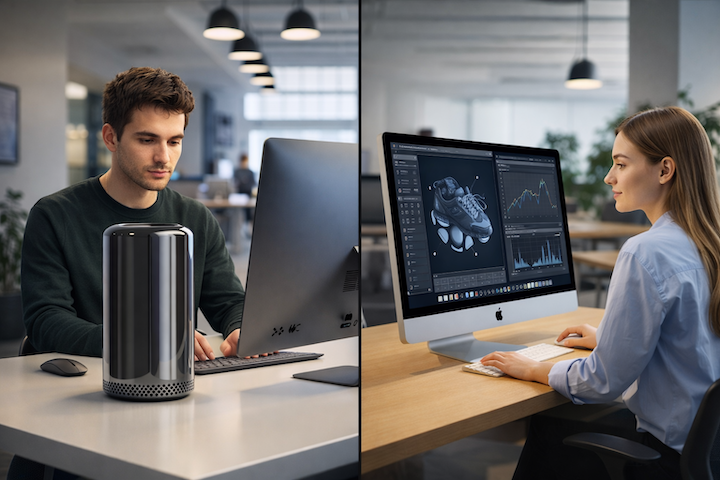
Mac Pricing Over Time: From Entry to Extreme
| Category | Example | Price |
|---|---|---|
| Lowest entry Mac | Mac mini (2005) | $499 |
| Original Mac (1984) | Macintosh 128K | $2,495 |
| Current entry Mac | Mac mini | $599 |
| Peak base price (current) | Mac Pro | $6,999–$7,499 |
| Peak configured price | Mac Pro (2019, Intel) | $53,799 |
Steve Jobs: Vision, Conflict, Return
Steve Jobs was the Macintosh’s chief evangelist—driving simplicity, storytelling, and emotional connection. Yet internal conflicts and early limitations led to struggles, and Jobs left Apple in 1985.
His return in the late 1990s reset Apple’s focus. The company simplified product lines, re-centered design, and rebuilt trust with consumers—laying the groundwork for Apple’s modern success.
Apple’s Co-Founders and Their Roles
- Steve Jobs – Vision, product direction, marketing
- Steve Wozniak – Engineering genius behind early Apple computers
- Ronald Wayne – Early administration and documentation (exited days after founding)
Tim Cook After Jobs
Tim Cook became CEO in 2011. Where Jobs led with vision and narrative, Cook led with execution and scale—optimizing supply chains, expanding services, and navigating Apple through global regulatory and geopolitical challenges.
Outsourcing, China, and Global Manufacturing
Apple’s reliance on Chinese manufacturing enabled rapid scaling but also brought scrutiny over labor conditions. Over time, Apple expanded supplier audits and began diversifying production, especially toward India and Southeast Asia, to reduce risk and geopolitical exposure.

Antitrust and Privacy Controversies
Apple has faced:
- Antitrust fines in Europe over App Store practices
- Privacy-related penalties tied to advertising transparency rules
- Ongoing investigations in the U.S., EU, and Asia
Apple’s defense emphasizes user privacy, security, and platform integrity, while regulators argue about market power and fairness. The debate remains unresolved—and central to the future of Big Tech governance.
A Legacy That Endures
The Macintosh did more than launch a product line—it reshaped expectations. For HuuTri.org readers reflecting on decades of technological change, the Mac’s story is a reminder that thoughtful design and human-centered thinking can alter daily life across generations.
-Nguyễn Bách Khoa-