
Aviation’s Leap: The First Flight of the Boeing 727 — A Turning Point in Modern Commercial Flight: On February 9, 1963, aviation history changed when the prototype Boeing 727 lifted off from Renton, Washington. The tri-jet’s maiden flight marked a decisive shift in how airlines would connect cities, ushering in what many historians consider the true expansion phase of the Jet Age.
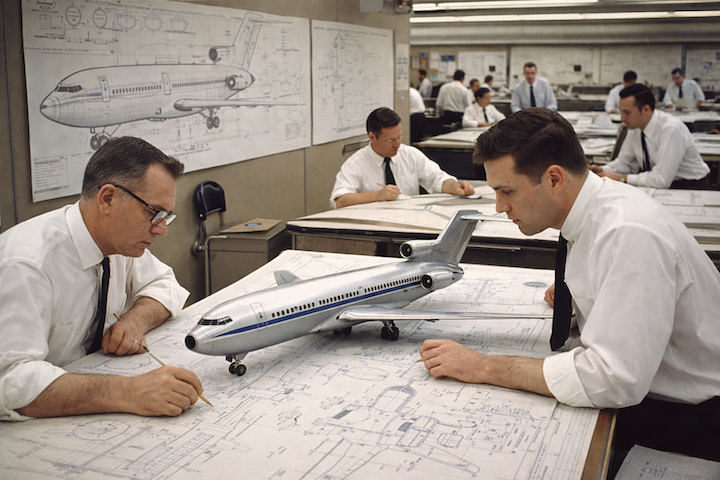
Unlike earlier jets designed mainly for long-haul routes, the Boeing 727 was engineered for short- and medium-distance travel, able to operate from shorter runways and smaller airports. Its three rear-mounted engines, advanced high-lift wing design, and built-in rear stairway allowed it to serve destinations that previously depended on slower propeller aircraft.
By the time production ended, 1,832 aircraft had been built, making the 727 one of the most successful airliners of the 20th century. Airlines around the world adopted it rapidly, and it became known as “the DC-3 of the Jet Age” — a workhorse that democratized jet travel.
Why It Mattered
The 727 didn’t just add another aircraft type — it expanded the airline network map. Regional airports gained jet service, travel times dropped dramatically, and air travel became accessible to millions more passengers. The modern hub-and-spoke system that defines today’s airline industry owes much of its growth to the operational flexibility pioneered by the 727.
The Boeing Story: From Wooden Seaplanes to Aerospace Titan
Boeing was founded in 1916 in Seattle by William E. Boeing, initially building wooden seaplanes. Over the next century, the company evolved from a small aircraft workshop into one of the most powerful aerospace manufacturers in the world.
Key Milestones in Boeing’s Rise
- 1958 – Boeing 707: Helped launch the commercial jet age
- 1963 – Boeing 727: Brought jet travel to regional routes
- 1967 – Boeing 737: Became the best-selling jetliner family in history
- 1970 – Boeing 747: The “Jumbo Jet” revolutionized global long-haul travel
Through continuous innovation, Boeing became synonymous with commercial aviation. For decades, airlines viewed Boeing aircraft as the industry standard for reliability, performance, and global support.
Boeing Timeline: Triumphs and Turbulence
| Year | Milestone |
|---|---|
| 1916 | Boeing founded in Seattle |
| 1958 | 707 enters service, beginning the jet age |
| 1963 | First flight of the Boeing 727 |
| 1967 | 737 enters service |
| 1970 | 747 enters service |
| 1997 | Boeing merges with McDonnell Douglas |
| 2014 | Malaysia Airlines Flight MH370 (a Boeing 777) disappears |
| 2018–2019 | Two fatal 737 MAX crashes lead to global grounding |
| 2020 | COVID-19 pandemic devastates global air travel |
| 2024–2025 | Production recovery, safety reforms, and renewed airline demand stabilize the company |
Crises That Shook the Company:
Malaysia Airlines Disasters
The disappearance of MH370 in 2014 and the shoot-down of MH17 the same year involved Boeing 777 aircraft. While investigations did not blame Boeing’s design, the tragedies intensified scrutiny on aviation safety and airline oversight worldwide.
737 MAX Crisis
Two fatal crashes in 2018 and 2019 led to a worldwide grounding of Boeing’s best-selling aircraft. Production halted, billions were lost, and Boeing’s reputation suffered its greatest blow in modern history.
Pandemic Collapse
In 2020, global air travel dropped to levels not seen in decades. Airlines delayed or canceled aircraft orders, pushing Boeing into financial distress.
How Boeing Survived
Despite enormous setbacks, Boeing endured through:
1. Safety and Quality Reforms
The company restructured engineering oversight, strengthened regulatory cooperation, and tightened manufacturing controls.
2. Financial Resilience
Government support, defense contracts, and capital market confidence helped Boeing weather financial losses.
3. Massive Order Backlog
Airlines worldwide still need fuel-efficient jets, and Boeing’s aircraft remain central to global fleets.
4. Strategic Recovery
Production rates increased again, and Boeing focused on restoring trust rather than rushing new designs.
Today, Boeing’s stock remains strong because investors believe in the long-term demand for air travel and Boeing’s duopoly position alongside Airbus.
The Future of Boeing
The future hinges on innovation, safety credibility, and global sales diplomacy. Recent U.S. administrations — including efforts under President Donald Trump — have promoted American aerospace exports, encouraging foreign carriers to purchase Boeing aircraft as part of broader trade relationships.
What Lies Ahead
- Development of a next-generation single-aisle aircraft
- Increased focus on fuel efficiency and sustainability
- Digital manufacturing and automation upgrades
- Continued rivalry with Airbus for global market share
Boeing’s survival story reflects the resilience of the aerospace sector itself: cyclical, high-risk, but fundamentally tied to humanity’s need to connect across continents.
Legacy of the 727
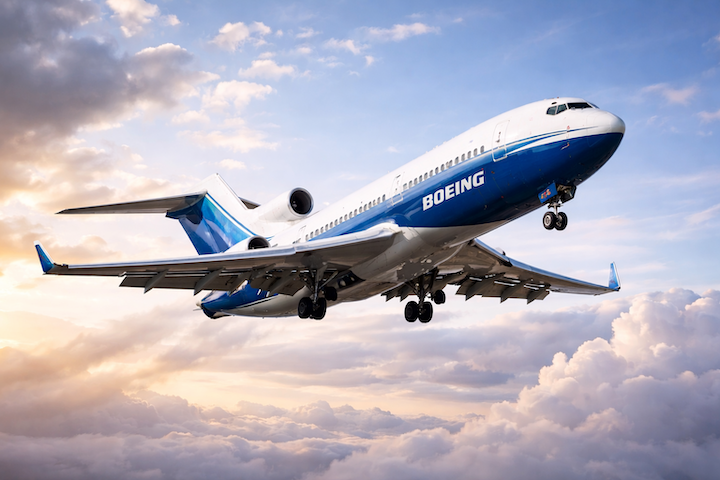
The Boeing 727’s first flight in 1963 was not just an engineering milestone — it was a social and economic turning point. It brought jet travel to smaller cities, accelerated globalization, and helped shape the interconnected world we live in today.
-Lê Nguyên Vũ-
Sources for Further Reading
- Boeing Historical Archives
https://www.boeing.com/history - Smithsonian National Air and Space Museum
https://airandspace.si.edu/ - Federal Aviation Administration (FAA) Historical Records
https://www.faa.gov/about/history - National Transportation Safety Board (NTSB) Aviation Reports
https://www.ntsb.gov/investigations/AccidentReports/Pages/aviation.aspx - International Air Transport Association (IATA) Industry Data & Statistics
https://www.iata.org/en/publications/economics/ - Aviation Week & Space Technology Archives
https://aviationweek.com/air-transport/archives