
Paris: Where Fashion Became an Art Form –
On a crisp afternoon in 19th-century Paris, aristocratic women gathered in elegant salons along the Rue de la Paix. Dressmakers were already famous, but something new was happening. Clothing was no longer merely sewn — it was designed.
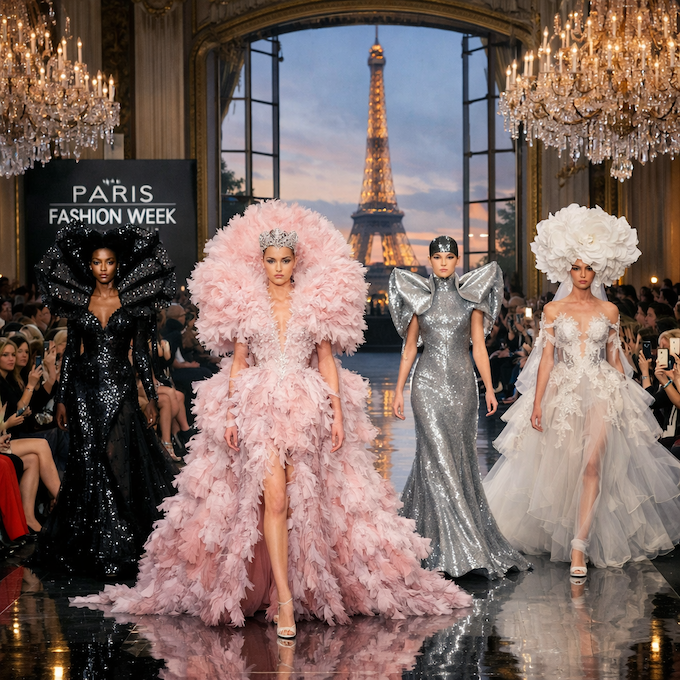
The transformation began with Charles Frederick Worth, an Englishman who moved to Paris in the 1850s. Worth did something revolutionary:
- He designed collections ahead of time, instead of simply sewing what clients requested.
- He introduced live models to present garments to wealthy clients.
- He placed labels inside garments, turning clothing into branded luxury.
These ideas created haute couture, a uniquely Parisian system in which clothing became a form of art, craftsmanship, and prestige.
By the early 20th century, Paris had become the undisputed capital of fashion.
Designers like:
- Coco Chanel
- Christian Dior
- Yves Saint Laurent
redefined how women dressed and how fashion influenced culture.
In 1947, Dior shocked the world with the “New Look”, a dramatic silhouette of cinched waists and full skirts that restored glamour after World War II austerity. American buyers reportedly gasped during the show — and the world rushed to copy Paris again.
For decades, one phrase summarized global fashion power:
“If Paris decides it, the world wears it.”
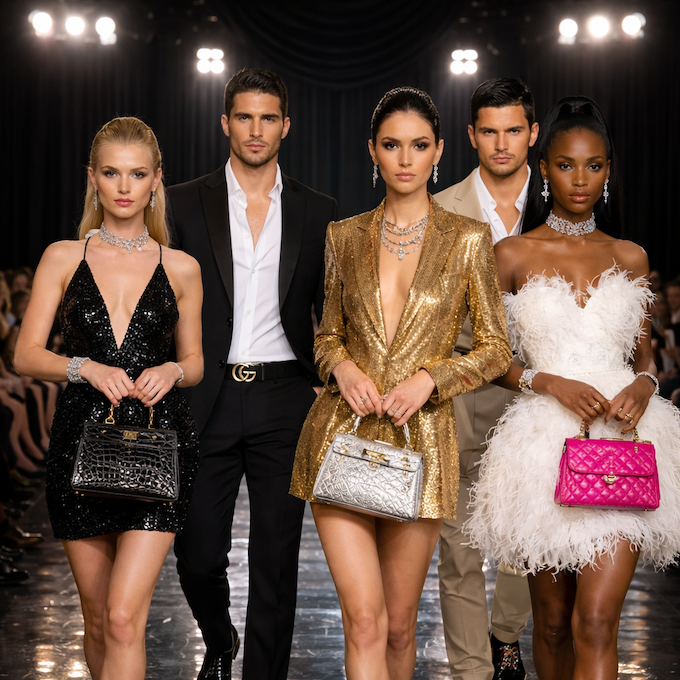 Milan: Italy’s Rise to Luxury Power
While Paris invented haute couture, Italy perfected luxury craftsmanship.
Italian fashion grew from centuries-old traditions of:
- textile weaving
- leather tanning
- tailoring
- silk production
But Milan’s fashion dominance truly accelerated in the 1970s–1980s.
Italian designers shifted fashion toward modern elegance, clean lines, and ready-to-wear luxury.
Two names helped transform Milan into a fashion superpower:
- Giorgio Armani
- Gianni Versace
Armani introduced soft power dressing — relaxed tailoring that became the uniform of executives in the 1980s.
Versace brought bold glamour and celebrity culture into fashion, dressing music icons and Hollywood stars.
Soon Milan became home to legendary houses such as:
- Gucci
- Prada
- Dolce & Gabbana
Today, Milan represents luxury craftsmanship, while Paris remains fashion’s artistic capital.
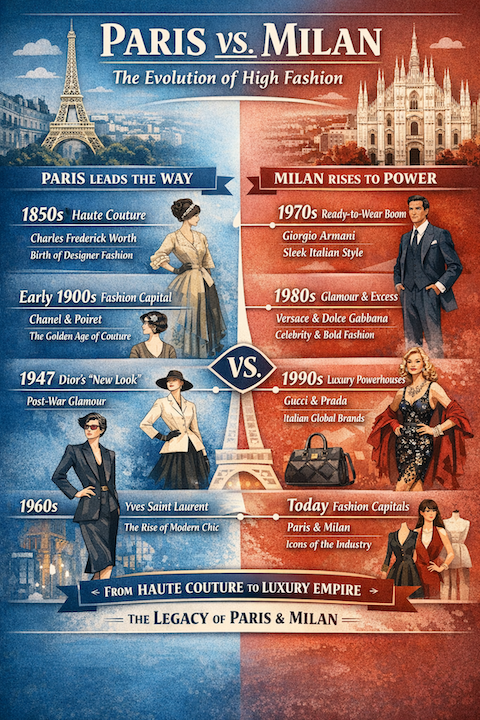
Paris vs Milan: Who Started High Fashion First?
The answer is clear historically.
Paris came first.
Timeline highlights:
|
Era |
Fashion Center |
Key Development |
|---|---|---|
|
1850s |
Paris |
Birth of haute couture |
|
Early 1900s |
Paris |
Global fashion leadership |
|
1947 |
Paris |
Dior’s New Look |
|
1970s–1980s |
Milan |
Rise of Italian ready-to-wear luxury |
Paris invented the concept of designer fashion.
Milan perfected the business of luxury fashion.
Together they define the modern fashion industry.
World-Famous Designers and Their Iconic Brands
Paris Fashion Legends
|
Designer |
Brand |
Signature |
|---|---|---|
|
Coco Chanel |
Chanel |
timeless elegance |
|
Christian Dior |
Dior |
couture femininity |
|
Yves Saint Laurent |
Yves Saint Laurent |
modern women’s tailoring |
|
Hubert de Givenchy |
Givenchy |
refined aristocratic style |
Milan Fashion Icons
|
Designer |
Brand |
Signature |
|---|---|---|
|
Giorgio Armani |
Armani |
power suits |
|
Gianni Versace |
Versace |
bold glamour |
|
Miuccia Prada |
Prada |
intellectual minimalism |
|
Guccio Gucci |
Gucci |
heritage leather luxury |
Some handbags from these houses now cost $5,000–$60,000.
Luxury fashion has become both art and investment.
The Psychology of Luxury Fashion
Why do consumers spend thousands on a handbag or jacket?
Economists and psychologists point to several factors.
1. Social Status Signaling
Luxury brands function as status symbols.
A Chanel bag or Hermès scarf signals:
- financial success
- cultural awareness
- membership in an elite social group
This phenomenon is called “conspicuous consumption.”
The theory originated with economist Thorstein Veblen, who observed that people buy luxury goods partly to display wealth publicly.
2. Identity and Self-Expression
Luxury fashion also reflects personal identity.
Consumers often associate brands with personality traits.
Examples:
- Chanel → elegance
- Versace → boldness
- Prada → intellectual sophistication
- Armani → quiet power
Wearing these brands helps people express who they believe they are — or aspire to be.
3. Emotional Reward and Self-Esteem
Luxury purchases trigger dopamine responses in the brain.
Buying a luxury item can create:
- emotional satisfaction
- increased self-confidence
- a sense of achievement
In many cases, the product becomes a symbolic reward for personal success.
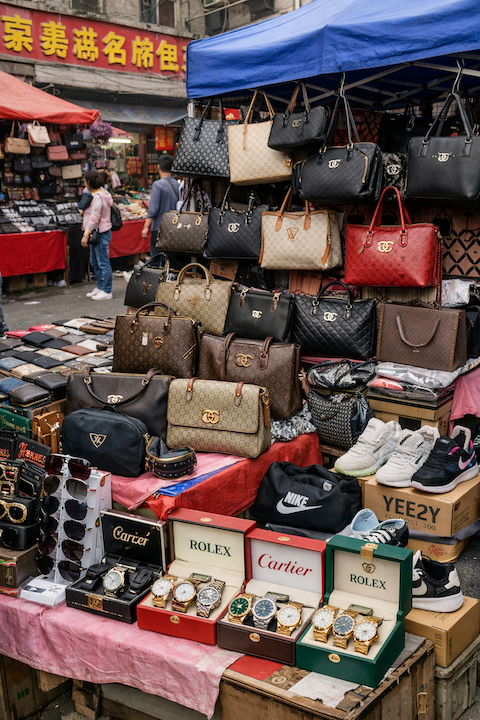
The Global Counterfeit Empire
Where there is luxury, there are imitators.
The counterfeit fashion industry is now worth an estimated $450–$600 billion globally.
Popular knockoff targets include:
- Louis Vuitton
- Gucci
- Chanel
- Rolex
Much of the production occurs in parts of China, Southeast Asia, and Turkey, though distribution networks span the globe.
Counterfeits appeal to consumers because they deliver:
- the appearance of luxury
- at 1–5% of the original price
Ironically, counterfeit markets reinforce the desirability of the real brands.
When logos become widely recognizable, their prestige grows.
Luxury houses fight this aggressively through:
- lawsuits
- technology tracking
- authentication chips
- customs enforcement
Yet the demand persists.
For many consumers, the symbol is as powerful as the craftsmanship.
Fashion: More Than Clothing
In the end, Paris and Milan represent two sides of the same story.
Paris gave the world fashion as creative art.
Milan gave the world fashion as global luxury industry.
Together they built a system where clothing can mean far more than fabric.
It can represent:
- identity
- aspiration
- craftsmanship
- wealth
- and sometimes illusion.
And that is why, more than 170 years after haute couture began in Paris, the world still watches the runways of Paris and Milan to see what the future will wear. 👗✨
-Lê Nguyễn Thanh Phương-