
There is a quiet reality that many people—especially those entering retirement—rarely prepare for.
It’s not rising healthcare costs.
It’s not inflation.
It’s not even the fear of outliving savings.
It’s loneliness.
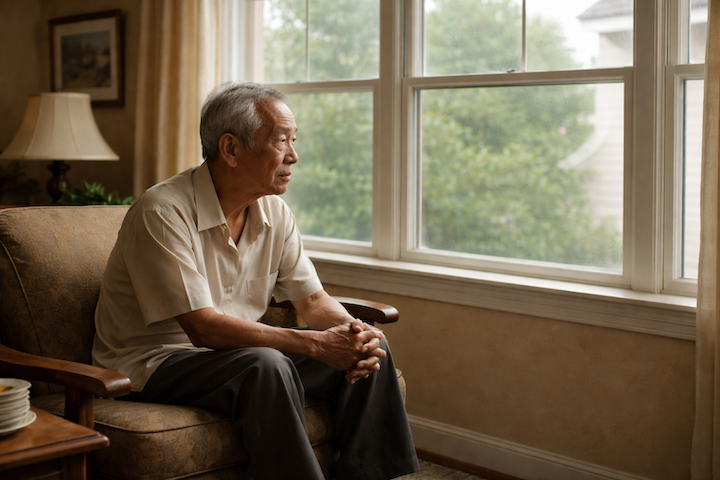
And unlike financial risks, loneliness doesn’t show up on a bank statement. It doesn’t announce itself clearly. It settles in slowly—after children move away, after careers end, after daily routines lose their structure. What begins as “more quiet time” can, over months or years, evolve into something far more serious.
Today, medical experts are no longer treating loneliness as just an emotional state. It is increasingly recognized as a major public health concern, with measurable effects on the brain, the heart, and even the aging process itself.
Why Loneliness Matters More Than You Think
A landmark advisory from the U.S. Surgeon General delivered a striking comparison:
The health impact of chronic loneliness is comparable to smoking 15 cigarettes a day.
That is not a metaphor—it is a clinical framing of risk.
For retirees and those approaching retirement, this matters because life transitions often reduce daily social interaction. Workplaces disappear. Social circles shrink. Mobility may decline. And without intentional effort, isolation can quietly take hold.
The Brain Under Isolation: Increased Risk of Dementia
Loneliness doesn’t just affect mood—it affects cognition.
Research has shown that individuals who experience persistent loneliness face a significantly higher risk of developing dementia. A large meta-analysis found that loneliness can increase this risk by approximately 40%.
From a neurological standpoint, this makes sense:
- Social interaction stimulates memory, language, and emotional processing
- Isolation reduces cognitive engagement
- Chronic loneliness increases stress hormones that may damage brain cells over time
For older adults, this creates a dangerous feedback loop—less interaction leads to cognitive decline, which in turn can lead to even greater isolation.
Emotional Health: The Gateway to Depression
Loneliness is one of the strongest predictors of depression in older adults.
What makes it particularly dangerous is how subtle it can be at first:
- Loss of interest in hobbies
- Reduced motivation to go out
- A growing sense of disconnection
- Feeling “unneeded” or forgotten
Over time, these feelings can deepen into clinical depression—affecting sleep, appetite, energy levels, and overall quality of life.
For many retirees, this is not about being alone—it’s about feeling alone, even when surrounded by others.
The Heart Pays the Price
Loneliness doesn’t stay in the mind—it moves into the body.
Studies consistently show that social isolation is linked to a higher risk of:
- Heart disease
- Stroke
- High blood pressure
The mechanism is largely driven by chronic stress. When a person feels socially disconnected, the body remains in a low-level “fight or flight” state:
- Increased cortisol (stress hormone)
- Elevated inflammation
- Poor sleep quality
- Higher likelihood of unhealthy habits (less exercise, poor diet, smoking)
Over time, these factors significantly increase cardiovascular risk.
A Hidden Accelerator of Aging
Perhaps one of the most concerning findings in recent years is this:
Loneliness may actually accelerate biological aging.
Research published in scientific journals such as Aging suggests that chronic loneliness can:
- Increase inflammation markers
- Disrupt immune system function
- Alter cellular aging processes
In practical terms, this means two people of the same age may age very differently—depending in part on their level of social connection.
Loneliness is not just a feeling. It is a physiological condition with measurable impact on how fast the body declines.
Why This Matters for Retirement Planning
Most retirement planning focuses on financial security. But increasingly, experts are recognizing a second equally important pillar:
Social health is longevity health.
Without meaningful human connection, even a well-funded retirement can become emotionally and physically fragile.
This is especially important for:
- Individuals living alone
- Widows or widowers
- Retirees who relocate away from established communities
- Seniors with limited mobility
Practical Steps to Reduce Loneliness
The good news: loneliness is modifiable. Unlike many medical conditions, it can be actively addressed with intentional lifestyle design.
Here are evidence-based strategies:
1. Build Structured Social Routines
- Weekly lunches with friends
- Community or church involvement
- Volunteer commitments
Consistency matters more than frequency.
2. Stay Physically Active in Social Settings
- Group exercise classes
- Walking clubs
- Dance or fitness programs for seniors
This combines physical and social benefits.
3. Maintain Purpose After Retirement
- Part-time work
- Mentorship roles
- Community leadership
Purpose creates connection.
4. Use Technology—But Intentionally
- Video calls with family
- Online communities with shared interests
Technology should supplement, not replace, real interaction.
5. Consider Living Arrangements Carefully
- Multi-generational living
- Senior communities
- Co-housing models
Environment plays a major role in social exposure.
A Final Thought
Loneliness is often invisible—but its consequences are not.
It can quietly increase the risk of dementia.
It can deepen depression.
It can strain the heart.
It can even speed up aging itself.
For anyone approaching retirement, the question is no longer just:
“Will I have enough money?”
But also:
“Will I have enough connection?”
Because in the long run, a healthy retirement is not just about how long you live—it’s about how well you live, and who you share that life with.
-Phan Trần Hương-
Sources for Further Reading
- U.S. Surgeon General Advisory on Loneliness and Social Isolation (2023)
- National Institute on Aging – Social Isolation, Loneliness, and Health
- Alzheimer’s Association – Social Engagement and Dementia Risk
- American Heart Association – Loneliness and Cardiovascular Disease
- Journal Aging – Studies on Loneliness and Biological Aging
- Centers for Disease Control and Prevention (CDC) – Mental Health and Aging