
Consumers—especially older adults—should check their medicine cabinets after nearly 40,000 bottles of a popular over-the-counter eye drop were recalled nationwide because the manufacturer could not guarantee that the product was sterile.
Prestige Brands Holdings voluntarily recalled 39,060 bottles of Clear Eyes Maximum Itchy Eye Relief. The recall began on July 29, 2026, and the U.S. Food and Drug Administration classified it as a Class II recall on August 14, 2026. FDA Enforcement Report database
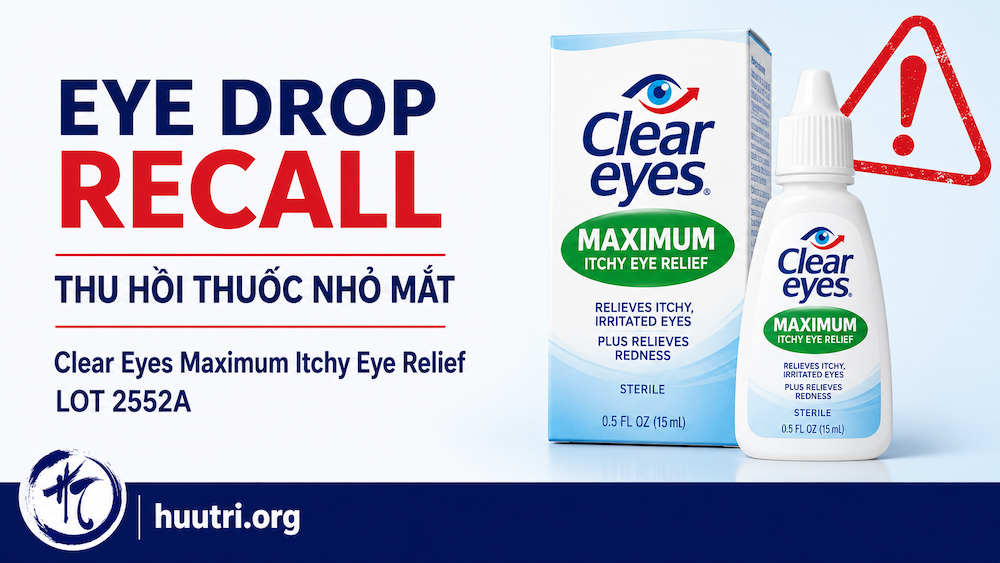 Which eye drops are being recalled?
The recall applies to only one specific product and lot:
| Product information | Recalled product |
| Brand | Clear Eyes |
| Product | Maximum Itchy Eye Relief |
| Type | Over-the-counter drops for itchy, red, burning, watery or mildly dry eyes |
| Bottle size | 0.5 fl oz (15 mL) |
| Lot number | 2552A |
| Expiration date | September 30, 2027 |
| NDC | 67172-999-01 |
| UPC | 6 78112 65920 3 |
| Distributor | Medtech Products Inc. |
| Distribution | Nationwide in the United States |
Consumers should match the product name, lot number and expiration date, not merely the Clear Eyes brand name. Other Clear Eyes products and lots have not been included in this particular recall. Ophthalmology Times
Why were the drops recalled?
The FDA lists the reason as a “lack of assurance of sterility” due to potential contamination.
This wording does not mean that every recalled bottle is contaminated. It means the company cannot reliably guarantee that the affected lot is free of bacteria, fungi or other microorganisms.
Eye drops are supposed to be sterile because they are applied directly to the eye, bypassing some of the body’s natural protections. Even a small amount of microbial contamination could potentially introduce an infection into sensitive eye tissue.
The FDA notice has not identified a particular microorganism in this recall. As of August 22, 2026, no adverse health events had been reported in connection with this specific recalled lot. Ophthalmology Times
What health problems could occur?
Using a bottle from the recalled lot does not automatically mean that a person will develop an infection. However, if the drops were contaminated, possible problems could include:
- Increased redness, burning or irritation
- Eye pain or unusual discomfort
- Swelling around the eye
- Excessive tearing
- Yellow, green or unusual eye discharge
- Sensitivity to light
- Blurred vision or another change in vision
- Conjunctivitis
- Infection or inflammation of the cornea, known as keratitis
- A corneal ulcer in a more serious infection
An untreated corneal infection can sometimes damage the eye and threaten vision. Nevertheless, this recall is classified as Class II, meaning temporary or medically reversible health effects are possible, while the likelihood of serious harm is considered remote.
What should consumers do?
If the bottle matches all the recalled information:
- Stop using it immediately. Do not continue using the drops simply because the liquid appears clear or the bottle looks normal.
- Keep the bottle and packaging temporarily. The lot number may be printed on the bottle, box or both. Take a photograph for your records.
- Contact the store, pharmacy or manufacturer. Ask for instructions concerning a return, refund or safe disposal.
- Do not share the bottle with anyone else.
- Do not attempt to sterilize or transfer the liquid into another container.
- Do not use leftover antibiotic or prescription eye drops unless instructed by a healthcare professional.
Should people who already used the drops consult a healthcare professional?
People who used the recalled drops but have no symptoms generally do not need emergency treatment. They should stop using the product and monitor their eyes carefully.
Consumers should contact an optometrist, ophthalmologist, physician or pharmacist if they are worried, uncertain about symptoms, or have recently undergone eye surgery. People with weakened immune systems, existing eye disease or other serious medical conditions may also wish to seek individualized advice.
Seek prompt medical care if any of these symptoms develop:
- New or worsening eye pain
- Increasing redness or swelling
- Discharge from the eye
- Blurred or reduced vision
- Strong sensitivity to light
- Difficulty opening the eye
- Symptoms that persist or become worse
Sudden vision loss, severe eye pain or rapidly worsening swelling should be treated as an emergency.
The FDA advises consumers to stop using eye drops if they experience pain, discharge, vision changes or unusual discomfort and to speak with a doctor about unexpected side effects. FDA eye-drop safety guidance
How to report a possible reaction
Consumers and healthcare professionals can report adverse reactions or product-quality problems through the FDA MedWatch Safety Information and Adverse Event Reporting Program.
When reporting a problem, retain the bottle, box, receipt and photographs of the lot number whenever possible.
A special reminder for older adults
Older adults often use several eye products for dryness, allergies, glaucoma or recovery from eye procedures. Bottles can look very similar, so check each product carefully and ask a family member or pharmacist for assistance if the lot number is difficult to read.
This recall is limited to one lot, and no injuries have currently been reported. There is no reason to panic—but because eye infections can progress quickly, consumers should stop using the recalled product and never ignore new pain, discharge or changes in vision.
-Nguyễn Duy Khiêm-
Sources for Further Reading
- FDA Enforcement Report Search — Search for “Clear Eyes Maximum Itchy Eye Relief” or recall number D-0766-2026 for the official recall record.
- FDA: What You Should Know About Eye Drops — Safety precautions, symptoms of possible eye-drop complications and when to contact a doctor.
- FDA: Understanding Drug Recalls — Explains what consumers should do when a medication is recalled.
- FDA: Recall Classifications and Definitions — Explains Class I, II and III recalls. This Clear Eyes recall is classified as Class II.
- Ophthalmology Times: Clear Eyes Recall Details — Includes the product name, lot 2552A, expiration date, NDC, UPC and current adverse-event information.
- FDA MedWatch Reporting Program — Consumers and healthcare professionals can report possible reactions or product-quality problems here.