
Imagine sitting beside a quiet pond as red maple leaves drift onto the water. Somewhere beyond the garden, Tokyo is busy with its morning commute. Here, you have time to finish your tea, breathe in the cool air, and watch the light move through the trees.
Japan in autumn offers moments like this in city gardens, beside mountain lakes, and around Kyoto’s old temples. Crimson maples and golden ginkgo trees bring warmth to the landscape as the days grow shorter. The seasonal changing of the leaves is called kōyō; going out to admire them is often called momijigari.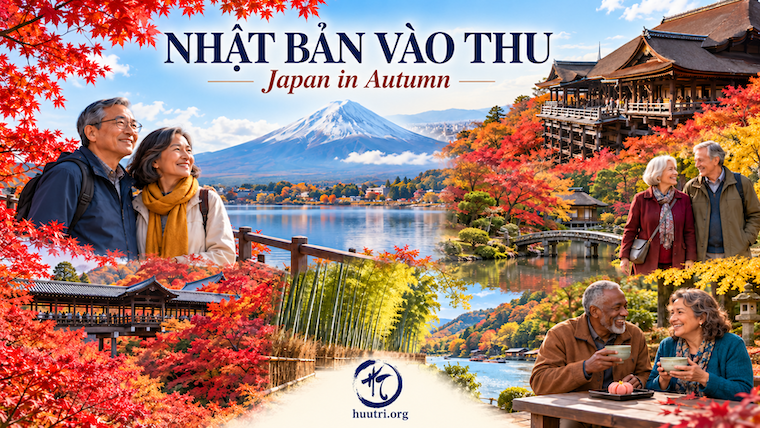
For older travelers, the pleasure comes from giving these places enough time. Choose a comfortable hotel, plan one main outing each day, and leave room for lunch and a rest. You can experience Japan’s autumn beauty without climbing a mountain or spending every morning packing a suitcase.
Choose your dates around the places you most want to see
Autumn reaches different parts of Japan at different times. Higher elevations and northern regions generally change earlier; Tokyo and Kyoto usually follow later. Use the following as broad planning windows, then check local foliage reports before your trip. [1–3]
| Destination | General planning window | What to keep in mind |
| Lake Kawaguchiko | Late October through November, often earlier than the cities | Conditions vary around the lake; mountain views depend on the weather. |
| Tokyo | Mid to late November into early December | Timing differs between gardens and between maples and ginkgo trees. |
| Kyoto | Mid November into early December | Famous temples can be crowded during the strongest colors. |
For a first visit centered on Tokyo and Kyoto, consider the second half of November. If the Fuji area is your priority, look at an earlier November departure. These are planning suggestions, not a forecast: a warm autumn can delay the colors, and no itinerary can guarantee peak foliage everywhere.
Reserve rooms with flexible cancellation terms when practical. Confirm the current year’s evening illuminations separately; dates, tickets, and entry arrangements can change.
Tokyo gardens with time to sit and enjoy them
At Rikugien Gardens, maple branches reach toward a landscaped pond, and stone paths reveal a different view with each turn. A short walk followed by a quiet pause can be more rewarding than trying to cover every path. Seasonal evening illuminations offer another way to see the garden, but bring extra warmth and consider whether you are comfortable walking in dim light. [4]
Shinjuku Gyoen is another option for a leisurely garden visit. Choose one garden for the day, enjoy lunch nearby, and return to your hotel before fatigue sets in. You do not need to combine a garden, a museum, a shopping district, and a night excursion to have a satisfying day in Tokyo.
For visitors using a cane or wheelchair, ask about the route itself: gravel, slopes, steps, and the distance between restrooms matter as much as the entrance. Japan has accessible transport and travel resources, but individual gardens and historic sites need separate checks. [5]
Lake Kawaguchiko and the pleasure of waiting for Fuji
On a clear day, Mount Fuji rises above Lake Kawaguchiko while autumn colors brighten the shore. Find a comfortable viewpoint, take a few photographs, then put the camera away. Watch the clouds move across the mountain and notice how the water changes with the breeze.
The north shore and the Momiji Corridor are well-known places to enjoy the season. Check current foliage reports rather than assuming that the leaves will match photographs from a previous year. Fuji can remain hidden behind clouds, even during an otherwise pleasant visit. [3]
The direct Fuji Excursion train connects Shinjuku and Kawaguchiko, with a journey of roughly two hours each way depending on the service. Allow additional time to reach Shinjuku, find your platform, and travel from Kawaguchiko Station to the lakeshore. Reserve seats and verify the return schedule. [6]
A day trip works for travelers comfortable with a long outing. If that sounds tiring, add two nights near the lake, checking hotel transfers and meal options before booking. For travelers who want fewer hotel changes, keep Tokyo and Kyoto as the two bases and make Fuji optional.
An overnight extension also makes room for a traditional inn, or ryokan, and an optional hot-spring bath. Ask about western-style beds, chairs at meals, bathroom handrails, and private bathing options. Check any bathing restrictions and seek medical advice if you are unsure whether a hot bath is suitable for you. A room with dinner and breakfast can be convenient, but compare the full price with an ordinary hotel stay.
Kyoto with fewer stops and deeper memories
Kyoto’s autumn invites you to linger. At Tofuku-ji, maple leaves fill the valley beneath the temple’s bridges. Eikando is another celebrated foliage destination, while Kiyomizu-dera offers views across wooded slopes toward the city. In Arashiyama, take time beside the river and enjoy the surrounding hills as well as the bamboo grove. [7]
Choose one principal temple or neighborhood each day. Kiyomizu-dera’s approach involves uphill walking, and historic temple grounds may include stairs and uneven surfaces. A taxi can shorten the approach without removing every physical challenge. Ask about accessible entrances before choosing a visit.
At Arashiyama, you might spend the morning on a short riverside walk, have a seated lunch, and return to your hotel. Save Eikando or Tofuku-ji for another day. A long stop over matcha can become one of the trip’s happiest memories.
An eleven day itinerary with two hotel bases
This sample begins on arrival in Japan and includes ten hotel nights: five in Tokyo and five in Kyoto. Add your international flight days separately.
| Day | Plan | Overnight |
| 1 | Arrive in Tokyo, transfer to the hotel, and have an early dinner. | Tokyo |
| 2 | Visit Rikugien, with a seated lunch and afternoon rest. | Tokyo |
| 3 | Choose Shinjuku Gyoen or an easy neighborhood outing. | Tokyo |
| 4 | Optional Kawaguchiko excursion; substitute a local outing if preferred. | Tokyo |
| 5 | Keep a flexible day for weather, recovery, or another garden. | Tokyo |
| 6 | Take a reserved Shinkansen seat to Kyoto; keep the afternoon light. | Kyoto |
| 7 | Visit Eikando or Kiyomizu-dera according to walking ability. | Kyoto |
| 8 | Enjoy Arashiyama’s riverside area and an unhurried lunch. | Kyoto |
| 9 | Visit Tofuku-ji, with the afternoon free. | Kyoto |
| 10 | Revisit a favorite area or choose a quiet garden and farewell dinner. | Kyoto |
| 11 | Transfer to Kansai International Airport for departure. | — |
Compare a flight into Tokyo and home from Kansai International Airport with a Tokyo round trip. The first arrangement avoids returning across the country. If your flights require a Tokyo departure, revise the final travel days and allow a generous buffer; returning to Tokyo the previous day may be the more comfortable choice.
Independent travelers can book the main hotels and trains, then add a local guide for one Kyoto day. A guided tour may suit readers who prefer help with language, luggage, and transfers. Before paying, ask about daily walking, stairs, rest stops, hotel elevators, and how the operator supports someone who needs to skip an outing.
Economy lodging that supports a comfortable trip
A modest hotel close to a usable station entrance can offer better value than a cheaper room that requires a long walk twice a day. In Tokyo, compare properties around Ueno or other convenient rail connections. In Kyoto, look near Kyoto Station or a useful subway stop, while checking the actual entrance and surrounding streets.
Business hotels are worth comparing for private rooms and practical facilities. Toyoko Inn is one example; its breakfast offerings vary by location. Treat any chain as a starting point for comparison, and check the individual property. [8–9]
Before reserving, confirm:
- Two separate beds if you want a twin room; “semi-double” does not mean two beds.
- An elevator, a nonsmoking room, and enough space to move around luggage.
- Bathroom access, including any step into the bathroom and the height of the tub.
- A western-style bed if getting up from a floor futon would be difficult.
- Nearby meals, cancellation terms, and the total price including applicable taxes.
For planning, allow approximately ¥12,000–¥24,000 per night for a modest room for two. This is an allowance, not a live quote. Popular autumn dates can cost more, especially in Kyoto; accessible rooms may also be limited. Book early and compare the full stay price.
Enjoy the season at the table
Autumn flavors are part of the journey. Look for chestnut rice, roasted sweet potatoes, mushroom dishes, and ripe persimmons. Near Kawaguchiko, a bowl of hōtō, the region’s broad noodles in a hearty soup, can be especially welcome after a cool morning outdoors.
To manage meal costs, choose a hotel breakfast when it is included, try a neighborhood restaurant’s lunch set, and have a simple dinner of noodles, grilled fish, or another set meal. Supermarkets and convenience stores can supply fruit, yogurt, sandwiches, and snacks. Check that your hotel room has suitable refrigeration for perishables.
Allow roughly ¥3,000–¥5,000 per person per day for ordinary meals, tea, and snacks. This is a planning allowance; special dinners and alcohol add to it. Restaurants with posted prices make budgeting easier. [8]
If you have allergies or dietary restrictions, carry a professionally translated card. Broths and sauces may contain ingredients that are not obvious from a photograph. Travelers watching sodium can ask for sauces separately and leave some noodle broth unfinished.
A practical budget for eleven days
The following estimates assume two adults sharing a room for ten nights, ordinary meals, public transportation, one Tokyo–Kyoto train journey, and an independent Kawaguchiko day trip. They are budgeting allowances rather than researched quotes for specific dates.
| Expense | Estimated cost per person |
| Half of ten nights in a shared hotel room | ¥60,000–¥120,000 |
| Meals and snacks for eleven days | ¥33,000–¥55,000 |
| Trains, airport transfers, and local public transportation | ¥35,000–¥50,000 |
| Garden and temple admissions | ¥4,000–¥8,000 |
| Contingency allowance | ¥15,000–¥25,000 |
| Total | ¥147,000–¥258,000 |
For illustration only, at ¥150 to US$1, that is approximately $980–$1,720 per person. This is not a current exchange-rate quotation. International airfare, travel insurance, shopping, guides, private transfers, and overnight extensions are additional. Frequent taxis or accessible private transport require a larger allowance.
Compare individual rail tickets with any rail pass before purchasing. A simple route with one major intercity journey does not automatically justify a nationwide pass. Set aside money for a short taxi ride when it will save energy for the place you came to enjoy.
Travel safely and protect your energy
Prepare for your own health needs. If you have ongoing medical conditions or concerns about a long flight, discuss the trip with your clinician. Carry medicines in your hand luggage in labeled packaging, with a medication list and supporting prescriptions. Check each medicine against Japan’s rules in advance: some products are restricted, and certain drugs or quantities require prior permission. [10]
Confirm medical coverage before departure. Original Medicare generally does not cover care in Japan. Some Medigap policies and Medicare Advantage plans provide limited overseas emergency benefits. Check your actual policy and consider travel medical insurance that addresses your needs, including preexisting-condition terms and medical evacuation. [11]
Take footing and daylight seriously. Wear broken-in shoes with good traction. Wet leaves, stone steps, and dim paths deserve extra care. Carry layers and a light rain jacket; the Fuji area can feel colder than the cities. Schedule daylight visits if night walking is uncomfortable.
Arrange assistance before you need it. Request airport assistance if helpful, and contact rail operators about boarding support or wheelchair spaces. Ask the hotel for the station exit with an elevator. Build in time for the longer accessible route rather than assuming every exit is suitable. [5]
Keep essential information offline. Carry your hotel’s address in Japanese, emergency contacts, insurance information, and a charged phone. Save maps and arrange mobile data. Keep your passport secure and follow local requirements for carrying identification.
Leave room to change the day. Eat regularly, carry water, and rest before you are exhausted. Check weather warnings and install the Japan Tourism Agency’s Safety tips app for disaster information. [12]
Stay on marked paths and avoid stopping in roads or blocking crowded walkways for photographs. Let the leaves remain where they belong; a photograph makes a lovely keepsake.
For emergencies in Japan, call 119 for an ambulance or fire service and 110 for police. The Japan Visitor Hotline is 050-3816-2787, or +81-50-3816-2787 from an overseas number, with assistance in English, Chinese, and Korean around the clock. It does not replace emergency dispatch. [13]
Make the reservations in a sensible order
Start with your preferred foliage region and walking needs. Check entry requirements for the passport you will actually use; living in the United States does not by itself determine visa eligibility. Then compare flights, reserve suitable hotels, arrange insurance, and plan the main rail journeys. Confirm attraction schedules and foliage conditions closer to departure. [14]
Leave at least one flexible day in each city. That space allows you to move a garden visit after rain, recover from a tiring excursion, or return to somewhere you loved.
Perhaps your strongest memory will be Fuji appearing briefly between clouds. Perhaps it will be a red maple reflected in a temple pond, or laughter over a warm meal with a traveling companion. Give yourself permission to stay a little longer when a place moves you. Japan’s autumn is especially rewarding when you have time to notice it.
-Lê Nguyễn Thanh Phương-
Sources and planning resources
Information checked October 22, 2026. Recheck schedules, entry rules, prices, and seasonal events before booking.
- Japan National Tourism Organization — Japan in November: Official resource
- GO TOKYO — Autumn leaves in Tokyo: Official resource
- Fuji Five Lakes Tourism Federation — Autumn leaves: Official resource
- GO TOKYO — Rikugien Gardens and seasonal night viewing: Official resource and Seasonal event
- JNTO — Accessible tourism: Official resource
- Fujikyu Railway — Fuji Excursion: Official resource
- Kyoto Online Tourist Information Center — Autumn foliage locations: Official resource
- JNTO — Japan on a budget: Official resource
- Toyoko Inn — Breakfast options: Official resource
- Japan Ministry of Health Labour and Welfare — Bringing medicines into Japan: Official resource
- Medicare — Travel outside the United States: Official resource
- Japan Tourism Agency — Illnesses injuries and disasters: Official resource
- JNTO — Japan Visitor Hotline: Official resource
- Japan Ministry of Foreign Affairs — Visa information: Official resource