
Did you know that the name Cappuccino was inspired by the robes worn by Catholic friars? Behind its silky milk foam and irresistible aroma lies a fascinating history spanning hundreds of years!
Every November 8, coffee lovers across America celebrate National Cappuccino Day, honoring one of the world’s most popular and recognizable coffee beverages.
But why is it called Cappuccino? Who invented it? And how did this creamy coffee drink become an international favorite?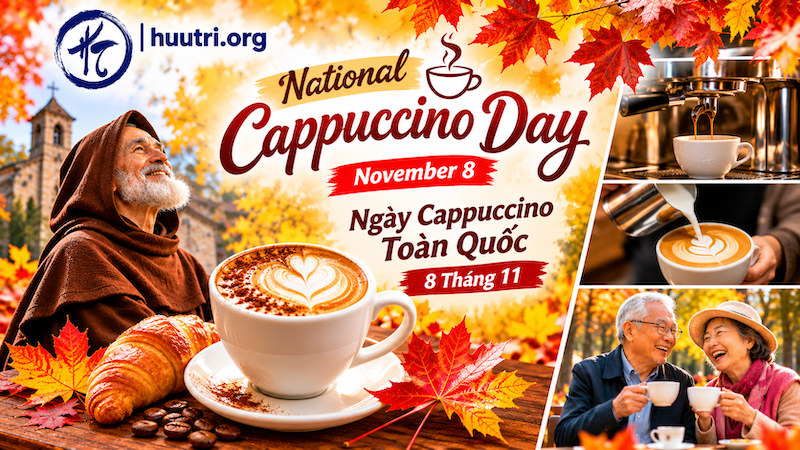
The Surprising Connection Between Cappuccino and Catholic Friars
Believe it or not, Cappuccino has a special connection to the Capuchin Franciscans, a branch of the Franciscan religious order established in Italy during the 16th century.
Capuchin friars traditionally wore distinctive brown robes with pointed hoods. When coffee was mixed with cream or milk, its light brown color resembled the color of their religious habits.
The Italian word cappuccio means “hood,” while cappuccino can be interpreted as “little hood.”
One popular legend dates back to the Battle of Vienna in 1683 and involves Blessed Marco d’Aviano, a Capuchin friar. According to the story, coffee was mixed with cream to soften its bitterness, creating a beverage associated with the friars’ brown robes.
However, historians have not verified this account, so it remains an intriguing legend rather than an established historical fact.
Nevertheless, the name Cappuccino preserves a fascinating connection between coffee culture and Catholic history.
From Vienna’s Coffeehouses to Italy
Cappuccino’s early predecessor was a beverage called Kapuziner, served in Vienna, Austria, during the 18th century. It typically consisted of coffee mixed with cream and sometimes sugar.
In the early 20th century, the development of espresso machines in Italy paved the way for the modern Cappuccino.
By the 1950s, advances in steam-powered milk frothing helped create the signature silky foam that distinguishes Cappuccino today.
During the 1980s and 1990s, international coffeehouse chains such as Starbucks helped introduce Cappuccino to millions of customers worldwide.
Today, from Rome and Paris to New York and Saigon, Cappuccino has become a symbol of coffee culture and the art of enjoying life’s simple pleasures.
What Makes a Perfect Cappuccino?
A traditional Cappuccino is often described as a combination of three equal parts:
- 1/3 Espresso: Rich, concentrated coffee with a bold aroma.
- 1/3 Steamed Milk: Adds natural sweetness and softens the coffee’s bitterness.
- 1/3 Milk Foam: Creates the smooth, velvety texture that makes Cappuccino special.
Actual proportions may vary depending on the café and brewing style.
Skilled baristas also create beautiful hearts, leaves, and flowers on the coffee’s surface using a technique known as Latte Art.
This combination of flavor, craftsmanship, and social tradition has made Cappuccino one of the world’s most beloved coffeehouse beverages.
Five Fun Facts About Cappuccino You May Not Know
- Italians traditionally drink Cappuccino in the morning.
In Italy, Cappuccino is commonly enjoyed with a cornetto, an Italian breakfast pastry. Ordering Cappuccino after lunch is less traditional, although visitors are free to enjoy it whenever they wish.
- Traditional Italian Cappuccinos are surprisingly small.
A typical Italian Cappuccino contains approximately 150–180 milliliters (5–6 ounces), much smaller than the oversized coffee drinks commonly served in the United States.
- Cappuccino doesn’t necessarily contain chocolate.
Although some cafés sprinkle cocoa powder or cinnamon over the foam, neither ingredient is required in a traditional Italian Cappuccino.
- Cappuccino and Latte are not the same.
Cappuccino typically has a more pronounced coffee flavor and a substantial layer of foam, while Latte contains more steamed milk and tastes milder.
- Cappuccino is more than just coffee.
In many countries, enjoying Cappuccino is a social tradition—a chance to meet friends, share stories, and relax.
Is Cappuccino Good for Older Adults?
For HuuTri readers, enjoying a Cappuccino in the morning can be a pleasant daily ritual that promotes alertness and relaxation.
A Cappuccino made with one shot of espresso typically contains approximately 60–75 milligrams of caffeine, depending on the coffee beans and brewing method.
However, older adults should keep a few considerations in mind:
- Sleep: Avoid drinking caffeinated coffee late in the afternoon or evening if it interferes with sleep.
- Sugar: Limit added sugar, flavored syrups, and whipped cream.
- Health considerations: Individuals who experience heart palpitations, acid reflux, or caffeine sensitivity should monitor their intake.
- Decaffeinated options: Those wishing to reduce caffeine can enjoy Cappuccino made with decaf espresso.
Moderation is the key to enjoying coffee while maintaining a healthy lifestyle.
A Cup of Coffee, a Little Happiness
Perhaps the greatest charm of Cappuccino isn’t simply its rich espresso or velvety milk foam.
It’s the peaceful moments that come with it.
A quiet morning reading the newspaper, a lively conversation with an old friend, or a few relaxing minutes away from life’s daily demands can all become more enjoyable with a warm cup of Cappuccino.
This November 8, celebrate National Cappuccino Day by treating yourself to a delicious cup or inviting a friend to share one.
And the next time you sip your Cappuccino, remember that this famous beverage carries a fascinating connection to the Capuchin Franciscan friars dating back centuries.
HuuTri wishes all our readers a wonderful National Cappuccino Day! May your coffee be warm, your conversations delightful, and your days filled with friendship, laughter, and life’s simple pleasures.
-Hoàng Anh-