
In just a few short weeks, global events have reminded us how quickly the financial landscape can shift. Ongoing geopolitical tensions are driving oil prices higher, putting pressure on everyday living costs—from gas to groceries. At the same time, uncertainty around interest rates continues to affect borrowing and savings, while the stock market faces renewed volatility as investors reassess growth expectations, especially in technology and AI sectors.
For those approaching retirement—or already there—this environment is not about panic, but about awareness. These overlapping forces—war, energy costs, and market fluctuations—can directly impact retirement income, expenses, and long-term financial security. Now more than ever, thoughtful planning and a steady approach are essential to navigate the road ahead with confidence.
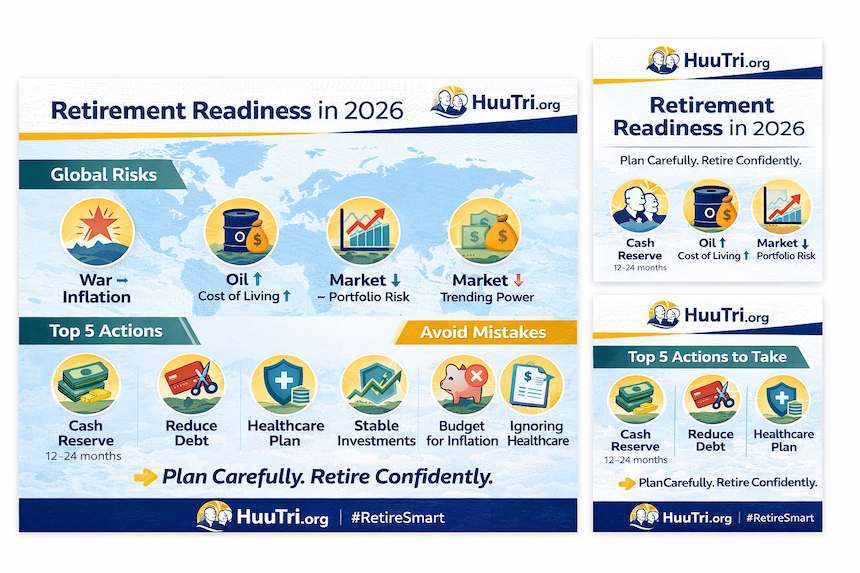 What’s Really Happening Behind the Headlines
Today’s economic environment is shaped by three powerful forces:
1) Global Conflicts and Rising Oil Prices
Geopolitical tensions are pushing energy prices upward. When oil rises, it doesn’t just affect fuel—it increases the cost of transportation, food, and services across the economy.
Impact on retirees: Higher everyday expenses and reduced purchasing power.
2) Interest Rates May Stay Higher for Longer
The Federal Reserve remains cautious about cutting rates, and in some scenarios, rates could rise again if inflation persists.
Impact on retirees:
- Borrowing becomes more expensive
- Credit card and loan interest rates remain high
- Safer investments (like bonds) may become more attractive
3) Stock Market Volatility and the “Reality Check” Phase
Markets are experiencing fluctuations as investors move away from hype-driven growth—especially in AI—and demand real earnings performance.
Impact on retirees:
- Investment portfolios may fluctuate more
- Growth may be slower than expected
- Risk management becomes more important than ever
What This Means for Your Retirement
This is a transition period in the financial world:
- From low interest rates → higher, uncertain rates
- From easy growth → disciplined investing
- From predictability → volatility
For retirees, the focus must shift from growing wealth to protecting and sustaining it.
How to Prepare for Retirement (Next 1–2 Years)
1) Strengthen Your Cash Reserve
Set aside 12–24 months of living expenses
This protects you from:
- Market downturns
- Unexpected medical costs
- Emergency spending
2) Reduce or Eliminate Debt
High interest rates make debt more expensive than ever.
Focus on:
- Credit cards
- Adjustable-rate loans
- Personal debt
Enter retirement with financial breathing room
3) Prepare for Healthcare Costs
Healthcare remains the largest financial risk in retirement.
Plan for:
- Medicare coverage decisions
- Out-of-pocket expenses
- Long-term care scenarios
4) Adjust Your Investment Strategy
Shift toward stability:
- Bonds and fixed income
- Dividend-paying stocks
- Cash equivalents
Reduce exposure to:
- High-risk or speculative investments
Goal: Preserve wealth, not chase returns
5) Plan for Market Downturns
Ask yourself:
“If the market drops 20%, will I still be financially secure?”
If not, adjustments are needed.
6) Recalculate Your Budget for Inflation
Expect higher costs in:
- Food
- Insurance
- Utilities
- Travel
Add a 10–15% buffer to your retirement budget.
7) Replace Financial Stress with a Clear Plan
Uncertainty creates stress—but planning reduces it.
Build:
- A monthly income strategy
- A withdrawal plan
- Backup scenarios
Common Mistakes to Avoid
- Retiring with high debt
- Relying too heavily on stock market growth
- Ignoring healthcare costs
- Lacking emergency savings
- Making emotional financial decisions

A Simple Retirement Readiness Check
Before retiring, ask yourself:
- Do I have enough cash reserves?
- Is my debt under control?
- Do I understand my healthcare coverage?
- Can I handle market volatility?
- Do I have a reliable income plan?
If you can answer “yes” to these questions, you are on the right path.
Final Thought for HuuTri Readers
This is not a time to fear the future—but it is a time to respect it.
The world is changing. Costs are rising. Markets are evolving.
But with careful planning, disciplined decisions, and a clear strategy:
Retirement can still be stable, secure, and fulfilling.
-Nguyễn Bách Khoa-