
FIFA — Fédération Internationale de Football Association — was founded in Paris on May 21, 1904, by seven European football associations: Belgium, Denmark, France, the Netherlands, Spain, Sweden, and Switzerland. Robert Guérin became FIFA’s first president. The purpose was simple but historic: create one international body to organize and standardize football across borders.
The FIFA World Cup was born later under FIFA president Jules Rimet, who wanted a true global championship beyond the Olympic Games. The first World Cup was held in Uruguay in 1930, partly because Uruguay had won Olympic football gold and was celebrating 100 years of independence. Only 13 teams participated.
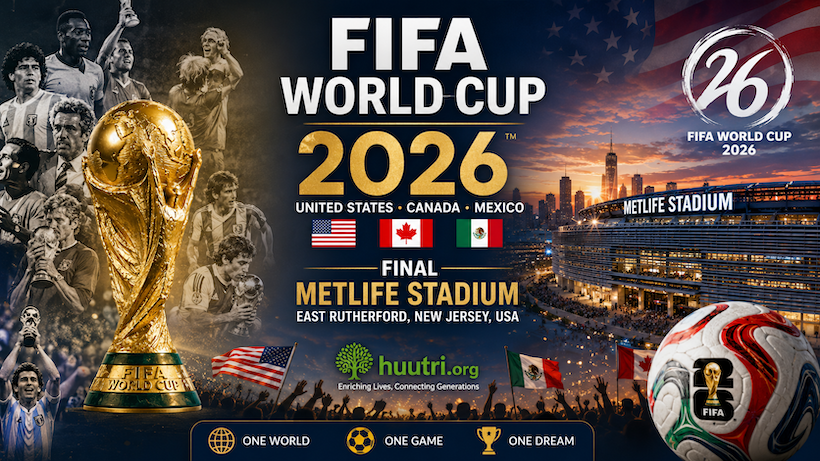
Through Qatar 2022, there have been 22 completed men’s FIFA World Cups. The 2026 World Cup is the 23rd edition and the first with 48 teams, hosted by the United States, Canada, and Mexico.
Last 5 World Cup Champions
| Year | Champion | Runner-Up | Final Score | Final Host City/Country |
|---|---|---|---|---|
| 2006 | Italy | France | 1–1, Italy won 5–3 on penalties | Berlin, Germany |
| 2010 | Spain | Netherlands | 1–0 after extra time | Johannesburg, South Africa |
| 2014 | Germany | Argentina | 1–0 after extra time | Rio de Janeiro, Brazil |
| 2018 | France | Croatia | 4–2 | Moscow, Russia |
| 2022 | Argentina | France | 3–3, Argentina won 4–2 on penalties | Lusail, Qatar |
FIFA’s own champions archive lists the modern winners, and the 2022 final was officially Argentina vs. France at Lusail Stadium, ending 3–3 after extra time before Argentina won on penalties.
Is FIFA a non-profit?
Yes, FIFA is organized as a not-for-profit association under Swiss law, headquartered in Zurich. But “non-profit” does not mean “small” or “non-commercial.” FIFA earns billions from media rights, sponsorships, licensing, hospitality, and ticketing. FIFA says it operates financially in a four-year cycle, with the World Cup as the main revenue engine. For the 2019–2022 cycle, FIFA reported USD $7.568 billion in revenue.
For 2024 alone, FIFA reported USD $483 million in revenue. Its revised 2023–2026 budget projects USD $13 billion in revenue, with hospitality rights and ticket sales expected to be a major share, about 25% of the cycle budget.
Does FIFA keep World Cup ticket money?
FIFA recognizes revenue from ticket sales and hospitality rights, along with broadcast, marketing, and licensing rights. Its finance division states that FIFA revenue comes from “television broadcasting, marketing and licensing and hospitality rights and ticket sales.”
For 2024, FIFA reported no hospitality/ticket revenue recognized, because most 2026 World Cup ticket revenue is recognized closer to the tournament period. FIFA’s 2026 cycle budget suggests hospitality and ticket sales may account for roughly 25% of projected USD $13 billion revenue — about $3.25 billion, though that combines hospitality and ticketing, not tickets alone.
Does FIFA pay taxes?
FIFA does pay some taxes and duties, but its tax treatment is complex because it is a Swiss not-for-profit association and also operates through subsidiaries in multiple countries. FIFA’s 2024 annual report says the normal tax rate for associations applies, and subsidiaries are taxed according to local laws. FIFA reported total taxes and duties of USD $903,000 in 2024.
Host countries often negotiate special tax arrangements for FIFA events. That is why critics argue FIFA receives extraordinary tax benefits when staging World Cups.
Ticket prices: group games, playoffs, and the final
For 2026, ticket prices vary widely by city, match, seat category, and dynamic pricing. Britannica reports that as of April 2026, official direct-sale prices ranged from about $60 to $10,990.
Reported official-style pricing data for 2026 shows some group-stage tickets starting around $60–$105, while higher category seats in major markets can cost hundreds or thousands. The 2026 final is scheduled for July 19, 2026, at MetLife Stadium / New York New Jersey Stadium in East Rutherford, New Jersey.
For the 2026 World Cup Final, published ticket guides report standard face-value categories roughly from $2,030 to $6,730, with premium/dynamic pricing reported far higher in some cases.
How does a country get chosen to host?
A country, or group of countries, submits a bid. FIFA evaluates stadiums, infrastructure, transportation, security, commercial plans, human-rights commitments, government guarantees, and tournament operations. The final host is appointed by FIFA’s member associations through FIFA Congress or by acclamation when only one eligible bid remains. For 2034, FIFA says Saudi Arabia was selected after a bidding process and acclamation by FIFA member associations.
The host selection is also shaped by continental rotation, meaning FIFA generally avoids giving consecutive tournaments to the same confederation region.
Is the World Cup immune to war or economic hardship?
No. The World Cup is powerful, but not immune. The clearest proof is that the 1942 and 1946 World Cups were cancelled because of World War II and its aftermath. The tournament resumed in Brazil in 1950.
What makes the World Cup resilient is not immunity but global demand: national pride, television audiences, sponsorship money, and the emotional power of football. Even during recessions or political tensions, countries and corporations often view the World Cup as a rare global stage.
World Cup 2026: teams and qualification
The 2026 World Cup expanded from 32 to 48 teams. The allocation is:
| Confederation | Direct Spots |
|---|---|
| UEFA Europe | 16 |
| CAF Africa | 9 |
| AFC Asia | 8 |
| CONMEBOL South America | 6 |
| CONCACAF North/Central America & Caribbean | 6 total, including 3 hosts |
| OFC Oceania | 1 |
| Intercontinental playoffs | 2 final spots |
48 teams are drawn into 12 groups of four; the top two in each group and the eight best third-place teams advance to a new Round of 32.
The three host nations — United States, Canada, and Mexico — qualified automatically. Other countries qualified through regional tournaments governed by their confederations.
The World Cup began as a dream of international sportsmanship. Today, it is part football, part business empire, part cultural festival, and part geopolitical theater. For fans, it remains simple: one ball, two teams, one nation holding its breath. For FIFA, it is the engine of a multi-billion-dollar global institution.
-Nguyễn Bách Khoa-