
Almost every parent has, at one time or another, raised their voice or physically disciplined a child. When we think of domestic violence, we often picture a husband abusing his wife. Yet domestic violence also includes parents who abuse their children.
In developed countries such as the United States, child abuse is a criminal offense. Many parents have been prosecuted, imprisoned, or have lost custody of their children because of abusive behavior. In many developing countries, however, physical punishment and mistreatment of children are still not taken as seriously by the legal system or society, especially when such actions are viewed as a traditional method of discipline under the old saying, “Spare the rod, spoil the child.”
The Numbers
Statistics show that parents and legal guardians are responsible for approximately 76% to 89% of reported child abuse cases. The most common forms include neglect, emotional abuse, physical abuse, and psychological maltreatment.
In the United States, children under one year of age experience the highest rate of abuse, with 20.1 victims per 1,000 children. Surprisingly, mothers are identified as the primary abuser in 37% of cases, fathers in 25%, and both parents together in 19.3%.
According to the World Health Organization (WHO), an estimated 6 out of every 10 children under the age of five—approximately 400 million children worldwide—experience psychological aggression or physical punishment by parents or caregivers.
In Vietnam, according to Lao Động Newspaper (June 28, 2018), nearly 70% of children have experienced abuse by their parents.
Forms of Child Abuse
Disciplining a child while angry or emotionally overwhelmed is often counterproductive because the punishment comes from the parent’s frustration and loss of self-control rather than a genuine desire to teach. The purpose of discipline is to guide and correct. Abuse, however, creates fear, resentment, and broken relationships.
Effective discipline requires calmness, emotional restraint, and the ability to correct behavior without causing physical or emotional harm.
When parents, guardians, or caregivers lose control, child abuse commonly takes at least five forms:
1. Physical Abuse
Using physical force against a child, including hitting, slapping, kicking, burning, or physically restraining the child.
2. Emotional Abuse
Words or actions that make a child feel humiliated, rejected, worthless, or unloved, and that interfere with healthy emotional development.
Examples include constant comparison with others, ridicule, verbal insults, humiliation, threats, belittling comments, or emotional coldness and rejection.
3. Sexual Abuse
Any sexual act or attempted sexual act involving a child, including inappropriate touching, incest, rape, exposing children to pornography, or coercing them into sexual activities.
4. Neglect
Repeatedly failing to provide a child’s basic physical or emotional needs, including adequate food, water, clothing, shelter, affection, and emotional support, leaving the child isolated and deprived.
5. Medical Neglect
Failing to provide necessary medical or mental health care, including refusing treatment, medication, or appropriate care when a child is sick, injured, or living with a disability.
The Lasting Effects of Child Abuse
Being abused by one’s own parents often leaves lifelong scars, especially emotional ones. At its core, abuse destroys a child’s sense of safety and security.
Repeated beatings, harsh punishment, emotionally damaging treatment, and uncontrolled anger from parents frequently result in psychological trauma that can remain deeply embedded into adulthood.
These long-term effects often include:
a. Emotional and Mental Health
Mental Health: Childhood abuse is associated with anxiety, depression, chronic anger, emotional distress, and Post-Traumatic Stress Disorder (PTSD).
Self-Perception: Victims often struggle with shame, guilt, low self-esteem, and a lack of confidence.
Emotional Regulation: Abuse can alter developing areas of the brain responsible for impulse control and emotional regulation, resulting in emotional instability and recurring traumatic memories.
b. Relationships
Trust: Children abused by parents or caregivers often struggle to trust others and may find it difficult to build healthy relationships later in life.
Isolation: Many survivors withdraw socially, become overly guarded, avoid challenges, and fear confronting people or difficult situations.
c. Behavior and Daily Life
Substance Abuse: Survivors are at greater risk of turning to alcohol or drugs as a way to numb emotional pain and feelings of helplessness.
Learning and Career Development: Trauma often affects concentration and academic performance, making education and future employment more challenging.
The Cycle of Abuse: Many abused children unfortunately become abusive parents themselves because unresolved childhood trauma often resurfaces in adulthood.
d. Physical Health
Chronic stress caused by childhood abuse can permanently affect both the nervous and immune systems. Research has linked childhood maltreatment with increased risks of heart disease, chronic pain, obesity, and other long-term health problems later in life.
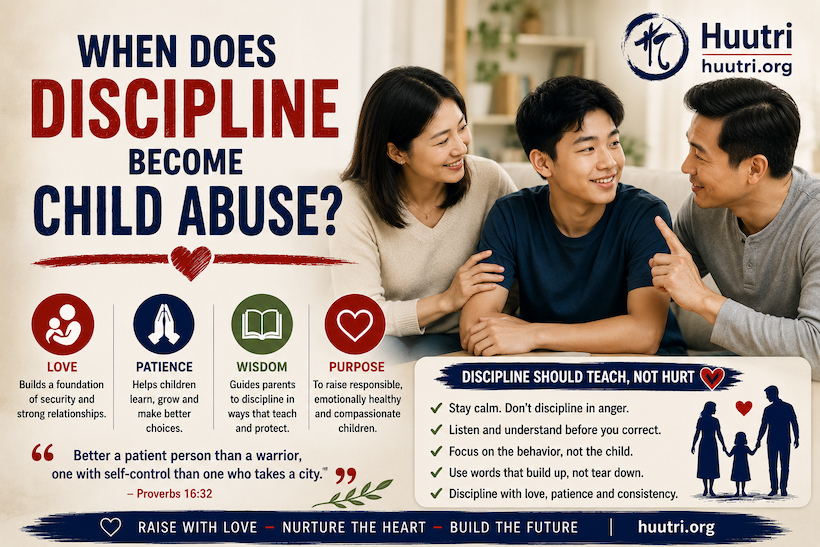
Discipline Should Teach, Not Harm
Healthy parenting includes both encouragement and correction. Many Vietnamese parents grew up hearing the saying, “Gentle words don’t work, so stronger measures are needed,” implying that physical punishment is necessary when children refuse to listen.
Today, however, this approach is increasingly recognized as outdated. Physical punishment often causes lasting psychological harm and negatively shapes a child’s future attitudes and emotional well-being because it crosses the line from discipline into abuse.
The following reminders may help parents and caregivers maintain self-control while raising children.
1. Fear Is Not Learning
When discipline is delivered in anger, children become more focused on fear and confusion than on understanding what they did wrong. Instead of learning, they feel emotionally unsafe.
2. It Damages Relationships
Yelling, insulting, hitting, withholding affection, or neglecting a child can erode trust and create resentment, rebellion, and emotional distance. These experiences may also suppress a child’s natural gifts and potential.
3. It Discourages Children
Harsh, impulsive reactions to mistakes communicate that parents are discouraging rather than supporting their children, causing them to lose confidence and courage.
4. It Often Ends in Regret
Anger clouds judgment. Decisions made in the heat of the moment often produce harmful consequences that are out of proportion to the child’s mistake and leave parents with lasting regret.
Before Correcting a Child
To avoid crossing the line from discipline into abuse, parents and caregivers should consider the following:
1. Pause and Step Away
Remove yourself from the situation until your heartbeat slows and your emotions settle. Avoid disciplining while angry.
2. Regain Self-Control
Take deep breaths, go for a short walk, or reflect on the situation. Master your own emotions before attempting to guide your child’s behavior.
3. Focus on Teaching
Remain calm. Remember the parenting principles and life experiences that have shaped your understanding of healthy discipline before deciding on any consequence.
4. Draw Wisdom from Scripture
The Bible offers timeless guidance for parents:
“Better a patient person than a warrior, one with self-control than one who takes a city.”
Proverbs 16:32
“Whoever spares the rod hates their child, but the one who loves their child is careful to discipline them.”
Proverbs 13:24
“Fathers, do not provoke your children to anger, but bring them up in the discipline and instruction of the Lord.”
Ephesians 6:4
“Fathers, do not embitter your children, or they will become discouraged.”
Colossians 3:21
Healthy discipline is rooted in love, patience, and wisdom. Its purpose is never to humiliate or harm a child, but to help them grow into responsible, emotionally healthy, and compassionate adults.
By Trần Mỹ Duyệt, PhD in Psychology