
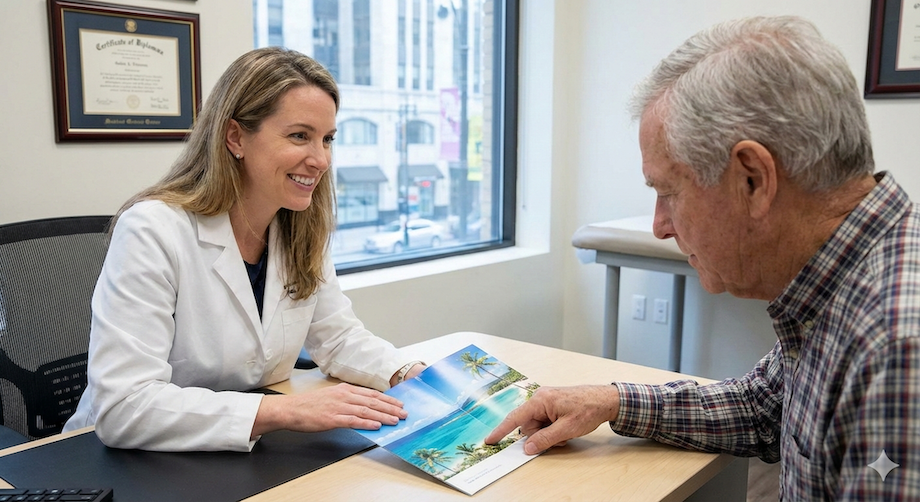
In a move that challenges conventional ideas of medical treatment, Sweden has introduced a pioneering healthcare initiative that allows doctors to prescribe travel as part of a patient’s treatment plan. Rather than viewing travel as a luxury or indulgence, Swedish health authorities are positioning it as a structured, evidence-based therapeutic intervention—particularly for individuals experiencing chronic stress, burnout, or mild mental health challenges.
Travel as Medicine, Not Escape
Under this initiative, physicians may recommend short, restorative trips—often centered on natural environments such as forests, coastal archipelagos, or quiet rural areas. The emphasis is not on sightseeing or long vacations, but on intentional time away from daily stressors to allow the body and mind to recalibrate.
This approach reflects Sweden’s broader healthcare philosophy: prevention and lifestyle-based care are essential tools for reducing long-term medical costs and improving population well-being. In some cases, travel expenses may be partially covered through national health insurance, depending on medical necessity and clinical assessment.
The Science Behind Nature-Based Healing
The program is grounded in a growing body of research from environmental psychology, neuroscience, and public health. Numerous studies have demonstrated that time spent in natural settings can:
- Lower cortisol (the body’s primary stress hormone)
- Improve mood and emotional stability
- Enhance attention and cognitive recovery
- Support better sleep quality
- Reduce symptoms of anxiety and mild depression
Exposure to nature has also been shown to help “reset” the nervous system, enabling faster emotional regulation and improved resilience when individuals return to their everyday routines.
A Shift Toward Lifestyle Medicine
While still in its early stages, Sweden’s prescribed-travel initiative signals a meaningful shift in how healthcare systems may evolve. Rather than relying exclusively on clinical interventions, this model integrates lifestyle medicine directly into formal treatment pathways. It acknowledges a reality many patients already feel intuitively: healing does not always occur within hospital walls or doctors’ offices.
Sometimes, recovery happens during a quiet walk through a forest, a few days by the sea, or time spent disconnected from chronic pressures and constant digital demands.
Implications Beyond Sweden
Sweden’s experiment is being closely watched by public health experts worldwide. As stress-related conditions, burnout, and mental health challenges continue to rise globally—especially among working adults and older populations—this model raises an important question for other healthcare systems:
What if time, space, and meaningful experiences were treated as legitimate components of medical care?
If successful, Sweden’s approach could influence how nations think about prevention, mental health, and the role of environment in long-term well-being.
–Nguyễn Duy Khiêm-
Further Reading & Research Sources
- World Health Organization (WHO) – Mental Health and Well-Being
- Nature Reviews Psychology – Environmental Psychology & Nature Exposure
- National Institutes of Health (NIH) – Nature Exposure and Stress Reduction
- Swedish Public Health Agency (Folkhälsomyndigheten)
- Harvard Health Publishing – How Nature Helps Reduce Stress