
In recent years, a major shift has been taking place in the U.S. food industry: artificial food dyes—especially petroleum-based colorants—are being increasingly restricted and phased out. What was once considered harmless in candies, baked goods, and beverages is now a growing public health concern.
The original HuuTri article introduced this trend , and by 2026, the picture has become much clearer.
1. Latest Developments in the United States (2026)
This is no longer just a proposal—many policies are now entering the implementation phase.
Several states, including California, New York, Illinois, and New Jersey, are actively enforcing or rolling out laws that restrict or ban certain artificial dyes. California remains at the forefront:
- Ban on Red Dye No. 3 (effective 2027)
- Ban on several synthetic dyes in public schools starting in 2028
At the federal level, under the initiative led by Robert F. Kennedy Jr., the U.S. government is working with the FDA and food manufacturers to:
- Gradually reduce the use of petroleum-based synthetic dyes
- Target the phase-out of eight major dyes by the end of 2026
This is not an immediate ban but a transition. Consumers will begin to notice fewer artificially vibrant colors on store shelves in the near future.
2. Why Stronger Action Now?
Health concerns are no longer speculative.
Research has increasingly shown links between artificial food dyes and various health issues:
Behavioral and neurological effects
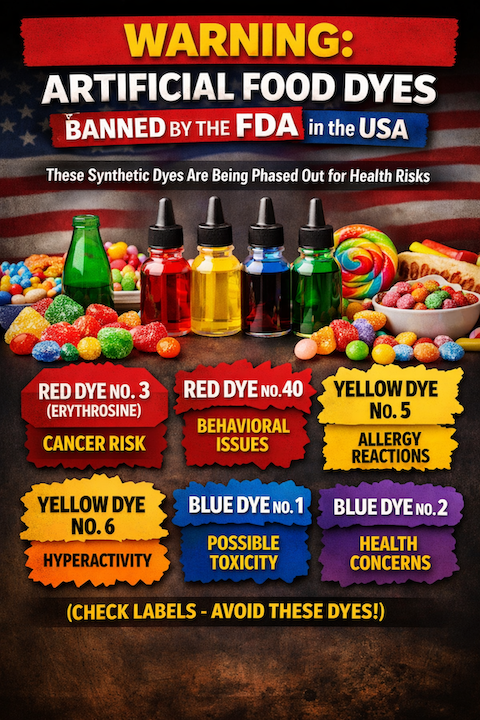
Certain dyes, such as Red 40 and Yellow 5, have been associated with hyperactivity, attention difficulties, and behavioral changes in children.
Allergic and immune reactions
Some individuals may experience hives, asthma, or chemical sensitivities.
Potential cancer risks in certain cases
Red Dye No. 3 has been shown to cause cancer in animal studies, which has led to restrictions in multiple regions.
For older adults, the concern is even greater. As the body ages, immune function and metabolic efficiency decline, making the long-term accumulation of chemicals more significant.
3. How the Rest of the World Compares
In the European Union, foods containing certain dyes must carry warning labels about potential effects on children’s behavior and attention. This requirement has pushed many manufacturers to switch to natural alternatives.
Canada allows some artificial dyes but under strict limits and ongoing safety evaluations.
Across parts of Asia, regulations vary, but past incidents involving unauthorized dyes have led to tighter controls and import restrictions.
4. What This Means for Older Adults
This is not just about food color—it is about long-term health.
First, reducing exposure helps limit the buildup of synthetic chemicals, lowering the risk of inflammation, allergies, and metabolic issues.
Second, it reduces the likelihood of unwanted interactions with medications, as some dyes may affect how drugs are absorbed or processed.
Third, it encourages a shift toward more natural, less processed foods.
5. What You Can Do Now
While regulations continue to roll out, individuals can take proactive steps.
Read food labels carefully and avoid ingredients such as Red 3, Red 40, Yellow 5, Yellow 6, and Blue 1.
Choose foods with natural color sources like beet juice, turmeric, or spirulina.
Reduce consumption of highly processed foods, especially brightly colored candies, cereals, and sugary drinks.
6. Looking Ahead
By the end of 2026, experts expect the U.S. food supply to contain fewer artificial colors and become overall safer.
Consumers will gradually adjust to more natural-looking foods and develop a better understanding of what they are eating.
In short, phasing out artificial food dyes does not diminish the appeal of food—it improves safety.
For older adults, this shift represents an important step toward better long-term health, reduced disease risk, and a more natural, sustainable lifestyle.
-Nguyễn Duy Khiêm-