
Every year on the first Monday of September, Americans observe Labor Day. For many families, it means a three-day weekend filled with backyard barbecues, picnics, parades, shopping, travel, and one last summer outing before school and fall routines begin.
But behind the fun is an important chapter of American history. Labor Day honors the millions of people—native-born and immigrant—whose work built the nation and whose struggles helped improve wages, working hours, safety, and dignity in the workplace.
In 2026, Labor Day falls on Monday, September 7.
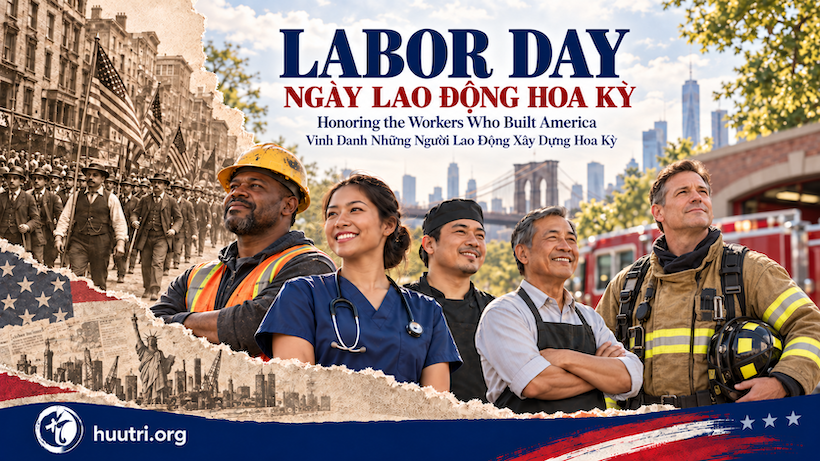 How Labor Day Began
During the late 1800s, America was rapidly becoming an industrial nation. Factories, railroads, mines, mills, and construction projects created enormous economic growth—but working conditions were often harsh.
Many employees worked 10 to 12 hours a day, six or even seven days a week. Workplace injuries were common, child labor was widespread, and workers had few legal protections. If someone became sick or was injured on the job, the family could quickly lose its income.
Labor organizations began demanding shorter hours, better pay, safer workplaces, and greater respect for working people.
On September 5, 1882, approximately 10,000 workers assembled in New York City for what is considered America’s first Labor Day parade. They marched from City Hall to Union Square and later gathered with their families for a picnic, music, and speeches. The event combined a public demonstration of worker solidarity with recreation and family celebration—a pattern that continues today. The Library of Congress documents this historic gathering.
Who first proposed the holiday remains debated. Peter J. McGuire, a leader of the Brotherhood of Carpenters and Joiners, is often credited with suggesting a day honoring American workers. However, historical evidence also points to Matthew Maguire, a machinist and secretary of New York’s Central Labor Union. The U.S. Department of Labor recognizes that both men played important roles in the holiday’s early history.
Oregon became the first state to officially recognize Labor Day in 1887. Other states soon followed. On June 28, 1894, President Grover Cleveland signed legislation establishing Labor Day as a federal holiday to be observed on the first Monday of September. The U.S. Department of Labor provides a detailed history of the holiday.
What Did the Labor Movement Accomplish?
Labor Day is not a celebration of one organization or political party. It recognizes the broad contribution of working people and the long struggle to create more humane working conditions.
Over many decades, workers and reformers helped advance:
- The eight-hour workday and 40-hour workweek
- Overtime pay for eligible employees
- Restrictions on child labor
- Minimum-wage protections
- Safer workplaces
- Workers’ compensation
- Employer-supported health and retirement benefits
- The right of workers to organize and negotiate collectively
These protections did not arrive all at once, nor do they apply equally to every worker. One major milestone was the Fair Labor Standards Act of 1938, which established federal standards involving minimum wages, overtime, the 40-hour workweek, and child labor. The Department of Labor explains the law’s development and continuing importance.
Immigrants Helped Build America
Labor Day has special meaning for immigrant families. Generations of immigrants arrived in America hoping to create better lives through hard work. They labored on farms and railroads, in factories, mines, restaurants, hotels, hospitals, garment shops, construction sites, and family-owned businesses.
Chinese and Irish immigrants helped build the transcontinental railroad. European immigrants supplied much of the workforce during America’s industrial expansion. Mexican and other Latino workers played essential roles in agriculture, transportation, construction, manufacturing, and service industries. Newer generations of immigrants continue contributing as caregivers, teachers, engineers, health professionals, entrepreneurs, technicians, and small-business owners.
The Library of Congress notes that millions of newly arrived immigrants made America’s industrial development possible. The National Park Service likewise recognizes immigrant labor as a central part of the nation’s economic history. Library of Congress and National Park Service
For Vietnamese Americans, Labor Day can be an opportunity to remember the first generation of refugees and immigrants who began again in a new country. Many accepted demanding jobs, worked long hours, learned English at night, opened small businesses, and sacrificed so their children could receive an education and enjoy greater opportunities.
Their work may never appear in a history book, but it remains part of the American story.
How Americans Celebrate Labor Day Today
The original Labor Day included a parade, picnic, music, and speeches. More than 140 years later, many of those traditions remain.
Parades and community festivals
Some cities hold Labor Day parades featuring workers, unions, public employees, marching bands, veterans, cultural organizations, and local businesses. County fairs, concerts, neighborhood festivals, and cultural celebrations are also popular throughout the weekend.
Barbecues, picnics, and family gatherings
Grilling hamburgers, hot dogs, ribs, chicken, and corn has become a classic Labor Day tradition. Immigrant families often add their own flavors to the table—from Vietnamese thịt nướng, chả giò, gỏi, and bánh mì to Mexican carne asada, Korean barbecue, Filipino dishes, and foods from many other cultures.
The result is something wonderfully American: families celebrating the same holiday while sharing the tastes and traditions of their homelands.
Beaches, parks, and road trips
Because Labor Day arrives near the unofficial end of summer, families often visit beaches, lakes, national parks, campgrounds, or nearby resorts. Others enjoy fishing, boating, hiking, gardening, or simply relaxing outdoors.
For older adults, a morning picnic, scenic drive, gentle walk, or family meal at home can be just as meaningful as a long trip.
Sports and backyard games
Baseball remains part of the holiday weekend, while college football often begins around Labor Day. Families also enjoy swimming, volleyball, badminton, cornhole, card games, and friendly backyard competitions.
Shopping and back-to-school preparation
Labor Day has also become a major retail weekend, with sales on clothing, mattresses, furniture, appliances, and automobiles. Families frequently use the weekend to purchase school supplies or prepare children for the academic year.
Sales may be part of the modern holiday, but they should not overshadow the people working in stores, restaurants, hospitals, hotels, airports, delivery services, and public-safety jobs while others are enjoying a day off.
Not Everyone Gets the Day Off
Labor Day is a federal holiday, but that does not mean every private-sector employee automatically receives a paid day off. Many health-care workers, first responders, restaurant employees, transportation workers, caregivers, retail workers, and other essential employees continue working.
Federal law also does not automatically require private employers to provide extra holiday pay unless overtime or another applicable agreement is involved. This reality makes Labor Day an appropriate time to thank the people who continue serving the public during the holiday.
A sincere greeting, a generous tip, or a simple expression of appreciation can carry real meaning.
A Meaningful Labor Day for Every Generation
Beyond barbecues and sales, families can make Labor Day more meaningful by asking parents and grandparents about their first jobs in America. What difficulties did they face? Who gave them an opportunity? What sacrifices did they make? What lessons would they like younger generations to remember?
Families might also:
- Visit a local labor-history museum or historic site
- Attend a community parade or cultural festival
- Support a family-owned or immigrant-owned business
- Thank essential workers who are on duty
- Volunteer at a food bank or community organization
- Share family stories about work, sacrifice, and perseverance
- Help a younger person prepare a résumé or explore a career
Labor Day reminds us that America was not built only by famous leaders and wealthy industrialists. It was built every day by farmers, factory workers, tradespeople, teachers, nurses, caregivers, restaurant employees, engineers, entrepreneurs, public servants, and countless others whose names may never be widely known.
For immigrants, Labor Day carries an especially powerful message: when we work, contribute, build businesses, raise families, and help our communities, we are not standing outside the American story. We are helping write it.
This Labor Day, enjoy the barbecue, the family gathering, and the final days of summer—but also take a moment to honor the generations of working people whose effort, courage, and sacrifice helped make those moments possible.