
Monosodium glutamate (MSG) is widely used around the world and is approved by the U.S. Food and Drug Administration (FDA). But does that mean it is the ideal choice for retirees and older adults concerned about their long-term health?
The answer is more nuanced than a simple yes or no.
What Is MSG?
MSG (Monosodium Glutamate) is the sodium salt of glutamic acid, an amino acid that occurs naturally in foods such as tomatoes, mushrooms, seaweed, and cheese. MSG is commonly used to enhance the savory “umami” flavor in foods.
Today, MSG can be found in:
- Instant noodles
- Canned foods
- Frozen meals
- Chips and snack foods
- Packaged sauces
- Fast food
- Some restaurant dishes
What Does the FDA Say About MSG?
The FDA classifies MSG as “Generally Recognized as Safe” (GRAS), meaning it is considered safe when consumed in normal amounts. International organizations such as the World Health Organization (WHO) and the Food and Agriculture Organization (FAO) have reached similar conclusions.
In other words:
MSG is not banned in the United States.
There is no strong scientific evidence showing that MSG is harmful to most people when consumed in typical amounts.
However, there is an important distinction between something being “safe” and something being “ideal.”
Safe Does Not Always Mean Ideal
Many foods and ingredients approved by regulators are not necessarily recommended as part of a healthy long-term diet.
For example:
- Sugary soft drinks are legal and FDA-approved.
- Processed meats are legal and FDA-approved.
- High-sodium foods are legal and FDA-approved.
Yet health professionals still advise limiting them.
The same reasoning can apply to MSG-containing foods.
Why Retirees Should Be Cautious About MSG
1. MSG Is Often Found in Highly Processed Foods
The biggest concern may not be MSG itself.
MSG frequently appears in foods that are also high in:
- Sodium
- Preservatives
- Saturated fat
- Added sugars
- Empty calories
For older adults managing:
- High blood pressure
- Heart disease
- Kidney disease
- Type 2 diabetes
regular consumption of heavily processed foods can be far more concerning than MSG alone.
2. Some People May Be Sensitive to MSG
Although research has not conclusively proven a direct link between MSG and adverse reactions, some individuals report symptoms after consuming foods containing large amounts of MSG.
Reported symptoms include:
- Headaches
- Facial flushing
- Sweating
- Nausea
- Heart palpitations
- Numbness or tingling sensations
- Weakness
- Chest discomfort
These symptoms are usually mild and temporary. However, for older adults with cardiovascular conditions or anxiety disorders, they can still be uncomfortable and concerning.
3. Sodium Intake Matters More as We Age
MSG contains less sodium than table salt, but it still contributes to total daily sodium intake.
Excess sodium consumption has been associated with:
- Elevated blood pressure
- Increased stroke risk
- Worsening heart disease
- Fluid retention
- Greater strain on the kidneys
Older adults who have been advised by their physicians to follow a low-sodium diet should pay close attention to foods containing MSG and other flavor enhancers.
4. Stronger Flavors May Encourage Overeating
MSG makes foods more appealing and flavorful.
This can be beneficial for seniors who have experienced age-related declines in taste perception.
However, for those trying to:
- Lose weight
- Control diabetes
- Lower cholesterol
- Manage blood pressure
highly flavored processed foods may encourage greater food consumption and higher calorie intake than intended.
Should Older Adults Avoid MSG Completely?
Not necessarily.
For most healthy adults, consuming foods that contain MSG occasionally is unlikely to cause significant problems.
However, older adults may benefit from:
✔ Reading ingredient labels carefully
✔ Limiting highly processed foods
✔ Choosing fresh, whole foods whenever possible
✔ Cooking more meals at home
✔ Monitoring how their body responds after eating foods containing MSG
If you consistently experience headaches, palpitations, or other symptoms after eating certain foods, discuss those reactions with your healthcare provider.
Natural Sources of Umami Flavor
Many chefs and nutrition experts recommend obtaining umami flavor from natural sources such as:
- Shiitake mushrooms
- Tomatoes
- Seaweed
- Caramelized onions
- Roasted garlic
- Parmesan cheese
- Homemade bone broth
These foods can enhance flavor while also providing additional nutritional benefits.
The Bottom Line for Retirees
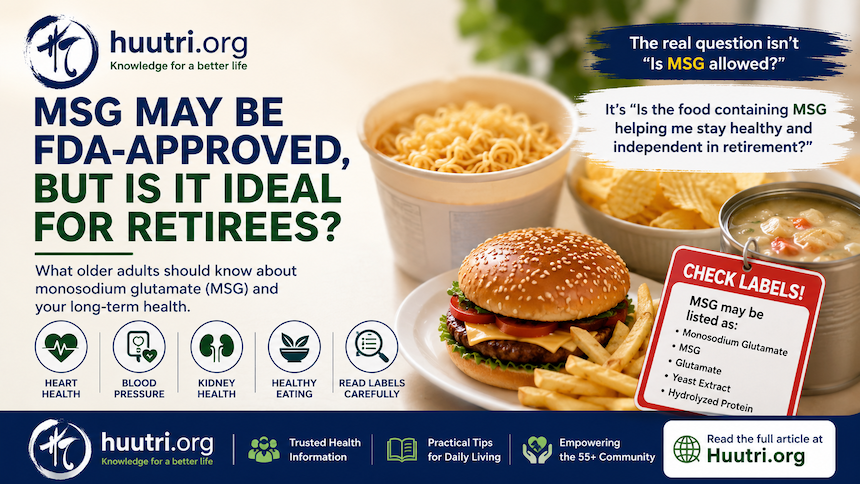
MSG may be approved by the FDA and considered safe by major health organizations. But for retirees and older adults, the better question is not:
“Is MSG allowed?”
Instead, ask:
“Is the food containing MSG helping me maintain my health and quality of life?”
In many cases, the issue is not a small amount of MSG itself, but the highly processed foods that often accompany it.
For retirees who want to protect their heart health, blood pressure, kidney function, and overall well-being, a diet focused on fresh, minimally processed foods remains the healthiest long-term strategy.
-Thanh Thuỷ-
Sources for Further Reading:
- FDA – Monosodium Glutamate (MSG)
- WHO/FAO Joint Expert Committee on Food Additives (JECFA)
- Harvard Health Publishing
- PubMed – Research on MSG and MSG Symptom Complex
- American Chemical Society (ACS)