
Was turkey chosen simply because it was large enough to feed an entire family? The answer involves a fascinating combination of American history, farming, economics, practicality and cultural traditions.
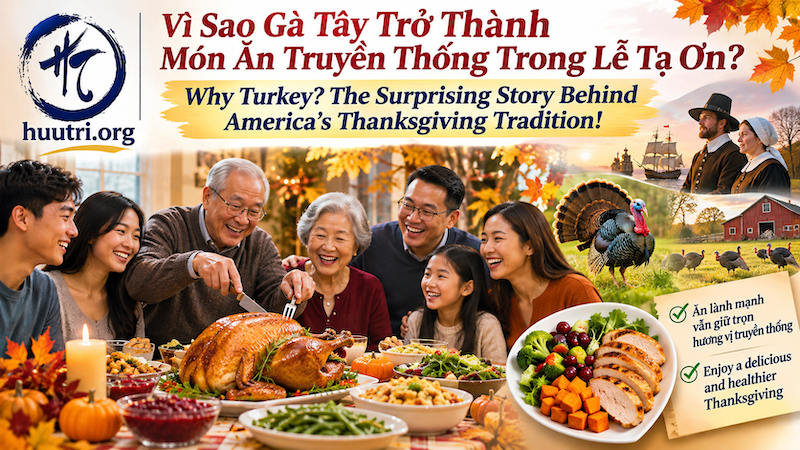 Every Thanksgiving, millions of American families gather around the dinner table to enjoy roasted turkey, mashed potatoes, cranberry sauce, stuffing and pumpkin pie. But have you ever wondered why turkey, rather than chicken, duck, pork or beef, became the centerpiece of this uniquely American holiday?
For older adults and retirees, Thanksgiving is also a wonderful opportunity to reconnect with family and friends, enjoy traditional dishes and celebrate life’s blessings without compromising their health.
1. Was turkey served at the first Thanksgiving in 1621?
Surprisingly, there is no definitive historical evidence that turkey was served at the famous three-day harvest celebration shared by the Pilgrims and the Wampanoag people in Plymouth, Massachusetts, in 1621.
Historical records suggest that the feast likely included venison, wild birds, corn, fish and seafood. Wild turkeys were abundant in the region, so they may have been served, but they were not necessarily the centerpiece of the celebration.
In fact, the Thanksgiving dinner we recognize today developed largely during the 19th century.
2. Why turkey? An early example of smart farming economics
Your Thanksgiving turkey was, in many respects, the result of a very practical economic decision by early American farming families.
Consider the value of different farm animals in those days:
| Farm animal | Economic value |
| Chicken | Provided eggs throughout the year |
| Cow | Provided milk, butter and cheese |
| Ox | Helped plow fields and transport goods |
| Pig | Provided meat that could be salted and preserved for winter |
| Turkey | Provided a substantial amount of meat for a special occasion |
Unlike dairy cows and egg-laying chickens, turkeys were primarily valued for their meat. Slaughtering a turkey for a holiday celebration was less likely to disrupt a family’s daily supply of food.
Turkeys also had several practical advantages:
- They were native to North America and widely available.
- They could forage for insects, seeds and vegetation.
- Birds raised in spring could reach a suitable size by late autumn.
- One large turkey could feed an extended family.
- Leftover meat could be used in soups, stews and other meals.
Turkey was also sufficiently special to distinguish a holiday feast from an ordinary dinner.
In other words, early American farmers understood the importance of getting the greatest value from their resources long before modern household budgeting became popular.
3. The woman who helped make turkey an American holiday icon
One of the most influential figures behind America’s Thanksgiving tradition was Sarah Josepha Hale (1788–1879), an American writer and magazine editor who also wrote Mary Had a Little Lamb.
In her 1827 novel Northwood, Hale described a Thanksgiving feast featuring a roasted turkey at the center of the dinner table.
For years, she promoted Thanksgiving as a national holiday through her writings and letters to American political leaders.
In 1863, during the American Civil War, President Abraham Lincoln proclaimed a national Thanksgiving observance on the last Thursday of November.
Over subsequent generations, cookbooks, magazines, advertisements, paintings and family traditions cemented the turkey’s position as America’s Thanksgiving centerpiece.
What began partly as a practical farming decision eventually became a national cultural tradition.
4. Five fun facts about Thanksgiving turkeys
Turkeys are native to North America. Indigenous communities raised domesticated turkeys long before European settlers arrived in the Americas.
Wild turkeys can fly! Unlike many heavy domesticated turkeys raised for meat, wild turkeys can fly short distances and even sleep in trees.
Turkey eggs are edible. However, turkeys lay fewer eggs than chickens and are generally more expensive to raise for egg production.
One turkey can feed an extended family. A 15-pound turkey can generally serve around 10–12 people, depending on portions and how much leftover meat is desired.
Turkey is not necessarily what makes you sleepy. Turkey contains tryptophan, but the enormous meal, alcohol and overall calorie intake are more likely contributors to post-dinner drowsiness than turkey alone.
5. Is turkey a healthy food for people over 50?
Yes! When properly prepared, turkey can be an excellent source of nutrition, particularly for older adults who want to maintain muscle mass, strength and physical independence.
Turkey provides:
- High-quality protein to help preserve muscle mass.
- Vitamin B6 and B12 to support metabolism and nervous system function.
- Selenium to support thyroid and immune function.
- Zinc to support immunity and wound healing.
- Phosphorus to support bone health.
Skinless roasted turkey breast is particularly attractive because it is high in protein and relatively low in fat. However, commercially brined, smoked and processed turkey products may contain significant amounts of sodium.
Often, the biggest nutritional problem at Thanksgiving is not the turkey itself, but everything served alongside it.
6. Enjoy a healthier Thanksgiving dinner without sacrificing tradition
For HuuTri.org readers, especially those managing high blood pressure, cholesterol, diabetes or weight, Thanksgiving does not have to mean giving up favorite foods.
The secret is balance, moderation and sensible portions.
The healthy Thanksgiving dinner plate
- 50% – Non-starchy vegetables: Green beans, broccoli, Brussels sprouts, salads or steamed Asian greens.
- 25% – Lean protein: Roasted turkey, preferably skinless breast meat.
- 25% – Carbohydrates: Sweet potatoes, mashed potatoes, stuffing, rice or whole grains.
- Water or unsweetened tea.
This approach can help manage calorie intake and blood sugar while allowing everyone to enjoy their favorite holiday dishes.
Traditional dishes with a healthier twist
| Traditional dish | Healthier alternative |
| Deep-fried turkey | Oven-roasted turkey with garlic and herbs |
| Turkey skin | Skinless turkey breast |
| Heavy gravy | Light, low-sodium mushroom gravy |
| Mashed potatoes with cream | Mashed potatoes with olive oil and garlic |
| Candied sweet potatoes | Roasted sweet potatoes with cinnamon |
| Sugary cranberry sauce | Homemade cranberry sauce with less sugar |
| Green bean casserole | Fresh green beans with garlic and almonds |
| Large slice of pumpkin pie | Small slice of pumpkin pie |
| Soft drinks and cocktails | Sparkling water or unsweetened tea |
The American Heart Association also recommends paying attention to the hidden sodium, added sugar and saturated fat in prepared holiday meals.
7. A Vietnamese-American Thanksgiving dinner
For Vietnamese-American families, Thanksgiving offers a wonderful opportunity to combine American traditions with the familiar flavors of Vietnamese cuisine.
A healthier multicultural Thanksgiving menu might include:
Roasted turkey with lemongrass, garlic and ginger. Use aromatic herbs and spices to enhance flavor without relying heavily on salt or butter.
Vietnamese turkey salad – Gỏi gà tây. Combine shredded turkey with cabbage, carrots, onions, mint and a light lime dressing.
Stir-fried Asian vegetables. Bok choy, mustard greens or green beans lightly cooked with garlic and a small amount of oil.
Fresh turkey spring rolls – Gỏi cuốn gà tây. A refreshing combination of turkey, lettuce, cucumber, herbs and rice paper.
Turkey congee – Cháo gà tây. A comforting way to enjoy leftover turkey the following day. Use low-sodium broth and plenty of fresh ginger.
There is no rule that says an American Thanksgiving dinner must consist entirely of Western dishes. Combining the best of both culinary cultures can create a meaningful family tradition for future generations.
8. Seven healthy Thanksgiving habits for older adults
- Do not skip breakfast. Arriving at dinner extremely hungry makes overeating more likely.
- Start with vegetables. Enjoy fiber-rich foods before reaching for additional portions of starches.
- Eat slowly. Spend more time talking with family and friends between bites.
- Stay hydrated. Drink water regularly and limit alcohol and sugary beverages.
- Enjoy dessert without guilt. A small portion of your favorite dessert is perfectly reasonable for many people, provided it fits their individual dietary needs.
- Take a 10–20-minute walk after dinner. If your mobility permits, a gentle walk can help manage post-meal blood sugar and provide another opportunity for family bonding.
- Store leftovers safely. Cook turkey to an internal temperature of 165°F, refrigerate leftovers within two hours and use refrigerated leftovers within three to four days. Older adults are particularly vulnerable to foodborne illnesses.
Those with diabetes, kidney disease or other medical conditions requiring specific dietary restrictions should continue following their individualized nutrition plans during the holidays.
9. Thanksgiving is about more than what is on the dinner table
As we grow older, we often discover that the most valuable things in life are not material possessions, expensive gifts or extravagant meals.
They are the moments we share with the people we love.
Thanksgiving is an opportunity to invite someone who lives alone, reconnect with old friends, call family members living far away, share childhood memories, teach grandchildren family recipes and express gratitude for those who have accompanied us throughout our lives.
Consider starting a family tradition in which each person at the dinner table shares one thing they are grateful for this year.
A healthy Thanksgiving nourishes not only the body but also the mind, the heart and our sense of belonging.
Eat well. Laugh often. Give thanks. Treasure the moments.
From all of us at HuuTri.org, may your Thanksgiving be filled with good health, happiness, friendship and the warmth of family.
Happy Thanksgiving 2026!
-Phan Trần Hương-
References
Smithsonian National Museum of American History; Texas A&M University; Library of Congress; American Heart Association; U.S. Department of Agriculture (USDA).