
In the automotive industry, battery theft usually conjures images of criminals stealing catalytic converters or individual battery packs from parked vehicles. But in one of the largest cargo theft investigations involving electric vehicle batteries in U.S. history, investigators say criminals didn’t steal batteries from customers—they stole them before they ever left the factory.
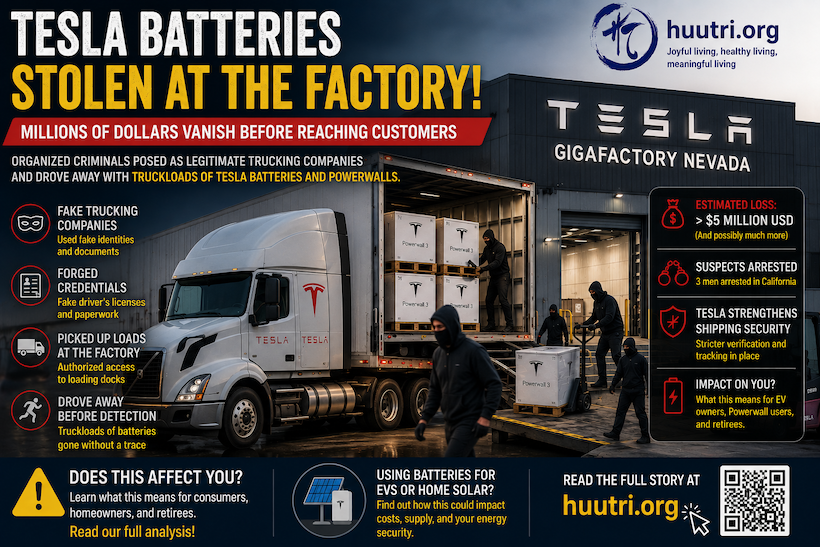 According to recently released sheriff’s records obtained through public records requests, organized cargo theft rings allegedly stole multiple truckloads of Tesla vehicle batteries and Powerwall home energy storage systems directly from Tesla’s Gigafactory in Nevada over several months. The case has drawn national attention because of both the sophistication of the scheme and the enormous value of the stolen products.
What Happened?
Authorities say the thefts occurred primarily between December 2025 and January 2026 at Tesla’s Nevada Gigafactory.
Instead of breaking into the factory, investigators believe organized criminal groups impersonated legitimate trucking companies and freight carriers.
Once trailers were loaded and ready for shipment, fake trucking companies allegedly arrived with forged credentials and simply drove away with hundreds of thousands of dollars worth of batteries.
Law enforcement describes this as “strategic cargo theft”—a rapidly growing form of organized crime targeting supply chains rather than retail stores.
How Many Thefts Occurred?
Investigators documented:
- At least 11 confirmed Tesla cargo thefts
- Nine of those occurred during January alone
- Investigators are examining 17 cargo theft cases involving Tesla and other companies in the area
- Officials believe the real number may be higher because cargo theft often goes unreported.
What Was Stolen?
The thieves allegedly targeted:
- Tesla vehicle battery packs
- Powerwall 3 residential battery storage systems
- Entire semi-trailers loaded with finished products
One January shipment alone contained:
- 123 Powerwall units
Several trailers each carried approximately $500,000 worth of batteries.
How Much Money Was Lost?
Tesla has not publicly disclosed the total financial loss.
However, based on sheriff’s reports:
- Two trailers stolen in December each contained more than $475,000 worth of Powerwalls.
- Additional trailers in January each carried approximately $500,000 in batteries.
Adding together only the thefts described in public reports produces an estimated value of well over $5 million, and potentially considerably more if all 11 incidents involved similarly valued loads. Authorities have not released a final verified dollar figure.
How Did Criminals Pull It Off?
Unlike traditional cargo theft, investigators say this operation relied on deception rather than force.
The alleged scheme involved:
- Creating fake trucking companies
- Using forged commercial driver’s licenses
- Exploiting freight brokers
- Accepting legitimate shipping assignments
- Picking up fully loaded trailers directly from Tesla loading docks
- Driving away before anyone realized the carrier was fraudulent
Investigators also found that some early thefts were made possible because certain security procedures were not consistently followed. Tesla has since strengthened driver verification procedures at the factory.
Were Any Suspects Arrested?
Yes.
Authorities arrested three California men after investigators secretly placed GPS tracking devices on one recovered trailer.
Prosecutors allege the suspects:
- used forged commercial driver’s licenses,
- traveled from California, and
- attempted to retrieve another trailer under surveillance.
They have been charged with felony possession of stolen property, and the broader investigation remains ongoing. Authorities have not said whether additional arrests are expected.
Can Stolen Tesla Batteries Be Used?
Tesla appears to have an important safeguard.
According to investigators, once Tesla identifies a battery or Powerwall as stolen, the company can mark it so it cannot be activated normally. Some stolen Powerwalls later appeared for sale online, but investigators said these units could not be activated after being flagged as stolen. That greatly reduces their value to legitimate buyers.
Will This Cause Battery Shortages?
At this point, there is no evidence that the thefts have created a significant shortage of Tesla batteries.
Tesla manufactures batteries on a massive scale, producing enough for hundreds of thousands of vehicles and energy storage systems each year. Even so, losing multiple truckloads of finished products represents a meaningful operational disruption and adds replacement, insurance, security, and logistics costs.
Could Battery Prices Increase?
Possibly—but probably not because of these thefts alone.
Battery prices are influenced much more by factors such as:
- lithium and nickel prices,
- manufacturing costs,
- tariffs,
- shipping expenses,
- supply and demand,
- and technological improvements.
However, cargo theft contributes indirectly by increasing:
- insurance premiums,
- transportation security costs,
- fraud prevention expenses, and
- supply chain overhead.
If organized cargo theft continues to rise across the industry, those higher costs could eventually be reflected in product prices. Industry estimates indicate cargo theft in the United States now costs billions of dollars annually.
Should Current Tesla Owners Be Concerned?
For most owners, probably not.
Current Tesla vehicle owners are unlikely to experience any direct effects.
Likewise, existing Powerwall owners should continue receiving software updates and warranty support as normal.
The main concern would be for consumers waiting for new installations if thefts or other supply-chain disruptions were to become widespread. At present, there is no indication that customer deliveries have been broadly affected by these incidents.
What Does This Mean for Seniors?
Many retirees have embraced solar energy and home battery storage to reduce electricity costs and maintain backup power during outages.
For seniors considering a battery purchase, the key points are:
Existing Owners
If you already own a Powerwall or similar battery system:
- Your equipment should continue functioning normally.
- These thefts do not affect batteries already installed in homes.
Future Buyers
If you’re planning to install:
- rooftop solar,
- home battery storage, or
- purchase an electric vehicle,
there is no reason to postpone solely because of this investigation. Battery technology continues to improve, and manufacturers—including Tesla—are likely to strengthen shipping security rather than reduce production.
Buying Used Batteries
This case does reinforce one important lesson:
Avoid purchasing batteries from unknown sellers offering unusually large discounts. A battery reported as stolen may not be activatable or may lack manufacturer support.
Lessons Beyond Tesla
The investigation highlights a broader issue facing modern manufacturing.
As factories become more automated and products become more valuable, criminals are increasingly targeting supply chains rather than retail stores. Instead of stealing one battery at a time, organized groups attempt to divert entire shipments before they ever reach customers.
The Tesla investigation demonstrates that cybersecurity, identity verification, freight broker screening, GPS tracking, and supply-chain security are becoming just as important as physical factory security.
For consumers—especially retirees investing in solar energy or electric vehicles—the incident is less a warning about Tesla batteries than a reminder to purchase through authorized dealers and remain cautious of deals that appear too good to be true.
-Nguyễn Bách Khoa-