
WASHINGTON, D.C. — The Federal Aviation Administration (FAA) lifted its nationwide ground stop on Friday evening, November 13, following more than four hours of disruption caused by technical problems affecting air traffic control communications.
According to the reported timeline, the ground stop began at approximately 3:54 p.m. Eastern Time (12:54 p.m. Pacific) and was lifted at 8:15 p.m. Eastern Time (5:15 p.m. Pacific).
The reopening of U.S. airspace marks an important step toward restoring normal airline operations. However, officials warned that passengers could continue experiencing flight delays, cancellations, and schedule changes over the following several days.
Meanwhile, Amtrak’s ticket-booking system and Microsoft Outlook also experienced separate service disruptions, raising questions about whether the incidents were connected to a broader cyberattack.
Based on the preliminary information released, there is no confirmed evidence of a coordinated cyberattack targeting these systems.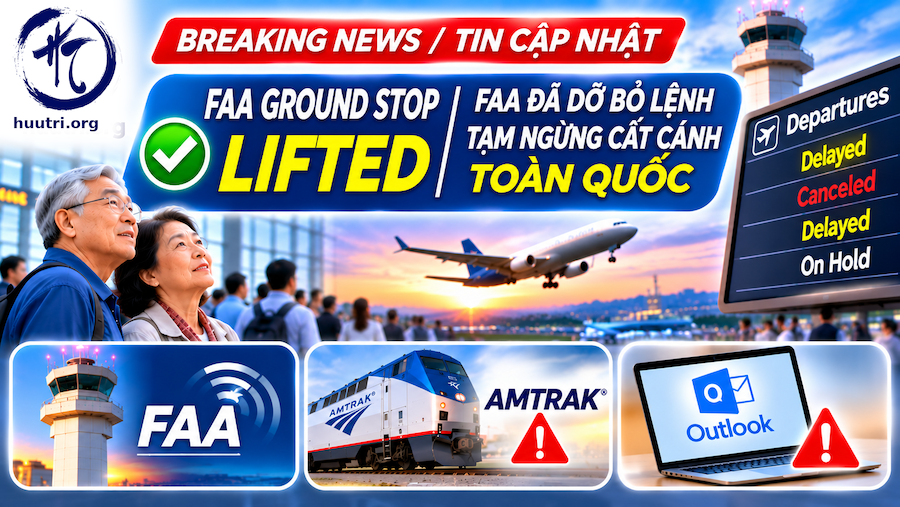
FAA REOPENS U.S. AIRSPACE — WHY ARE FLIGHTS STILL DELAYED?
A nationwide ground stop is an extraordinary aviation safety measure implemented when the FAA cannot ensure that critical air traffic control operations can function reliably.
During the restriction, commercial flights preparing for departure were required to remain on the ground. Aircraft already airborne were generally allowed to continue their journeys, although some flights may have been rerouted or diverted.
Once technicians restored the affected communications systems, the FAA authorized departures to resume.
However, airline operations cannot immediately return to normal for several reasons:
- Aircraft may be stranded at airports outside their scheduled operating locations.
- Flight crews may have reached federally mandated duty-time limits.
- Connecting flights may be disrupted, creating cascading delays throughout airline networks.
- Passengers who missed flights must be accommodated on alternative departures.
- Major airports may experience congestion as airlines attempt to resume numerous delayed flights simultaneously.
Therefore, lifting the nationwide ground stop does not mean every flight has returned to its original schedule.
Passengers traveling over the weekend should verify their flight status directly with their airlines before heading to the airport.
WHAT CAUSED THE FAA’S NATIONWIDE DISRUPTION?
According to preliminary explanations from federal transportation officials, the problem involved aging telecommunications equipment within the FAA’s air traffic control infrastructure.
Older network switches and routers reportedly became overloaded with data, resulting in unstable communications and inconsistent information transmission.
While some newer equipment continued operating, older components reportedly struggled to process the increased data load.
FAA technicians implemented measures to reduce the overload and restore communications, allowing the agency to lift the nationwide ground stop.
The incident raises renewed concerns about the reliability and resilience of America’s air traffic control infrastructure.
Although the federal government has invested billions of dollars in aviation modernization, some critical equipment still relies on technology developed decades ago.
Integrating modern digital systems with legacy infrastructure remains a major challenge, particularly as aviation operations become increasingly dependent on complex communications networks.
AMTRAK AND MICROSOFT OUTLOOK ALSO EXPERIENCE PROBLEMS — ARE THE INCIDENTS CONNECTED?
While airlines worked to restore operations, two other major services experienced disruptions.
Amtrak: A Surge in Ticket-Booking Demand
Following the FAA’s nationwide ground stop, many stranded airline passengers began searching for alternative transportation, including Amtrak trains.
Some travelers reported difficulties accessing Amtrak’s website, using its mobile application, or contacting customer service representatives.
Amtrak indicated that its trains continued operating, while the problems primarily affected ticket booking and customer support.
An unexpected surge in demand was identified as a contributing factor.
Travelers considering rail transportation should confirm ticket availability and train schedules before changing their travel arrangements.
Microsoft Outlook: Network Configuration Problems
Microsoft Outlook and certain Microsoft 365 services also experienced disruptions affecting email access and online productivity applications.
Microsoft attributed the problems to a network configuration change intended to increase system capacity.
However, the change reportedly caused some servers to become unavailable, interrupting normal service.
Microsoft subsequently began restoring affected services.
The company reported no evidence connecting its disruption to a cyberattack or to the FAA’s aviation problems.
IS THE UNITED STATES EXPERIENCING A COORDINATED CYBERATTACK?
The timing of disruptions affecting three major services naturally raised concerns about a possible coordinated cyberattack.
However, simultaneous technology failures do not necessarily indicate a common cause.
The preliminary explanations identify different problems:
FAA: Aging telecommunications equipment became overloaded with data.
Amtrak: Ticket-booking systems experienced difficulties amid unusually high demand.
Microsoft Outlook: A network configuration change disrupted service availability.
Federal security officials reported no evidence of unauthorized access to FAA systems, although further investigation was still necessary.
Importantly, a critical system can experience a major failure without any malicious interference.
Cybersecurity experts have long emphasized that protecting national infrastructure requires more than preventing hackers from gaining access.
It also requires redundant systems, reliable equipment, effective testing, and rapid recovery capabilities when technical failures occur.
WHAT SHOULD TRAVELERS DO NOW THAT THE GROUND STOP HAS BEEN LIFTED?
Although U.S. airspace has reopened, passengers should not assume that their flights will operate according to their original schedules.
- Check Your Flight Before Leaving for the Airport
Use your airline’s official website or mobile application to verify departure times, gate assignments, and flight status.
Even passengers who have already checked in or received boarding passes should continue monitoring their flights.
- Contact Your Airline About Rebooking
Ask whether the airline is offering fee waivers, complimentary schedule changes, or other accommodations for passengers affected by the FAA ground stop.
Policies may vary depending on the airline, travel date, and ticket conditions.
- Understand Your Refund Rights
Under U.S. Department of Transportation regulations, passengers whose flights are canceled or significantly changed are generally entitled to refunds if they decline alternative transportation.
Refund eligibility depends on the circumstances and applicable regulations.
Passengers should understand their rights before accepting travel credits or vouchers instead of monetary refunds.
- Keep Receipts for Unexpected Expenses
If your flight disruption requires an additional hotel stay, meals, or alternative transportation, retain all receipts.
These documents may be necessary when requesting reimbursement from an airline or submitting a travel insurance claim, subject to applicable coverage and policies.
- Notify Hotels, Cruise Lines, and Tour Operators
Passengers traveling internationally or participating in organized tours should contact their travel providers as soon as possible.
A missed connecting flight can affect hotel reservations, cruises, sightseeing arrangements, and other prepaid services.
Early communication may help minimize financial losses and allow tour operators to adjust itineraries.
- Confirm Amtrak Availability Before Switching Transportation
Travelers should not automatically cancel their airline reservations and switch to Amtrak without confirming train availability and schedules.
High demand may make alternative transportation difficult to secure.
- Beware of Travel-Related Scams
Scammers may exploit widespread flight disruptions by sending fraudulent emails, text messages, or links pretending to offer airline refunds or rebooking assistance.
Only provide payment information or make itinerary changes through official airline websites, applications, or authorized representatives.
Special Advice for Senior Travelers
Older adults and passengers requiring medical or mobility assistance should take additional precautions.
Keep essential medications, identification, mobile phones, chargers, and emergency contact information in carry-on luggage.
Passengers requiring wheelchair assistance or other mobility services should confirm arrangements directly with their airlines.
If prolonged airport delays occur, seek assistance from official airline service counters rather than relying on unverified information circulating on social media.
OFFICIAL WEBSITES FOR TRAVEL UPDATES
FAA – National Airspace System Status:
https://nasstatus.faa.gov/
FlightAware – Flight Tracking and Cancellations:
https://www.flightaware.com/
Amtrak – Train Schedules and Reservations:
https://www.amtrak.com/
U.S. Department of Transportation – Airline Refund Rights:
https://www.transportation.gov/individuals/aviation-consumer-protection/refunds
HUUTRI.ORG ANALYSIS: U.S. AIRSPACE HAS REOPENED, BUT THE TECHNOLOGY INFRASTRUCTURE WARNING REMAINS
The FAA’s decision to lift the nationwide ground stop is welcome news for passengers and the U.S. aviation industry.
However, the disruptions highlight society’s growing dependence on complex communications networks and digital infrastructure.
The United States leads the world in many advanced technologies, including artificial intelligence, cloud computing, and digital communications.
Yet aging telecommunications equipment can still threaten the operation of one of the world’s largest aviation networks.
This is not merely a technical issue for the FAA.
Transportation, electricity, banking, healthcare, and communications systems all require reliable backup capabilities to maintain essential services during unexpected failures.
For travelers, particularly older adults and international passengers, the immediate priority is to monitor official announcements, confirm travel arrangements, and prepare contingency plans.
The Bottom Line: The FAA has lifted the nationwide ground stop, but restoring normal airline operations may take additional time. There is currently no confirmed evidence that the FAA, Amtrak, and Microsoft Outlook disruptions were part of a coordinated cyberattack.
HuuTri.org will continue monitoring official announcements and investigative findings to keep readers informed.
-Lê Nguyên Vũ-