
Hair loss is something many people notice as they move into midlife and retirement. For some, it is a natural part of aging. But in many cases, increased hair shedding can reflect stress, nutritional deficiency, hormonal imbalance, poor sleep, rapid weight loss, or an underlying medical condition that deserves attention.
New research published in 2025–2026 continues to show that hair loss is not only a cosmetic issue. It is often closely connected to overall health, emotional well-being, and quality of life.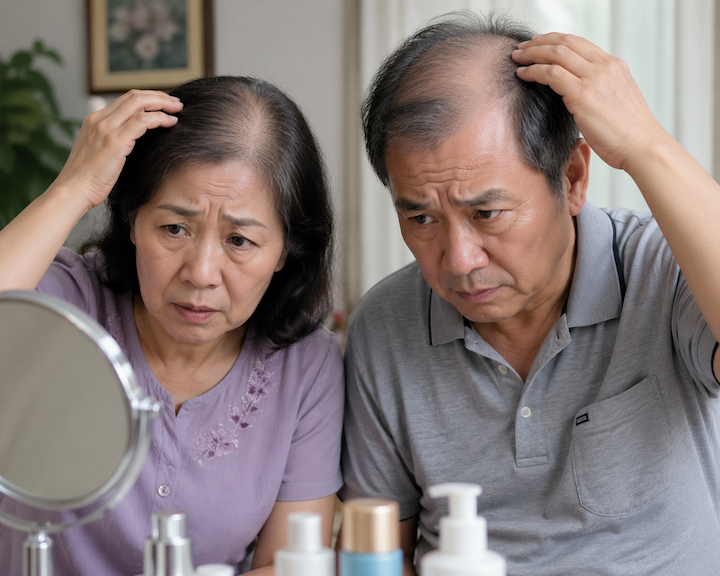
1. Genetics – The Most Common Cause
Why it happens
Genetic hair loss (androgenetic alopecia) is the leading cause of hair thinning in both men and women. Hair follicles gradually shrink over time, causing hair to become finer, slower-growing, and thinner.
What’s new in 2025–2026
New treatment approaches are being studied, including next-generation topical therapies designed to reactivate dormant follicles while reducing whole-body side effects. Early trials are promising, though they do not replace current treatments yet.
Current options
- Minoxidil: a topical treatment that may stimulate regrowth
- Finasteride: often prescribed for men under medical supervision
- Hair transplant: an option for advanced thinning
- Low-level laser therapy (LLLT): may help some individuals
Important: Hair treatment usually takes several months before visible improvement appears.
2. Chronic Stress
Why it happens
Financial concerns, illness, caregiving responsibilities, grief, poor sleep, or major life changes can trigger excess shedding. This is a common form of hair loss in older adults.
What’s new in 2026
Recent reviews suggest that long-term stress and sleep disruption may interfere with the hair growth cycle through stress hormones and inflammatory pathways.
Ways to improve
- Walk daily
- Practice meditation, prayer, yoga, or breathing exercises
- Improve sleep habits
- Reduce overload and overcommitment
- Seek counseling if anxiety becomes persistent
3. Thyroid Disorders
Why it happens
The thyroid regulates many body functions, including the hair growth cycle. Both underactive and overactive thyroid conditions may cause thinning and shedding.
Common warning signs
- Fatigue
- Unexplained weight gain or loss
- Fast or slow heartbeat
- Dry skin
- Sensitivity to cold or heat
Ways to improve
- Blood testing
- Proper medication adjustments
- Regular follow-up care
Once thyroid levels are stabilized, hair often improves gradually.
4. Nutritional Deficiency
Why it happens
Hair needs protein, iron, zinc, vitamin D, B12, and other nutrients to grow well. Older adults may eat less, absorb nutrients less efficiently, or have an unbalanced diet.
What newer research confirms
Recent medical reviews continue to support a link between low iron, vitamin D, zinc, and certain B vitamins with hair loss in many cases. However, supplementation is most useful only when a true deficiency exists.
Ways to improve
Focus on nutrient-rich foods such as:
- Fish, eggs, lean meats
- Beans and nuts
- Dark leafy greens
- Fresh fruit
- Dairy or fortified foods with vitamin D when appropriate
Avoid taking large amounts of supplements without testing or medical guidance.
5. Rapid Weight Loss and New Weight-Loss Medications
Why this matters now
This became a major topic in 2025–2026. Some people using GLP-1 weight-loss medications and experiencing rapid weight loss reported temporary hair shedding.
The cause is often not the medication itself, but related to:
- rapid weight loss
- nutritional shifts
- physical stress on the body
- uncovering pre-existing hair thinning
Ways to improve
- Lose weight gradually when possible
- Maintain adequate protein intake
- Monitor iron, vitamin D, and B12
- Tell your doctor if shedding becomes significant
6. Autoimmune Conditions and Scalp Disorders
Why it happens
Conditions such as alopecia areata, lupus, psoriasis, or scalp inflammation can affect the hair follicles and lead to hair loss.
Signs to watch for
- Patchy bald spots
- Red, itchy, or flaky scalp
- Pain or burning of the scalp
Treatment options
- See a dermatologist
- Anti-inflammatory or immune-modulating medications
- Treatment directed at the scalp condition
Newer medications for alopecia areata have helped many eligible patients achieve meaningful regrowth.
When Should You See a Doctor?
Medical evaluation is a good idea if you experience:
- Sudden hair loss
- Patchy hair loss
- Hair loss lasting for months
- Fatigue, dizziness, or unexplained weight loss
- Red, itchy, or painful scalp
- Rapid thinning after starting a new medication
What Matters Most in Retirement
Hair loss can sometimes be a signal that the body needs attention. For older adults, the goal is not only regrowing hair—but also protecting overall health, maintaining good nutrition, sleeping well, and managing stress.
When the cause is identified early, many cases can improve significantly.
-Nguyễn Duy Khiêm-
Sources for Further Reading
- American Academy of Dermatology – Hair Loss: Causes
Common and less common causes of hair loss, plus why identifying the cause matters.
American Academy of Dermatology – Hair Loss Causes - American Academy of Dermatology – Why Is My Hair Falling Out?
Overview of hereditary hair loss, stress, hairstyles, illness, and treatable conditions.
AAD – Why Is My Hair Falling Out? - American Academy of Dermatology – Alopecia Areata Overview
Signs, symptoms, and treatment options for patchy autoimmune hair loss.
AAD – Alopecia Areata Overview - Mayo Clinic – Hair Loss: Diagnosis and Treatment (2026 Update)
Current medical treatments, when to seek care, and realistic expectations.
Mayo Clinic – Hair Loss Diagnosis and Treatment - American Family Physician – Hair Loss: Common Causes and Treatment
Clinical guide explaining common patterns of diffuse and patchy hair loss.
American Family Physician – Hair Loss Guide - 2025 Review: Alopecia Areata – Pathogenesis, Diagnosis, and Therapies
Recent peer-reviewed review on autoimmune hair loss and newer therapies.
2025 Alopecia Areata Review - AAD 2025 Meeting Highlights – Alopecia Areata Research
Recent conference updates on regrowth treatments and quality-of-life impact.
AAD 2025 Research Highlights