
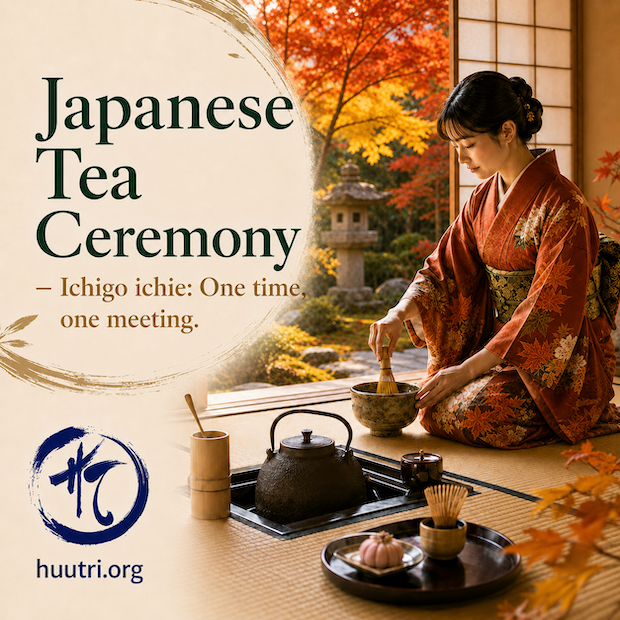
 In Japan, a bowl of tea can be much more than a drink.
It can be a welcome, a meditation, a work of art and a quiet reminder that the present moment will never come again in exactly the same way.
The Japanese tea ceremony invites guests to step away from crowded streets, glowing screens and hurried schedules. Inside a simple tatami room, every detail has meaning: the sound of boiling water, the placement of a flower, the turning of a tea bowl and even the silence shared between host and guest.
For travelers hoping to understand the spirit of Japan—not merely photograph its famous attractions—the tea ceremony offers one of the country’s most intimate cultural experiences.
More Than Tea: The “Way of Tea”
The Japanese tea ceremony is commonly called chanoyu, meaning “hot water for tea,” or sadō and chadō, meaning “the Way of Tea.”
Although tea originally arrived in Japan from China, its preparation gradually developed into a distinctly Japanese cultural art closely connected to Zen Buddhism. What began in religious and aristocratic circles eventually became a disciplined practice combining hospitality, architecture, ceramics, calligraphy, flower arranging, seasonal foods and mindful movement.
By the 16th century, the influential tea master Sen no Rikyū helped establish the philosophy and aesthetics that continue to guide tea practitioners today.
The four principles most closely associated with the Way of Tea are:
- Wa — harmony
- Kei — respect
- Sei — purity
- Jaku — tranquility
Together, they describe not only how a ceremony should be conducted, but also how people might treat one another.
Another expression frequently connected with tea culture is ichigo ichie: “one time, one meeting.” It reminds participants that every encounter is unique. Even if the same people meet in the same room tomorrow, the season, their feelings and that particular moment will have changed.
This is one reason a tea ceremony feels so special. The host prepares the gathering as if it may never happen in precisely the same way again.
The Beauty of Simplicity
A traditional tea room is intentionally modest. Its natural wood, earthen walls and tatami mats reflect the aesthetic of wabi-sabi—finding beauty in simplicity, imperfection and the passage of time.
Guests may enter through a small doorway that requires them to bow. Historically, this gesture symbolized leaving status and social rank outside. Within the tea room, everyone meets on more equal terms.
In the alcove, known as the tokonoma, the host displays a hanging calligraphy scroll and a carefully chosen seasonal flower arrangement. These are not merely decorations. They establish the mood of the gathering and often contain a message for the guests.
The tea utensils also tell a story. An old bowl may be valued for its irregular shape, subtle glaze or visible signs of use. A bamboo scoop might have a poetic name. The host selects every object according to the season, occasion and people attending.
Nothing is accidental, yet nothing should appear showy.
What Tea Is Traditionally Served?
The traditional tea used in the Japanese tea ceremony is matcha—finely ground powdered green tea.
Unlike ordinary steeped tea, matcha is whisked directly into hot water with a bamboo whisk called a chasen. Because the powdered leaves remain in the bowl, the guest consumes the tea itself rather than only an infusion.
Two principal forms may be served:
- Usucha, or “thin tea,” is lighter, frothier and usually prepared individually for each guest. It is the style most visitors encounter during introductory ceremonies.
- Koicha, or “thick tea,” uses considerably more matcha and less water. It has a dense, smooth consistency and is associated with more formal gatherings.
Matcha has a rich vegetal flavor with gentle bitterness and umami. To balance it, guests normally receive a seasonal Japanese sweet, or wagashi, before drinking the tea.
A complete formal gathering, called a chaji, can last several hours and may include a seasonal meal, sweets, thick tea and thin tea. A shorter and less formal gathering, called a chakai, is more common for travelers and first-time participants. The Japan National Tourism Organization’s guide explains these forms and the ceremony’s connection to Japanese hospitality.
The Quiet Choreography of the Host
Watching a tea master prepare matcha can feel like watching a carefully choreographed performance.
The host cleans each utensil before the guests—not because it is dirty, but as a symbolic act of purification and respect. The bowl, whisk, tea container and bamboo scoop are handled through a precise sequence of movements refined through years of training.
Hot water is ladled from the kettle. Matcha is measured into the bowl. The whisk moves quickly, but the host never appears hurried.
Guests also participate. They bow, receive the bowl with both hands and turn it slightly before drinking so they do not drink from its most decorative side. Afterward, they may admire the bowl and thank the host.
A beginner need not fear making a mistake. Visitor-friendly ceremonies usually explain each step, and hosts understand that international travelers may be unfamiliar with the etiquette. Sincerity, attentiveness and respect matter far more than perfect technique.
Is the Tea Ceremony Still Practiced Today?
Very much so.
The tea ceremony is not a performance preserved only for tourists. Across Japan, students continue to study under established tea schools, sometimes practicing for decades. Tea clubs can be found in schools and universities, while community organizations, temples, cultural centers and private teachers hold seasonal gatherings throughout the year.
The best-known schools include Urasenke, Omotesenke and Mushakōjisenke, all descended from the Sen family tradition. Each follows the same underlying spirit while differing in certain movements, utensils and methods of preparation.
Tea culture also continues to influence Japanese ceramics, lacquerware, bamboo crafts, confectionery, gardens and kaiseki cuisine. Kyoto’s official tourism organization describes tea ceremony as an art deeply intertwined with many of the city’s traditional industries and crafts. Kyoto City Official Travel Guide
Today, visitors may encounter tea in many forms—from highly formal private gatherings to relaxed workshops conducted in English. Modern experiences may offer chairs for guests who cannot sit comfortably on tatami, making the tradition more accessible without losing its essential meaning.
Where Can Travelers Experience It?
Kyoto
Kyoto is the natural starting point for travelers interested in tea culture. The ancient capital has historic tea rooms, temples, gardens, traditional townhouses and generations of artisans who produce tea bowls, lacquerware and sweets.
Visitor experiences range from brief demonstrations to private ceremonies with kimono dressing and instruction in preparing one’s own bowl of matcha. Some take place inside restored machiya townhouses, while others are offered in temple grounds or traditional gardens.
For example, Murin-an offers a reservation-based tea experience in its garden tearoom, accompanied by a guided garden visit. Kyoto’s official tourism site also maintains an activities directory where travelers can search for current cultural programs and tea ceremonies.
Uji
Located just south of Kyoto, Uji is celebrated for producing some of Japan’s finest green tea and matcha. It is an excellent destination for anyone who wants to go beyond the ceremony and learn how tea is grown, processed and appreciated.
Travelers may visit tea shops, enjoy matcha desserts, compare different grades of tea or join workshops conducted by local tea specialists. Combining Uji with Kyoto creates a rewarding journey from the tea field to the tea room.
Tokyo
Even in the heart of modern Tokyo, travelers can find traditional tea rooms in gardens, cultural centers, hotels and historic neighborhoods.
Some workshops teach guests how to receive tea and sweets; others allow participants to whisk their own matcha. Tokyo also hosts public tea events and guided cultural activities. The city’s official tourism guide currently lists tea ceremony workshops as well as garden tours that include a tea experience.
Kanazawa and Other Historic Cities
Kanazawa, known for its samurai heritage, landscaped gardens, ceramics and gold-leaf craftsmanship, has a particularly rich tea culture. Tea experiences are also available in Nara, Kamakura and many smaller historic towns.
Travelers staying at a traditional ryokan may occasionally be welcomed with matcha and a sweet, although this should not automatically be considered a complete tea ceremony. Ask whether the property offers a formal demonstration or a session led by a trained practitioner.
How to Participate Respectfully
Most introductory ceremonies are designed to welcome beginners. A few simple courtesies will help you enjoy the experience:
- Arrive on time. Preparation and timing are important parts of the ceremony.
- Wear clean, modest clothing. Avoid strong perfume, which can overwhelm the fragrance of the tea and incense.
- Remove your shoes when requested.
- Turn off your phone and allow yourself to be fully present.
- Follow the host’s guidance when bowing, receiving sweets or handling the tea bowl.
- Avoid touching utensils or decorations unless invited.
- Tell the organizer in advance if sitting or kneeling on tatami will be difficult. Many venues can provide chairs.
- Ask before taking photographs. Some hosts permit photos at designated moments but prefer silence during the preparation itself.
Reservations are recommended, especially in Kyoto and during cherry blossom or autumn foliage seasons. Look for experiences led by recognized practitioners, and check whether English interpretation, kimono rental or hands-on matcha preparation is included.
A Different Way to Remember Japan
Travelers often return home remembering Japan’s bullet trains, neon streets, ancient temples and spectacular food. But a tea ceremony leaves a different kind of memory.
It may be the whisper of the bamboo whisk against the bowl. The scent of tatami. The warmth of the ceramic between your hands. The pause before taking the first sip.
For a short while, there is nowhere else to go and nothing else to do.
That is the quiet gift of the Japanese tea ceremony. It does not simply teach visitors how matcha is prepared. It reveals a way of seeing: honor the season, respect the people before you, appreciate imperfect beauty and recognize that this particular meeting will never come again.
In a world that constantly urges us to move faster, the Way of Tea invites us to stop—and discover how much meaning can be found in a single bowl.
-Lê Nguyễn Thanh Phương-